🧏🏼♂️
The Emoji
Deaf Man: Medium-light Skin Tone
U+1F9CF U+1F3FC U+200D U+2642 U+FE0F · :deaf_man_mediumlight_skin_tone:
Trend 38
Meaning layers
- interpretation
- Used to signal 'I'm not listening,' selective hearing, or ignoring something intentionally. Also used genuinely to represent deaf identity or disability pride.
- tiktok usage
- Appears in 'I can't hear the hate' captions or deaf creator content; also used humorously to say 'blocking out the noise' or dismissing drama.
- irony level
- 5 / 10
Platform meanings
- meaning
- Deaf identity representation or 'not listening to negativity' trope in video captions and comments.
- trend usage
- Used by deaf TikTokers to normalize deaf culture; also co-opted in trending 'unbothered' aesthetics.
- hashtags
- #DeafTikTok#DeafCommunity#NotListening#DisabilityPride#DeafCulture
- virality score
- 52 / 100
Cultural meanings
🇺🇸
Western / Gen-Z
Widely used both genuinely for deaf identity pride and ironically to mean 'I'm not listening to the negativity' — dual usage is broadly understood.
🇵🇰
Pakistan & India
Primarily interpreted literally as a disability or hearing impairment symbol; disability stigma may limit casual ironic use, though urban youth may use it humorously.
🌍
Middle East
Generally understood as a symbol of hearing impairment; limited ironic usage, more commonly used in disability awareness or medical contexts.
🌐
Global Neutral
Universally recognized as representing deaf or hard-of-hearing individuals; ironic usage varies widely by region and context.
🇧🇩
Bangladesh
Interpreted mainly as a disability indicator; used in accessibility or social welfare content rather than casual messaging.
🇱🇰
Sri Lanka
Recognized as a symbol for hearing impairment, occasionally used in health or social awareness campaigns.
🇨🇳
China
Seen primarily as a disability representation emoji; used in accessibility discourse, though skin tone variations have limited cultural weight.
🇯🇵
Japan
Interpreted as a disability icon in formal contexts; Japan's disability etiquette means it's used carefully and respectfully, rarely ironically.
🇰🇷
South Korea
Used in deaf community content and disability inclusion campaigns; younger Koreans may also use it in 'I'm ignoring this' contexts online.
🇹🇼
Taiwan
Recognized as hearing impairment representation; disability advocacy communities use it actively in social media.
🇭🇰
Hong Kong
Used in both literal disability contexts and occasionally in Cantonese internet culture to mean dismissively not hearing something.
🇵🇭
Philippines
Interpreted as a representation of deafness; used in OFW and community support content about disability.
🇮🇩
Indonesia
Primarily associated with disability; used in social awareness campaigns and occasionally in humor about ignoring noise.
🇹🇭
Thailand
Seen as a disability symbol; used in accessibility content and sign language promotion posts.
🇻🇳
Vietnam
Interpreted straightforwardly as hearing impairment; not widely used in ironic or meme contexts.
🇲🇾
Malaysia
Used in disability advocacy contexts; multilingual communities may also use it humorously online.
🇸🇦
Saudi Arabia
Understood as a disability representation; limited casual usage, more common in formal accessibility or awareness content.
🇦🇪
UAE
Used in inclusive and accessibility-forward content common in the UAE's multicultural digital landscape.
🇪🇬
Egypt
Primarily a disability symbol; used in social welfare and health awareness posts rather than casual irony.
🇹🇷
Turkey
Recognized as a deaf or hearing-impaired symbol; used in disability rights and ASL/TID (Turkish Sign Language) content.
🇮🇷
Iran
Interpreted as a hearing impairment symbol; used in formal disability discourse and awareness campaigns.
🇳🇬
Nigeria
Used mostly to represent deafness; also occasionally adopted humorously in Pidgin English contexts to mean 'I'm not hearing that'.
🇿🇦
South Africa
Recognized as a deaf representation; used by South African Sign Language advocates and disability NGOs in their content.
🇬🇧
UK & Ireland
Used both for genuine deaf identity and the classic British 'not listening to drama' humor — irony level is moderate.
🇫🇷
France
Interpreted as a disability emoji; French deaf culture (which is strong historically) gives it authentic representational weight.
🇩🇪
Germany
Used in disability advocacy and accessibility discussions; Germany's structured approach to disability rights gives this emoji a professional tone.
🇪🇸
Spain & Italy
Mostly understood as a hearing impairment symbol; used in disability awareness but also occasionally in Mediterranean meme culture for 'I didn't hear that'.
🇧🇷
Brazil
Used in deaf community content (LIBRAS — Brazilian Sign Language — has a strong community); also used humorously in Brazilian meme culture.
🇲🇽
Mexico
Recognized as a disability symbol; used in LSM (Mexican Sign Language) community content and disability rights posts.
🌎
Latin America
Broadly understood as a hearing impairment or deaf identity emoji; adoption for ironic use varies across Latin American countries.
🇦🇺
Australia & NZ
Used for genuine deaf identity representation and casually to mean 'blocking out the noise' — Australians also use it in self-deprecating humor.
How its meaning shifted
- 2010
Emoji did not exist in 2010; general disability representation was minimal in digital communication.
- 2015
Still pre-release; disability representation in emoji was gaining advocacy attention but this specific emoji was not yet available.
- 2020
Released in 2019, it gained traction primarily in deaf community spaces and disability pride movements, especially during COVID accessibility discussions.
- 2026
Established as a dual-purpose emoji — genuine identity marker for deaf communities and mainstream shorthand for 'not listening' or 'unbothered' in pop culture.
See it on every platform
Adjacent emojis
- Often confused with
- person shruggingperson gesturing oknail polish
- Can replace
- earmuted speakerzipper mouth face
Share & embed
Frequently asked
01What does the 🧏🏼♂️ Deaf Man: Medium-light Skin Tone emoji mean?
A male figure with medium-light skin tone touching or pointing to their ear, representing deafness or hard-of-hearing status.
02What does 🧏🏼♂️ mean on TikTok?
Deaf identity representation or 'not listening to negativity' trope in video captions and comments.
03What does 🧏🏼♂️ mean on WhatsApp?
Casually used to say 'I wasn't paying attention' or 'I didn't hear that message'.
04What does 🧏🏼♂️ mean in Gen-Z slang?
Used to signal 'I'm not listening,' selective hearing, or ignoring something intentionally. Also used genuinely to represent deaf identity or disability pride.
05Is the 🧏🏼♂️ emoji safe to use?
Representation of deaf or hard-of-hearing individuals; symbol of disability pride and identity.
06What does 🧏🏼♂️ mean in texting?
Carries dual emotional weight — genuine representation for the deaf community and a metaphorical 'tuning out' signal for those avoiding negativity or conflict.
07What is the shortcode for 🧏🏼♂️?
The shortcode for Deaf Man: Medium-light Skin Tone is :deaf_man_mediumlight_skin_tone:
08What does 🧏🏼♂️ mean in dating?
Rarely used in flirting; could be used humorously to say 'I didn't hear you say no' (though this framing is problematic).
Safety & usage
- Safe meaning
- Representation of deaf or hard-of-hearing individuals; symbol of disability pride and identity.
- Caution
- Can be used mockingly to dismiss someone or imply their words are irrelevant, which may be ableist depending on context.
Avoid using this emoji to mock or trivialize deafness; ironic use should be clearly playful and not directed at deaf individuals.
How it looks across platforms
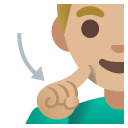
Appearance varies by platform and device. Google Noto, Twemoji, and OpenMoji are open-source.