🕦
The Emoji
Eleven-thirty
U+1F566 · :eleventhirty:
Trend 12
Meaning layers
- interpretation
- Rarely used literally; when used, it often signals late-night energy, almost-midnight vibes, or the awkward in-between time that feels neither productive nor restful.
- tiktok usage
- Appears in 'day in my life' content or late-night routine videos to mark the timestamp of chaotic late-night activities.
- irony level
- 4 / 10
Platform meanings
- meaning
- Timestamp marker for late-night content, often used in vlogs, study-with-me videos, or 'what I do at 11:30 PM' challenge formats.
- trend usage
- Appears in night-routine TikToks, 'this is your sign to sleep' trends, and late-night confessional content where creators share unfiltered thoughts.
- hashtags
- #1130pm#latenightvibes#nightroutine#cantsleep#midnightthoughts
- virality score
- 22 / 100
Cultural meanings
🇺🇸
Western / Gen-Z
Recognized as a late-night timestamp emoji used ironically to mark chaotic pre-midnight energy and procrastination rituals.
🇵🇰
Pakistan & India
Commonly used in casual chat to specify meeting times or prayer schedules; late-night usage signals someone is still awake and active.
🌍
Middle East
Often used practically to reference Isha prayer time or late-night social gatherings that are culturally common in the region.
🌐
Global Neutral
Universally understood as the time 11:30, used functionally across languages and cultures for scheduling and time communication.
🇧🇩
Bangladesh
Used practically in messages to confirm late-night study sessions or work schedules; considered a functional time marker.
🇱🇰
Sri Lanka
Appears in casual texts when arranging late-night plans or noting the time of religious or family events.
🇨🇳
China
Used in WeChat-style communication to schedule meetings or note overtime work hours; 11:30 PM is associated with late work culture (996).
🇯🇵
Japan
Carries connotations of overtime work culture and late-night commutes; used in messages to signal still being at the office or on the train.
🇰🇷
South Korea
Associated with late-night study culture (야자) and after-work socializing; used to signal the typical hour when activities wind down.
🇹🇼
Taiwan
Used pragmatically in scheduling; 11:30 PM is a common late-night work or entertainment milestone acknowledged in casual conversation.
🇭🇰
Hong Kong
Reflects the city's late-night culture; used to reference the typical time of late dinners, night markets, or finishing long work days.
🇵🇭
Philippines
Used in late-night chat sessions common among Filipino social groups; signals still being awake during late tambay (hanging out) sessions.
🇮🇩
Indonesia
Appears in messages coordinating late-night plans or signaling the final hour before midnight rest; associated with late-night social activity.
🇹🇭
Thailand
Used to indicate late-night street food outings or social gatherings, as 11:30 PM is an active hour in Thai nightlife culture.
🇻🇳
Vietnam
Used in context of late-night work sessions or family gatherings; Vietnamese urban culture often remains active at this hour.
🇲🇾
Malaysia
Marks the late-night supper (mamak) culture; sending this emoji often implies an invitation to late-night food outings.
🇸🇦
Saudi Arabia
Referenced in relation to late-night social culture post-Isha prayer; 11:30 PM is a common hour for family visits and gatherings.
🇦🇪
UAE
Used to reference the vibrant late-night lifestyle of cities like Dubai where social and business activity extends well past midnight.
🇪🇬
Egypt
Reflects Cairo's famously late social schedule; 11:30 PM is often when evening activities are just beginning.
🇹🇷
Turkey
Associated with late-night tea sessions and social gatherings; used casually to coordinate late-night plans or check-ins.
🇮🇷
Iran
Used to note the time of late-night family gatherings or online conversations that are common in Persian social culture.
🇳🇬
Nigeria
Represents a still-active social hour; used in Lagos culture to signal late-night outings, events, or late business communications.
🇿🇦
South Africa
Used practically for late-night event scheduling; also reflects the culture of late-night social gatherings in urban areas.
🇬🇧
UK & Ireland
Associated with the end of pub closing times in some regions; used to signal last orders or late-night text sessions.
🇫🇷
France
Reflects French late dining culture; 11:30 PM may mark the end of a long dinner or the beginning of late-night Parisian social life.
🇩🇪
Germany
Used practically for time-keeping in a culture that values punctuality; also appears in late-night social contexts among younger Germans.
🇪🇸
Spain & Italy
Completely normalized as an active social hour; dinner often starts at this time in Spain, so the emoji carries no 'late' connotation there.
🇧🇷
Brazil
Brazilian social culture is naturally late; 11:30 PM is a common time for evening activities, making this emoji feel ordinary rather than extreme.
🇲🇽
Mexico
Used in social coordination for late-night gatherings, fiestas, or casual late-night messages between friends and family.
🌎
Latin America
Across Latin America, this represents a normal social hour; used in messages about late dinners, parties, or casual evening plans.
🇦🇺
Australia & NZ
Used to mark a late-night hour that signals winding down; also appears in reference to late-night sports broadcasts or social plans.
How its meaning shifted
- 2010
Used almost exclusively as a literal time indicator in SMS and early smartphone messaging, primarily for scheduling purposes.
- 2015
Began appearing in social media posts as a timestamp marker, still largely functional with minimal ironic or emotional layers.
- 2020
Gained subtle cultural resonance as a late-night mood symbol during pandemic-era night-owl culture and disrupted sleep schedules.
- 2026
Functions as a niche late-night timestamp with light ironic and aesthetic uses; overshadowed by more expressive emojis but retained as a functional scheduling tool.
See it on every platform
Adjacent emojis
- Opposite
- sunsunrisealarm clock
- Often confused with
- twelve thirtyeleven oclockwatch
- Can replace
- crescent moonsleeping facezzz
Share & embed
Frequently asked
01What does the 🕦 Eleven-thirty emoji mean?
Depicts a clock face showing the time 11:30, commonly used to indicate the specific time of eleven-thirty or half past eleven.
02What does 🕦 mean on TikTok?
Timestamp marker for late-night content, often used in vlogs, study-with-me videos, or 'what I do at 11:30 PM' challenge formats.
03What does 🕦 mean on WhatsApp?
Used to specify the time 11:30 for meeting plans or to indicate someone is messaging late at night.
04What does 🕦 mean in Gen-Z slang?
Rarely used literally; when used, it often signals late-night energy, almost-midnight vibes, or the awkward in-between time that feels neither productive nor restful.
05Is the 🕦 emoji safe to use?
A neutral time-telling emoji representing 11:30 with no inherently harmful connotations.
06What does 🕦 mean in texting?
11:30 sits in a liminal psychological space — close enough to midnight to feel late, yet not quite there. It triggers mild urgency and a sense of time slipping away, often associated with unfinished tasks or the creeping awareness that tomorrow is near.
07What is the shortcode for 🕦?
The shortcode for Eleven-thirty is :eleventhirty:
08What does 🕦 mean in dating?
Sending this late at night can function as a subtle 'I'm still up' signal, implying availability without directly asking to talk or meet.
Safety & usage
- Safe meaning
- A neutral time-telling emoji representing 11:30 with no inherently harmful connotations.
- Caution
- In rare cases, could be used to timestamp or reference late-night manipulation tactics or as part of a pattern of late-night unwanted contact.
No significant safety concerns. Extremely low risk of misuse. Context-dependent in late-night communication but generally benign.
How it looks across platforms
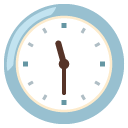


Appearance varies by platform and device. Google Noto, Twemoji, and OpenMoji are open-source.