🦶🏼
The Emoji
Foot: Medium-light Skin Tone
U+1F9B6 U+1F3FC · :foot_mediumlight_skin_tone:
Trend 38
Meaning layers
- interpretation
- Used ironically to flex, to indicate someone stepped on you metaphorically, or as a chaotic random emoji in unhinged posts. Also used in foot-related humor or when talking about being grounded/humble.
- tiktok usage
- Appears in comment sections as a joke about foot pics, used in 'putting my foot down' energy posts, or randomly inserted into unhinged reaction chains.
- irony level
- 7 / 10
Platform meanings
- meaning
- Used in comments to joke about foot pics, reference stepping on someone's argument, or add unhinged energy to a reaction chain.
- trend usage
- Appears in 'POV you just put your foot down' trend videos, foot-related ASMR content tags, and chaotic multi-emoji comment bombs.
- hashtags
- #footcheck#puttingmyfootdown#footemoji#unhingedemoji#footpics
- virality score
- 42 / 100
Cultural meanings
🇺🇸
Western / Gen-Z
Primarily used ironically — for foot pic jokes, 'putting your foot down' memes, and as a chaos emoji in unhinged posts. The skin tone modifier is rarely given significance beyond default emoji etiquette.
🇵🇰
Pakistan & India
Used literally to reference feet in conversations about foot care, walking, or traditional foot-washing rituals. Feet hold deep cultural and religious significance (both sacred and humble), so the emoji may be used carefully in respectful contexts.
🌍
Middle East
Feet are considered humble body parts in many Middle Eastern traditions; the emoji is used mostly literally for foot care or health contexts. Using it toward someone could be seen as mildly disrespectful in some conservative contexts due to the cultural significance of feet as lowly.
🌐
Global Neutral
Universally understood as a foot emoji; most commonly used to reference walking, foot health, or physical grounding without strong cultural connotations.
🇧🇩
Bangladesh
Used similarly to South Asian contexts — feet carry cultural and religious weight, so the emoji is used straightforwardly in health or lifestyle conversations rather than humorously.
🇱🇰
Sri Lanka
Feet are symbolically significant in Buddhist culture (e.g., the Buddha's footprint is sacred); the emoji is used practically for foot care discussions and rarely in humor that references feet directly.
🇨🇳
China
Primarily used in health and wellness contexts, especially foot massage (足疗) culture which is extremely popular. The emoji frequently appears in conversations about reflexology and spa treatments.
🇯🇵
Japan
Used in contexts related to foot baths (足湯), reflexology, and physical health. Japanese emoji culture tends toward literal interpretation; it's used decoratively in wellness and travel content.
🇰🇷
South Korea
Appears in beauty, wellness, and K-beauty foot care content (foot masks and peeling treatments are popular). Also used playfully in sports contexts when a soccer or sports play involves feet.
🇹🇼
Taiwan
Used in wellness and health contexts similar to mainland China, especially reflexology which is culturally significant. Also appears in casual hiking and outdoor lifestyle posts.
🇭🇰
Hong Kong
Similar to mainland Chinese usage with a focus on foot massage and reflexology culture. Also used in fitness and walking-focused wellness content.
🇵🇭
Philippines
Used casually in everyday conversation about walking, beach trips, and foot care. Rarely carries ironic or meme-heavy undertones; mostly literal and cheerful.
🇮🇩
Indonesia
Used in lifestyle and health content; feet carry some religious modesty considerations in Muslim-majority culture, so the emoji is used practically rather than humorously in most contexts.
🇹🇭
Thailand
Feet are considered the lowest and least sacred part of the body in Thai culture, so the emoji is used very carefully. It's more common in foot spa and massage tourism content than in casual jokes.
🇻🇳
Vietnam
Used in health and lifestyle content; foot massage culture is popular so the emoji appears in spa and wellness conversations. Generally treated as a neutral body part reference.
🇲🇾
Malaysia
Used in casual wellness and lifestyle content; similar to Indonesian usage with some cultural sensitivity around feet in Muslim communities.
🇸🇦
Saudi Arabia
Feet carry cultural humility associations; the emoji is used mostly in literal health and medical contexts rather than playfully. Showing or emphasizing feet in certain social contexts can be considered impolite.
🇦🇪
UAE
Used in cosmopolitan, wellness, and luxury spa contexts in urban settings. International influence means it also appears in fitness and lifestyle content without strong cultural taboo.
🇪🇬
Egypt
Generally used in literal contexts related to foot health or walking. Feet pointing toward someone is considered rude in Egyptian culture, which slightly colors interpretation.
🇹🇷
Turkey
Used in health, fitness, and foot care discussions. Turkish hamam (bath) culture includes foot washing traditions, so the emoji appears in wellness and travel content.
🇮🇷
Iran
Primarily a literal body part reference used in health and medical discussions. Cultural modesty norms mean it's rarely used in playful or flirtatious contexts.
🇳🇬
Nigeria
Used casually in everyday conversation; may appear in health content or humorous posts about walking and dancing. Nigerian digital culture embraces emoji humor, including body part emojis in meme contexts.
🇿🇦
South Africa
Used in beach and outdoor lifestyle content, fitness posts, and casual conversation. Appears in both English and Zulu/Afrikaans speaking communities without significant taboo.
🇬🇧
UK & Ireland
Used with dry wit and irony, fitting British humor. The 'putting your foot in it' expression makes this emoji relevant in contexts about making mistakes or blunders.
🇫🇷
France
Used in wellness, fashion (shoes and feet), and lifestyle content. French digital culture may use it in contexts related to elegant foot care or ironically in humor.
🇩🇪
Germany
Treated practically and literally; appears in health, fitness, and outdoor recreation contexts. German internet culture does not strongly meme-ify body part emojis in the same way as Anglophone culture.
🇪🇸
Spain & Italy
Used in summer, beach, and lifestyle content; feet are celebrated in sandal and barefoot Mediterranean culture. Also appears in football (soccer) contexts when referencing footwork.
🇧🇷
Brazil
Heavily used in summer, beach, and carefree lifestyle content where bare feet are a cultural symbol. Also appears in football (soccer) culture referencing footwork of players.
🇲🇽
Mexico
Used in casual, cheerful conversation about walking, dancing, and beach culture. Also appears in humor contexts referencing cumbia or salsa footwork.
🌎
Latin America
Broadly used in beach, dance, and outdoor lifestyle content across Latin America. Feet are associated with dance culture (salsa, merengue, cumbia), giving the emoji a lively, festive connotation.
🇦🇺
Australia & NZ
Used in beach, outdoor, and barefoot lifestyle content which is culturally significant in both countries. Also appears in casual ironic humor fitting Australian/NZ deadpan digital communication style.
How its meaning shifted
- 2010
Emoji did not exist in this form; body part emojis with skin tone modifiers were not yet part of Unicode. Feet were rarely represented in early emoji sets.
- 2015
Introduced with skin tone modifier support (Unicode 8.0, 2015); initially used almost exclusively literally for foot health, podiatry, and walking-related conversations.
- 2020
Gained ironic and meme-driven usage during pandemic era internet culture; 'foot pic' jokes exploded on social media and the emoji became part of absurdist humor vocabulary.
- 2026
Firmly embedded in ironic internet culture with dual existence as both a literal wellness/lifestyle emoji and a chaotic meme tool. The skin tone modifier is increasingly used intentionally to add specificity to humor or representation.
See it on every platform
Compare with
Adjacent emojis
- Often confused with
- leg medium light skin tonefootprintshiking boot
Share & embed
Frequently asked
01What does the 🦶🏼 Foot: Medium-light Skin Tone emoji mean?
A human foot depicted facing left, shown with medium-light skin tone. Represents the foot as a body part, walking, stepping, or physical grounding.
02What does 🦶🏼 mean on TikTok?
Used in comments to joke about foot pics, reference stepping on someone's argument, or add unhinged energy to a reaction chain.
03What does 🦶🏼 mean on WhatsApp?
Generally used literally to reference feet, walking, or a foot injury in conversation.
04What does 🦶🏼 mean in Gen-Z slang?
Used ironically to flex, to indicate someone stepped on you metaphorically, or as a chaotic random emoji in unhinged posts. Also used in foot-related humor or when talking about being grounded/humble.
05Is the 🦶🏼 emoji safe to use?
A body part emoji representing the human foot; used for foot health discussions, walking, wellness, and grounded lifestyle content.
06What does 🦶🏼 mean in texting?
The foot as a symbol often relates to stability, groundedness, and physical presence. In digital spaces it has been reclaimed as a tool of absurdist expression, reflecting Gen Z's tendency to deconstruct body-part emojis into comedic currency.
07What is the shortcode for 🦶🏼?
The shortcode for Foot: Medium-light Skin Tone is :foot_mediumlight_skin_tone:
08What does 🦶🏼 mean in dating?
Can be used flirtatiously in the context of foot fetish culture, or cheekily sent to signal 'I'll put my foot down in this relationship.' Mostly used as a tease or joke in modern dating.
Safety & usage
- Safe meaning
- A body part emoji representing the human foot; used for foot health discussions, walking, wellness, and grounded lifestyle content.
- Caution
- Can be used in unsolicited sexual contexts related to foot fetish culture; may be used to demean someone by implying they are 'beneath' the sender symbolically.
While not inherently NSFW, the emoji has been co-opted in foot fetish solicitation contexts on platforms like Twitter/X and Snapchat. Users — particularly minors — should be aware that unsolicited foot emoji messages from strangers may carry unwanted sexual connotations.
How it looks across platforms
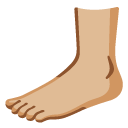


Appearance varies by platform and device. Google Noto, Twemoji, and OpenMoji are open-source.