🕟
The Emoji
Four-thirty
U+1F55F · :fourthirty:
Trend 18
Meaning layers
- interpretation
- Rarely used ironically; mostly literal for time-checking or signaling that afternoon grind is halfway through. Sometimes used to imply being stuck in an awkward in-between moment.
- tiktok usage
- Appears in 'this is my 4:30 routine' productivity content or 'POV it's 4:30 and you haven't started your homework' relatable content.
- irony level
- 3 / 10
Platform meanings
- meaning
- Represents the specific 4:30 time slot in routine or day-in-the-life content; also signals the late-afternoon energy slump.
- trend usage
- Used in 'my 4:30 routine' productivity trends, 'it's 4:30 AM and I'm on TikTok again' self-aware content, and golden-hour aesthetic videos.
- hashtags
- #430routine#430am#afternoonslump#430vibes#clockemoji
- virality score
- 22 / 100
Cultural meanings
🇺🇸
Western / Gen-Z
Primarily used literally for time communication or ironically in memes about 4:30 AM insomnia and procrastination spirals.
🇵🇰
Pakistan & India
Used functionally for scheduling in WhatsApp family and work groups; also appears in school and tuition context ('class at 🕟').
🌍
Middle East
Commonly used for scheduling afternoon meetings, prayers, or social gatherings; 4:30 PM falls near Asr prayer time, giving it mild religious scheduling resonance.
🌐
Global Neutral
Universally understood as a time indicator; no culturally specific connotations — safe and functional in all international contexts.
🇧🇩
Bangladesh
Used in group chats for scheduling academic, professional, or social events; straightforward time communication with little figurative use.
🇱🇰
Sri Lanka
Practical time-communication emoji in WhatsApp; sometimes signals evening activity planning as 4:30 marks the start of the cooler part of the day.
🇨🇳
China
Used functionally in WeChat for scheduling; clock emojis generally carry neutral connotations, though some users associate specific times with cultural numerology.
🇯🇵
Japan
Appreciated for precision in scheduling contexts; Japanese communication culture values exactness, so this emoji fits naturally into formal and informal time-setting.
🇰🇷
South Korea
Common in KakaoTalk for coordinating schedules; also appears in study-timer content where 4:30 AM study sessions are a badge of dedication among students.
🇹🇼
Taiwan
Used functionally for scheduling and time-stamping messages; occasionally seen in late-night online culture to indicate an unusually late or early hour.
🇭🇰
Hong Kong
Practical scheduling use dominates; in fast-paced urban culture, precise time emojis are welcomed in both professional and casual messaging.
🇵🇭
Philippines
Commonly used in group chats for event coordination; 4:30 PM resonates as the end of school or work, giving it a slight relief/anticipation connotation.
🇮🇩
Indonesia
Used for time coordination in WhatsApp and LINE groups; minimal figurative use beyond straightforward scheduling.
🇹🇭
Thailand
Appears in LINE chats for scheduling; 4:30 PM is a common afterwork or temple visit hour, lending it mild cultural routine significance.
🇻🇳
Vietnam
Functional scheduling use; 4:30 PM signals late-afternoon work wrap-up in a culture with strong work-life temporal awareness.
🇲🇾
Malaysia
Used across WhatsApp and Telegram for scheduling in multicultural group contexts; universally neutral and practical.
🇸🇦
Saudi Arabia
Has light religious timing resonance as 4:30 approaches Asr prayer; used in scheduling for after-prayer social or business activity.
🇦🇪
UAE
Functional time communication in a multicultural, fast-paced environment; used in both Arabic and English-language chats for meetings and meetups.
🇪🇬
Egypt
Used in WhatsApp for scheduling family gatherings or work meetings; the late afternoon timing connects to post-Asr social culture.
🇹🇷
Turkey
Practical scheduling emoji; 4:30 PM corresponds to the late-afternoon tea/coffee break culture, so it can implicitly suggest a social gathering.
🇮🇷
Iran
Used for scheduling in Telegram and Instagram DMs; minimal figurative use, largely literal and functional.
🇳🇬
Nigeria
Deployed in WhatsApp for event coordination; 4:30 can signal the start of evening social activities or church events.
🇿🇦
South Africa
Used straightforwardly in WhatsApp scheduling; 4:30 PM is a common school-pickup or end-of-workday marker giving it practical family communication use.
🇬🇧
UK & Ireland
Used for scheduling and occasionally in dry humor about the '4:30 on a Friday feeling' — end-of-work anticipation culture.
🇫🇷
France
Practical scheduling use; 4:30 PM ('quatre heures et demie') carries a mild 'goûter' (afternoon snack) cultural association for some users.
🇩🇪
Germany
Valued for its precision; Germans appreciate specific time emojis for scheduling. Used seriously in professional and personal coordination.
🇪🇸
Spain & Italy
Used for late-afternoon scheduling; in siesta cultures, 4:30 PM marks the resumption of activity after the midday pause, lending it a mild energetic connotation.
🇧🇷
Brazil
Used in WhatsApp for social planning; 4:30 PM in Brazil often signals pre-evening social warmup, so the emoji can carry light festive anticipation.
🇲🇽
Mexico
Functional scheduling emoji; in some contexts, 4:30 marks afternoon school end or pre-dinner social gathering time.
🌎
Latin America
Broadly used across Latin America for scheduling in WhatsApp and Instagram; minimal figurative use, culturally neutral.
🇦🇺
Australia & NZ
Used practically for scheduling; '4:30 on a Friday' carries strong knock-off (end-of-work) cultural resonance, making this emoji mildly celebratory in that context.
How its meaning shifted
- 2010
Primarily used as a literal time indicator in early smartphone messaging; part of the basic emoji set with minimal creative or ironic application.
- 2015
Gained light traction in scheduling apps and calendar integrations; began appearing in social media captions as a time-stamp aesthetic element.
- 2020
Absorbed into productivity and routine content on TikTok and Instagram; the 4:30 AM variant became embedded in hustle-culture and insomnia meme formats.
- 2026
Remains largely functional but has a stable niche in late-night/early-morning meme culture and golden-hour aesthetic content; AI scheduling tools occasionally auto-insert it in suggested messages.
See it on every platform
Adjacent emojis
- Opposite
- twelve oclocksunrisemoon face
- Often confused with
- four thirty twofive oclockthree thirty
- Can replace
- alarm clockhourglass not donestopwatch
Share & embed
Frequently asked
01What does the 🕟 Four-thirty emoji mean?
A clock face showing four-thirty (4:30), displaying an analog clock with the hour hand between four and five and the minute hand pointing to six.
02What does 🕟 mean on TikTok?
Represents the specific 4:30 time slot in routine or day-in-the-life content; also signals the late-afternoon energy slump.
03What does 🕟 mean on WhatsApp?
Straightforwardly indicates a meeting time or appointment at four-thirty.
04What does 🕟 mean in Gen-Z slang?
Rarely used ironically; mostly literal for time-checking or signaling that afternoon grind is halfway through. Sometimes used to imply being stuck in an awkward in-between moment.
05Is the 🕟 emoji safe to use?
A neutral, functional emoji representing the time four-thirty; used safely for scheduling and time communication across all ages and platforms.
06What does 🕟 mean in texting?
4:30 PM occupies a psychological 'between' zone — work isn't fully over, evening hasn't begun. It triggers mild restlessness or anticipatory energy. 4:30 AM carries existential late-night/early-morning crisis energy.
07What is the shortcode for 🕟?
The shortcode for Four-thirty is :fourthirty:
08What does 🕟 mean in dating?
Rarely flirtatious on its own; could be used as 'meet me at 4:30?' implying a low-key daytime date or afterschool rendezvous with subtle romantic undertones.
Safety & usage
- Safe meaning
- A neutral, functional emoji representing the time four-thirty; used safely for scheduling and time communication across all ages and platforms.
- Caution
- No known toxic or harmful usage patterns; extremely low risk in any conversational context.
No warnings necessary. This emoji has no documented association with harmful content, coded language, or unsafe behavior.
How it looks across platforms
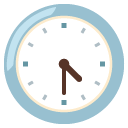


Appearance varies by platform and device. Google Noto, Twemoji, and OpenMoji are open-source.