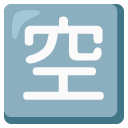
🈳
The Emoji
Japanese “vacancy” Button
U+1F233 · :japanese_vacancy_button:
Trend 8
Meaning layers
- interpretation
- Gen Z rarely uses this emoji organically; when used, it ironically signals that someone has 'nothing going on' emotionally or socially — a vacancy in their personality or schedule.
- tiktok usage
- Occasionally dropped in comments to mock someone who seems empty-headed or emotionally unavailable, or as self-deprecating humor about having no plans.
- irony level
- 8 / 10
Platform meanings
- meaning
- Signals emptiness, availability, or ironic vacancy — used to comment on someone emotionally unavailable or a space left open.
- trend usage
- Niche usage in 'rating your friends' trends or 'things that describe me' formats, where creators include this to humorously label their empty schedule or emotional state.
- hashtags
- #vacancy#emptysoul#nothinghere#japaneseemoji#rare emoji
- virality score
- 12 / 100
Cultural meanings
🇺🇸
Western / Gen-Z
Largely unknown or treated as an ironic novelty; when used, it signals emotional or intellectual vacancy in a self-deprecating or sarcastic way.
🇵🇰
Pakistan & India
Not commonly used; may be mistaken for a random foreign character, though Japanese pop culture fans might recognize it from manga or anime contexts.
🌍
Middle East
Rarely used and often unrecognized; in tech-savvy or K/J-pop fan communities it might appear as an aesthetic character without deep meaning.
🌐
Global Neutral
Internationally neutral but low comprehension — most non-East-Asian users see it as an unrecognizable foreign symbol rather than a meaningful emoji.
🇧🇩
Bangladesh
Almost entirely unused in everyday digital communication; might appear in academic or language-learning contexts about Japanese script.
🇱🇰
Sri Lanka
Extremely niche usage; occasionally seen in Japanese culture fan communities or among those studying Japanese language.
🇨🇳
China
Recognized as Japanese kanji '空' (kōng in Mandarin, meaning empty/sky); carries natural linguistic meaning and might be used to indicate emptiness or openness.
🇯🇵
Japan
Highly recognizable as a standard signage symbol seen on parking lots, hotels, and public facilities — conveys straightforward practical meaning of 'available' or 'vacant.'
🇰🇷
South Korea
Partially recognized due to shared kanji heritage (공, gong — empty); used among those familiar with Japanese or in contexts referencing Japanese signage culture.
🇹🇼
Taiwan
Well understood as the Traditional Chinese character 空 meaning empty or available; used authentically in contexts signaling availability or open space.
🇭🇰
Hong Kong
Recognized through Cantonese character knowledge (空, hùng — empty); naturally understood as vacancy or availability, sometimes used in practical communication.
🇵🇭
Philippines
Very niche recognition; primarily seen in Japanese cultural fan communities or among OFWs who have worked in Japan and encountered this signage.
🇮🇩
Indonesia
Largely unrecognized by the general public; appears occasionally in Japanese language learning communities or J-culture fan groups.
🇹🇭
Thailand
Recognized mainly within Japanese language study circles and anime communities; otherwise treated as an exotic or decorative foreign symbol.
🇻🇳
Vietnam
Uncommon in everyday use; Vietnamese kanji learners (chữ Nôm heritage) might recognize the character, but practical usage remains minimal.
🇲🇾
Malaysia
Niche usage limited to Japanese culture enthusiasts; occasionally appears in discussions about Japanese signs encountered during travel to Japan.
🇸🇦
Saudi Arabia
Virtually unknown outside of tech-enthusiast or Japan-oriented communities; treated as an unreadable foreign character by most users.
🇦🇪
UAE
In the UAE's multicultural digital space, it may appear among Japanese expatriates or in Japanese restaurant and hospitality communications.
🇪🇬
Egypt
Extremely rare usage; might appear in academic contexts about Japanese writing systems or among anime enthusiasts exploring obscure emoji.
🇹🇷
Turkey
Uncommon but occasionally used in Japanese language learning communities; Turkey has a growing anime fanbase that may encounter this symbol.
🇮🇷
Iran
Very rare; the anime and manga community in Iran occasionally uses Japanese-origin emoji for aesthetic purposes, but this specific one is highly niche.
🇳🇬
Nigeria
Almost nonexistent in everyday use; might appear in tech-forward communities or among Nigerian students studying Japanese.
🇿🇦
South Africa
Rare usage; recognized primarily in Japanese cultural interest groups or by individuals who have traveled to Japan.
🇬🇧
UK & Ireland
Treated as an obscure quirky emoji; occasionally used ironically by those who know Japanese or want to signal something is 'vacant' in a tongue-in-cheek way.
🇫🇷
France
France has a notable interest in Japanese culture (Japanophilia is strong), so this emoji gets slightly more traction than in other Western European nations, particularly among manga fans.
🇩🇪
Germany
Very rarely used; might appear in precise, organized contexts to signal an available slot — fitting German appreciation for clear availability signage.
🇪🇸
Spain & Italy
Mostly unrecognized; used occasionally by Japanese culture enthusiasts or those who have traveled to Japan and encountered this symbol on signs.
🇧🇷
Brazil
Brazil has one of the largest Japanese diaspora communities globally, so this emoji sees slightly more authentic recognition than in other Latin American countries.
🇲🇽
Mexico
Rarely used outside of Japanese cultural fan communities; the growing anime fanbase in Mexico may encounter it but seldom adopts it in communication.
🌎
Latin America
Across Latin America, very niche usage; primarily limited to Japanese diaspora communities and anime enthusiasts who appreciate authentic Japanese symbols.
🇦🇺
Australia & NZ
Occasionally used among the Japanese expatriate community and anime fans; otherwise treated as an unusual and exotic symbol by the general population.
How its meaning shifted
- 2010
Introduced as part of early Unicode emoji sets to support Japanese mobile carrier compatibility; used almost exclusively in Japanese digital communication for practical signage purposes.
- 2015
Began appearing on non-Japanese platforms as emoji sets expanded globally; largely misunderstood outside Japan and treated as a mysterious foreign character.
- 2020
Gained minor ironic usage in Western internet culture as a symbol of emptiness or vacancy; featured in 'obscure emoji' listicles and niche meme formats.
- 2026
Remains a niche and rarely used emoji globally; retains authentic meaning in Japanese digital contexts while serving primarily as an ironic or aesthetic symbol in Western internet culture.
See it on every platform
Adjacent emojis
Share & embed
Frequently asked
01What does the 🈳 Japanese “vacancy” Button emoji mean?
The 🈳 emoji depicts the Japanese kanji character '空' (kū/sora), meaning 'empty' or 'vacancy,' enclosed in a square button. It is used to indicate availability, open slots, or vacant spaces.
02What does 🈳 mean on TikTok?
Signals emptiness, availability, or ironic vacancy — used to comment on someone emotionally unavailable or a space left open.
03What does 🈳 mean on WhatsApp?
Almost never used in casual chats; if sent, it confuses most recipients as it is not widely recognized outside Japan-specific contexts.
04What does 🈳 mean in Gen-Z slang?
Gen Z rarely uses this emoji organically; when used, it ironically signals that someone has 'nothing going on' emotionally or socially — a vacancy in their personality or schedule.
05Is the 🈳 emoji safe to use?
Indicates vacancy, availability, or open space — completely benign and practical in its original intent.
06What does 🈳 mean in texting?
The concept of vacancy triggers feelings of openness or loneliness depending on context. Psychologically, it can represent a void waiting to be filled or a clean slate free of burden.
07What is the shortcode for 🈳?
The shortcode for Japanese “vacancy” Button is :japanese_vacancy_button:
08What does 🈳 mean in dating?
Rarely used flirtatiously, but could cheekily signal 'I'm single and available' — a vacancy in the heart open for business.
Safety & usage
- Safe meaning
- Indicates vacancy, availability, or open space — completely benign and practical in its original intent.
- Caution
- In rare ironic usage, could be deployed to insult someone as 'empty-headed' or emotionally hollow, though this is uncommon and mild.
No significant safety concerns. The emoji is largely misunderstood globally, which limits both its positive and negative misuse potential. Minimal risk of offensive usage.
How it looks across platforms


Appearance varies by platform and device. Google Noto, Twemoji, and OpenMoji are open-source.