👩🏿❤️💋👩🏽
The Emoji
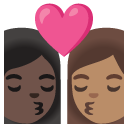
Kiss: Woman, Woman, Dark Skin Tone, Medium Skin Tone
U+1F469 U+1F3FF U+200D U+2764 U+FE0F U+200D U+1F48B U+200D U+1F469 U+1F3FD · :kiss_woman_woman_dark_skin_tone_medium_skin_tone:
Trend 68
Meaning layers
- interpretation
- Used to celebrate WLW (women loving women) relationships, especially across different racial backgrounds. A powerful symbol of queer love and interracial romance without apology.
- tiktok usage
- Appears in WLW couple content, 'couple goals' videos, pride content, and interracial relationship celebration videos. Often used in captions like 'she's mine 👩🏿❤️💋👩🏽'.
- irony level
- 1 / 10
Platform meanings
- meaning
- Symbol of WLW love and interracial queer relationships, used in couple content and pride videos
- trend usage
- Appears in WLW couple POVs, pride month trends, 'meet my girlfriend' reveal videos, and interracial relationship appreciation content
- hashtags
- #WLW#QueerCouple#LesbiansOfTikTok#InterracialCouple#PrideMonth
- virality score
- 72 / 100
Cultural meanings
🇺🇸
Western / Gen-Z
Widely embraced as a positive symbol of WLW love and interracial queer relationships; considered a normalized, celebratory emoji with strong visibility politics. Gen Z uses it matter-of-factly alongside other relationship emojis.
🇵🇰
Pakistan & India
Rarely used openly due to significant social stigma around same-sex relationships; may be used privately among LGBTQ+ individuals in urban, progressive circles or within secure messaging. Public use carries social risk.
🌍
Middle East
Largely avoided in public digital spaces due to legal and social prohibitions on same-sex relationships across most of the region; used underground within private LGBTQ+ networks or by diaspora communities online.
🌐
Global Neutral
Universally understood as representing a kiss between two women; its reception varies dramatically by regional and cultural context but its visual meaning is consistent across platforms globally.
🇧🇩
Bangladesh
Rarely used publicly due to social conservatism and legal restrictions on same-sex relationships; may circulate privately among queer youth in online spaces but carries significant risk if used openly.
🇱🇰
Sri Lanka
Used cautiously within urban progressive circles; LGBTQ+ rights are limited and social acceptance is mixed, so public use remains uncommon though online queer communities are growing.
🇨🇳
China
LGBTQ+ content faces increasing censorship on Chinese platforms; this emoji may be filtered or flagged on domestic platforms like WeChat and Weibo, though it is used by queer communities on VPN-accessible international platforms.
🇯🇵
Japan
Used within Japan's active yuri (WLW) fanbase and LGBTQ+ communities; Japan has a complex relationship with queer visibility — culturally tolerated in certain contexts but not legally recognized in marriage, so usage is community-specific.
🇰🇷
South Korea
Used by LGBTQ+ South Koreans and allies, particularly younger generations influenced by global queer culture; faces significant social conservatism but has a vocal queer community online, especially on Twitter and Instagram.
🇹🇼
Taiwan
Widely accepted and used positively — Taiwan is the first Asian country to legalize same-sex marriage, making this emoji a celebration of love without significant social taboo.
🇭🇰
Hong Kong
Used openly by LGBTQ+ residents and activists; Hong Kong has a relatively visible queer community though political climate has shifted. Used in pride contexts and relationship expression.
🇵🇭
Philippines
Mixed usage — Filipino LGBTQ+ culture is vibrant and WLW couples are relatively visible, but deep Catholic social values mean public use can still invite commentary. Used freely in LGBTQ+ digital spaces.
🇮🇩
Indonesia
Largely avoided in public due to strong social and religious conservatism, particularly in Islamic-majority areas; used privately within underground LGBTQ+ digital communities.
🇹🇭
Thailand
Used within Thailand's active LGBTQ+ community — Thailand has high cultural visibility for queer identities, especially in media; this emoji is used in romantic and celebratory contexts by WLW individuals.
🇻🇳
Vietnam
Used cautiously; Vietnam has decriminalized homosexuality but same-sex marriage is not recognized, and social acceptance is mixed. Urban youth use it within queer online spaces.
🇲🇾
Malaysia
Avoided publicly due to legal prohibitions and strong social stigma around same-sex relationships; used privately within the LGBTQ+ underground community.
🇸🇦
Saudi Arabia
Extremely rarely used publicly due to legal criminalization of same-sex relationships; associated with significant legal and social risk if used openly.
🇦🇪
UAE
Similar to Saudi Arabia — rarely used publicly given legal restrictions; used privately by LGBTQ+ expats and residents within closed digital communities.
🇪🇬
Egypt
Avoided in public digital spaces due to social conservatism and legal risks for LGBTQ+ individuals; private usage exists within underground queer communities.
🇹🇷
Turkey
Was used more openly before increasing social conservatism; still used by LGBTQ+ Turks online, particularly on Twitter where queer communities remain vocal despite growing restrictions.
🇮🇷
Iran
Extremely rare in public use due to severe legal prohibitions; may circulate in diaspora communities or within extremely private digital spaces.
🇳🇬
Nigeria
Rarely used openly due to strict anti-LGBTQ+ laws and strong social stigma; used privately within small underground queer communities or by diaspora Nigerians abroad.
🇿🇦
South Africa
Relatively open usage — South Africa has the most progressive LGBTQ+ legal framework in Africa, with same-sex marriage legal since 2006. Used by WLW couples and allies freely in urban areas.
🇬🇧
UK & Ireland
Used openly and positively in both countries which have strong LGBTQ+ rights and social acceptance; common in couple posts, pride content, and everyday queer expression.
🇫🇷
France
Used freely in France's socially liberal context; appears in couple content, pride celebrations, and LGBTQ+ visibility posts without significant taboo.
🇩🇪
Germany
Widely accepted and used positively; Germany has strong LGBTQ+ legal protections and social acceptance, making this emoji common in queer couple and pride content.
🇪🇸
Spain & Italy
Spain uses it openly with strong LGBTQ+ acceptance; Italy has more mixed reception due to stronger Catholic social influence, though younger Italians use it freely in urban contexts.
🇧🇷
Brazil
Brazil has a large and visible LGBTQ+ community and this emoji is used extensively in queer couple content, pride celebrations, and relationship expression, particularly in major cities.
🇲🇽
Mexico
Used actively within Mexico's growing LGBTQ+ visibility movement; urban areas are increasingly affirming while more rural areas retain conservative views, creating a varied usage landscape.
🌎
Latin America
Usage varies significantly by country — more open in Argentina (which has progressive LGBTQ+ laws) and urban areas across the region; more cautious in socially conservative countries.
🇦🇺
Australia & NZ
Used openly and positively in both countries with strong LGBTQ+ rights frameworks and social acceptance; common in couple content, pride events, and everyday queer expression.
How its meaning shifted
- 2010
This specific ZWJ sequence did not exist in 2010; early emoji sets had no same-sex couple representation at all, let alone skin tone variations. Queer couples had no digital pictographic representation.
- 2015
Basic same-sex couple emojis were introduced around this period but without skin tone combinations; this specific sequence was not yet available. LGBTQ+ advocates were pushing for more inclusive emoji options.
- 2020
Multi-skin-tone ZWJ couple sequences including same-sex variants became more widely supported across platforms; used by WLW couples to represent their actual relationships with matching skin tones, gaining traction in pride and visibility content.
- 2026
Fully mainstream within LGBTQ+ digital spaces; used naturally alongside other couple emojis without special commentary needed in progressive communities. Renders correctly across all major platforms and is deeply embedded in WLW digital culture and interracial queer relationship expression.
See it on every platform
Compare with
Adjacent emojis
- Opposite
- no entrybroken heartkiss man man
- Often confused with
- two women holding handswoman dark skin tonekiss mark
Share & embed
Frequently asked
01What does the 👩🏿❤️💋👩🏽 Kiss: Woman, Woman, Dark Skin Tone, Medium Skin Tone emoji mean?
A kiss emoji depicting two women with dark skin tone and medium skin tone, formed by combining woman, dark skin tone, heart, kiss mark, and woman with medium skin tone via ZWJ sequence.
02What does 👩🏿❤️💋👩🏽 mean on TikTok?
Symbol of WLW love and interracial queer relationships, used in couple content and pride videos
03What does 👩🏿❤️💋👩🏽 mean on WhatsApp?
Sent between partners as a digital kiss and romantic affirmation, especially meaningful when skin tones reflect the real couple
04What does 👩🏿❤️💋👩🏽 mean in Gen-Z slang?
Used to celebrate WLW (women loving women) relationships, especially across different racial backgrounds. A powerful symbol of queer love and interracial romance without apology.
05Is the 👩🏿❤️💋👩🏽 emoji safe to use?
A representation of romantic love between two women of different skin tones; used for relationship expression, pride, and LGBTQ+ visibility.
06What does 👩🏿❤️💋👩🏽 mean in texting?
Carries deep emotional weight for LGBTQ+ individuals, representing both personal love and broader social visibility. For many, using this specific emoji is an act of self-affirmation and queer pride, particularly when it reflects their real-life relationship's skin tones.
07What is the shortcode for 👩🏿❤️💋👩🏽?
The shortcode for Kiss: Woman, Woman, Dark Skin Tone, Medium Skin Tone is :kiss_woman_woman_dark_skin_tone_medium_skin_tone:
08What does 👩🏿❤️💋👩🏽 mean in dating?
Sent between WLW partners or crushes as a direct, unambiguous declaration of romantic interest and affection. More intimate than a simple heart.
Safety & usage
- Safe meaning
- A representation of romantic love between two women of different skin tones; used for relationship expression, pride, and LGBTQ+ visibility.
- Caution
- Rarely weaponized toxically; may be used to mock or troll in homophobic or racist contexts, or used to fetishize queer interracial relationships in an objectifying way.
Users in countries with anti-LGBTQ+ laws should be aware of risks when using this emoji publicly. In some contexts it may attract harassment from homophobic actors. The emoji's specificity (WLW + interracial) means it can attract both racist and homophobic hostility simultaneously in certain online spaces.
How it looks across platforms
Appearance varies by platform and device. Google Noto, Twemoji, and OpenMoji are open-source.