🧗🏽♂️
The Emoji
Man Climbing: Medium Skin Tone
U+1F9D7 U+1F3FD U+200D U+2642 U+FE0F · :man_climbing_medium_skin_tone:
Trend 52
Meaning layers
- interpretation
- Used to signal grinding, pushing through challenges, leveling up, or literally 'climbing' toward goals. Also used ironically for small mundane efforts.
- tiktok usage
- Appears in gym motivation content, hustle culture edits, and 'glow-up' transformation videos as a symbol of upward momentum.
- irony level
- 4 / 10
Platform meanings
- meaning
- Represents hustle, self-improvement, and physical or metaphorical upward movement. Frequently in workout and goal-setting videos.
- trend usage
- Paired with 'sigma grindset' content, POV climbing challenges, and motivational montages set to trending audio.
- hashtags
- #RockClimbing#ClimbingLife#GrindSeason#FitnessTok#ClimberTikTok
- virality score
- 58 / 100
Cultural meanings
🇺🇸
Western / Gen-Z
Strongly associated with hustle culture aesthetics, outdoor adventure identity, and metaphorical self-improvement narratives on social media.
🇵🇰
Pakistan & India
Primarily interpreted as a fitness or outdoor adventure symbol; also used culturally to represent ambition and upward social mobility.
🌍
Middle East
Used to represent athletic activity and aspiration; the medium skin tone makes it relatable and often preferred over lighter variants.
🌐
Global Neutral
Universally understood as someone climbing — whether literally for sport or metaphorically for personal or professional growth.
🇧🇩
Bangladesh
Mostly interpreted as a physical activity or sports emoji; less common but gaining traction among urban youth fitness communities.
🇱🇰
Sri Lanka
Used in fitness and sports contexts, particularly among younger populations engaging with international social media trends.
🇨🇳
China
Associated with outdoor sports culture and the growing rock climbing scene; used in fitness and extreme sports communities.
🇯🇵
Japan
Connected to the growing popularity of bouldering gyms; used precisely for climbing-related content with minimal metaphorical extension.
🇰🇷
South Korea
Popular among outdoor and fitness-oriented youth; also used metaphorically for academic or career hustle in competitive culture.
🇹🇼
Taiwan
Used in adventure sports and fitness contexts; Taiwan's growing climbing community embraces it as a community symbol.
🇭🇰
Hong Kong
Associated with urban climbing gyms and outdoor hiking culture unique to Hong Kong's geography and active lifestyle scene.
🇵🇭
Philippines
Primarily literal, representing outdoor adventure and extreme sports; also used by OFW communities metaphorically for 'climbing up' in life.
🇮🇩
Indonesia
Used in outdoor and nature adventure communities; Indonesia's rich mountaineering culture gives it strong literal resonance.
🇹🇭
Thailand
Connected to the vibrant rock climbing tourism scene in Krabi and Chiang Mai; used in adventure travel content.
🇻🇳
Vietnam
Mostly used in sport and adventure contexts by urban youth; also metaphorically for perseverance in competitive environments.
🇲🇾
Malaysia
Used in outdoor recreation and fitness communities; Malaysia's cave and cliff climbing spots give it strong cultural relevance.
🇸🇦
Saudi Arabia
Gaining popularity with Vision 2030 promoting active lifestyles; used by youth in fitness and sports-related social posts.
🇦🇪
UAE
Used among the active expat and local youth communities engaging in indoor climbing gyms and desert adventure sports.
🇪🇬
Egypt
Primarily literal in sports and adventure travel contexts; also used metaphorically for ambition among younger social media users.
🇹🇷
Turkey
Popular in outdoor and trekking communities; Turkey's diverse climbing landscapes make it a recognizable sports symbol.
🇮🇷
Iran
Used in sports and outdoor adventure contexts; mountain climbing has deep cultural roots in Iran, lending the emoji strong resonance.
🇳🇬
Nigeria
Used metaphorically for hustle, ambition, and 'climbing up' socially or economically — a powerful symbol of upward mobility.
🇿🇦
South Africa
Associated with the thriving outdoor adventure culture including Table Mountain; used in fitness and tourism content.
🇬🇧
UK & Ireland
Used in outdoor and fitness contexts with a dry humor undercurrent; also metaphorically for 'scaling the corporate ladder' jokes.
🇫🇷
France
Connected to France's strong alpine and climbing culture; used authentically in sports communities and metaphorically for ambition.
🇩🇪
Germany
Associated with precise, disciplined athletic pursuits; used in fitness contexts and metaphorically for methodical career progress.
🇪🇸
Spain & Italy
Used in outdoor adventure and hiking contexts; the Mediterranean climbing scene gives it authentic cultural grounding.
🇧🇷
Brazil
Popular in outdoor sports communities alongside Brazil's natural landscape culture; also used to symbolize ambition and drive.
🇲🇽
Mexico
Used in fitness and adventure contexts; metaphorically embraced in discussions about overcoming economic or social obstacles.
🌎
Latin America
Broadly used across Latin America as a symbol of resilience, hustle, and upward aspiration, resonating with diverse socioeconomic narratives.
🇦🇺
Australia & NZ
Strongly associated with outdoor adventure culture; widely used in climbing, hiking, and extreme sports communities across both countries.
How its meaning shifted
- 2010
The climbing emoji did not yet exist; rock climbing was represented through text descriptions or generic sports symbols.
- 2015
Climbing emojis were introduced in 2017, so no usage existed; concept was beginning to gain emoji proposal traction.
- 2020
Gained usage during the pandemic as indoor climbing gyms surged in popularity and people sought outdoor escapism; used both literally and motivationally.
- 2026
Firmly embedded in fitness, hustle culture, and outdoor adventure social media lexicon; used both sincerely and ironically across all major platforms.
See it on every platform
Adjacent emojis
- Often confused with
- person runningperson cartwheelingperson golfing
- Can replace
- mountainflexed bicepsperson hiking
Share & embed
Frequently asked
01What does the 🧗🏽♂️ Man Climbing: Medium Skin Tone emoji mean?
A man with medium skin tone climbing a rock wall or cliff face, depicted in a climbing harness or free-climbing posture.
02What does 🧗🏽♂️ mean on TikTok?
Represents hustle, self-improvement, and physical or metaphorical upward movement. Frequently in workout and goal-setting videos.
03What does 🧗🏽♂️ mean on WhatsApp?
Signals that you're working hard, making progress, or literally going climbing.
04What does 🧗🏽♂️ mean in Gen-Z slang?
Used to signal grinding, pushing through challenges, leveling up, or literally 'climbing' toward goals. Also used ironically for small mundane efforts.
05Is the 🧗🏽♂️ emoji safe to use?
A wholesome representation of rock climbing as a sport, fitness activity, or metaphor for ambition and perseverance.
06What does 🧗🏽♂️ mean in texting?
Evokes the psychological concept of mastery motivation — the intrinsic drive to overcome obstacles and achieve competence through effort.
07What is the shortcode for 🧗🏽♂️?
The shortcode for Man Climbing: Medium Skin Tone is :man_climbing_medium_skin_tone:
08What does 🧗🏽♂️ mean in dating?
Can be used flirtatiously to suggest someone is 'climbing' their way into your heart, or to hint at shared outdoor adventure interests.
Safety & usage
- Safe meaning
- A wholesome representation of rock climbing as a sport, fitness activity, or metaphor for ambition and perseverance.
- Caution
- Rarely used in toxic contexts; could theoretically be used sarcastically to mock someone for overreaching or social climbing.
Generally safe and positive. No significant misuse patterns documented. Skin tone variants should be used respectfully and inclusively.
How it looks across platforms
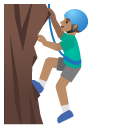
Appearance varies by platform and device. Google Noto, Twemoji, and OpenMoji are open-source.