🧚🏿♂️
The Emoji
Man Fairy: Dark Skin Tone
U+1F9DA U+1F3FF U+200D U+2642 U+FE0F · :man_fairy_dark_skin_tone:
Trend 52
Meaning layers
- interpretation
- Used to represent someone who is whimsical, unbothered, or living in their own magical world. Also used ironically to call out someone being delusional or out of touch with reality.
- tiktok usage
- Appears in videos about escapism, fantasy aesthetics, or when someone is pretending a problem doesn't exist. Often paired with dreamy edits or dark fantasy content.
- irony level
- 6 / 10
Platform meanings
- meaning
- Represents fantasy energy, dark aesthetic content, or ironic detachment from reality. Also used in Afrofuturism and Black fantasy creator communities.
- trend usage
- Used in 'villain era', 'dark fairy' transformation trends, and ironic 'I don't care' vibes. Paired with moody audio and dark visual edits.
- hashtags
- #DarkFairy#FairyCore#BlackFantasy#Afrofuturism#MainCharacter
- virality score
- 58 / 100
Cultural meanings
🇺🇸
Western / Gen-Z
Widely used in ironic memes about delusion and accountability dodging, but also genuinely embraced in Black fantasy and Afrofuturism communities. Carries dual weight of sarcasm and sincere cultural pride.
🇵🇰
Pakistan & India
Rarely used due to limited cultural familiarity with the fairy archetype in this masculine form. May be seen as childish or confusing; occasionally used by younger urban users into Western fantasy media.
🌍
Middle East
Uncommon in daily use; fairy mythology is not central to regional folklore. May be used by younger users familiar with Western pop culture, often without the ironic layer understood in the West.
🌐
Global Neutral
Understood primarily at face value as a male fairy character with dark skin tone. The ironic and cultural subtext is largely lost outside English-speaking Western contexts.
🇧🇩
Bangladesh
Very limited usage; the fairy concept doesn't directly translate to local folklore (Peri or Jinn are closer analogues). Younger Gen Z users may use it in fantasy fandom contexts.
🇱🇰
Sri Lanka
Rarely used in mainstream communication. May appear among young people engaged with K-pop, anime, or Western fantasy fandoms where such characters are recognized.
🇨🇳
China
Extremely limited usage in Chinese social media. The concept of a male fairy (仙子) exists in Chinese mythology but the emoji's design doesn't map cleanly. Occasionally used in fandom communities.
🇯🇵
Japan
Has some resonance due to Japan's rich tradition of magical beings (妖精, yōsei). May be used in fantasy game or manga communities, though skin tone modifiers are less commonly applied in Japanese emoji culture.
🇰🇷
South Korea
Used occasionally in K-fantasy fandom spaces and among fans of dark fantasy webtoons. The dark skin tone representation is sometimes highlighted positively in diversity conversations.
🇹🇼
Taiwan
Similar to broader East Asian usage — found in fantasy fandom circles and among younger users familiar with Western emoji conventions. Skin tone diversity is noted but not always the primary focus.
🇭🇰
Hong Kong
More exposure to Western internet culture means slightly broader recognition. Used in fantasy fandom content and occasionally in ironic internet humor by younger users.
🇵🇭
Philippines
Has more exposure through Western pop culture and fantasy media. Used in Filipino fantasy fandom communities and occasionally in humorous contexts about someone being unrealistic or overly romantic.
🇮🇩
Indonesia
Limited mainstream use but appears in fantasy-loving online communities. Indonesia's rich mythology (Peri, Jin) gives some context, though the visual representation differs from local tradition.
🇹🇭
Thailand
Occasionally used among Thai youth engaged with Western fantasy content or gaming. Thai fairy/spirit mythology provides some cultural overlap, though the emoji is seen as distinctly Western.
🇻🇳
Vietnam
Minimal usage outside of Western fantasy fandom groups. May appear in youth-oriented social media when engaging with global fantasy trends or ironic meme culture.
🇲🇾
Malaysia
Limited but growing usage among Malaysian youth connected to global internet culture. May appear in fantasy gaming communities or humorous contexts about someone being 'too dreamy'.
🇸🇦
Saudi Arabia
Very limited usage due to cultural and religious context around mythological creatures and gender representation. May appear among younger, internationally educated users consuming Western media.
🇦🇪
UAE
Slightly more exposure due to the cosmopolitan, international population. Used occasionally by younger expats and locals familiar with Western internet culture, particularly in fantasy or gaming contexts.
🇪🇬
Egypt
Minimal mainstream usage. May appear among Egyptian youth engaged with global fantasy media. Local concepts like djinn provide some mythological bridge but the emoji remains distinctly foreign.
🇹🇷
Turkey
Moderate awareness among Turkish youth who consume Western pop culture and gaming content. Used occasionally in fantasy fandom spaces and ironically in meme culture.
🇮🇷
Iran
Very limited usage. Strong traditions of Persian fairy mythology (Peri) exist but the emoji's presentation doesn't align with those archetypes. Appears rarely among Western-media-consuming youth.
🇳🇬
Nigeria
Growing usage especially in Afrofuturism and Black fantasy communities where Nigerian creators are actively reclaiming and reimagining mythological imagery. The dark skin tone is particularly resonant and celebrated.
🇿🇦
South Africa
Used with meaningful cultural weight in Black South African creative communities engaging with Afrofuturism and pan-African fantasy storytelling. The representation aspect is frequently highlighted.
🇬🇧
UK & Ireland
Well-understood given Britain and Ireland's rich fairy folklore tradition (Celtic, Saxon). Used both sincerely in fantasy content and ironically in internet humor, with awareness of the skin tone's representational significance.
🇫🇷
France
Moderate usage among French Gen Z familiar with Western internet culture. The fairy archetype has European roots France recognizes; the dark skin modifier adds a diversity dimension French users note in representation discussions.
🇩🇪
Germany
Used in fantasy gaming and fandom communities. German internet culture appreciates the ironic usage in meme contexts; the representation angle resonates in diversity-forward online spaces.
🇪🇸
Spain & Italy
Moderate usage in fantasy fandom and gaming communities. Mediterranean fairy mythology provides some cultural context; the dark skin modifier is recognized as a diversity statement in media conversations.
🇧🇷
Brazil
Active usage in Brazilian fantasy fandom and Afro-Brazilian cultural spaces where mythological reimagining is vibrant. The dark skin tone carries special resonance in conversations about Afro-Brazilian representation in fantasy.
🇲🇽
Mexico
Used among younger Mexican users into fantasy media and gaming. Indigenous mythological traditions provide some cultural context; the emoji appears in fantasy fandom and occasionally in ironic meme usage.
🌎
Latin America
Broadly used in fantasy fandom communities across Latin America. The dark skin tone is recognized and celebrated in spaces discussing Afro-Latinx representation in mythological and fantasy contexts.
🇦🇺
Australia & NZ
Well-understood in the Australian and NZ context given strong British cultural influence and fairy folklore familiarity. Used both genuinely in fantasy content and ironically in meme culture, with awareness of Indigenous representation nuances.
How its meaning shifted
- 2010
This emoji did not exist in 2010. Emoji skin tone modifiers and the fairy emoji itself had not yet been introduced to the Unicode standard.
- 2015
The fairy emoji itself was not yet standardized. Skin tone modifiers were introduced in 2015 but applied only to existing human-form emojis, not yet the fairy.
- 2020
The man fairy with dark skin tone became more commonly used following increased attention to diversity in emoji representation. Found primarily in fantasy communities and early Afrofuturism social media spaces.
- 2026
Established dual usage: sincere celebration of Black identity in fantasy/mythology by Afrofuturism creators, and ironic deployment in meme culture around delusion, male accountability avoidance, and 'main character syndrome' discourse.
See it on every platform
Adjacent emojis
- Often confused with
- man mage dark skin toneman supervillain dark skin toneangel
Share & embed
Frequently asked
01What does the 🧚🏿♂️ Man Fairy: Dark Skin Tone emoji mean?
A male fairy with dark skin tone, depicted with wings, often wearing fantasy-style clothing. Combines the man emoji, fairy emoji, and dark skin tone modifier.
02What does 🧚🏿♂️ mean on TikTok?
Represents fantasy energy, dark aesthetic content, or ironic detachment from reality. Also used in Afrofuturism and Black fantasy creator communities.
03What does 🧚🏿♂️ mean on WhatsApp?
Playfully used when someone is being whimsical, unbothered, or slightly delusional in group chats.
04What does 🧚🏿♂️ mean in Gen-Z slang?
Used to represent someone who is whimsical, unbothered, or living in their own magical world. Also used ironically to call out someone being delusional or out of touch with reality.
05Is the 🧚🏿♂️ emoji safe to use?
A fantasy fairy character celebrating diverse representation in mythological imagery. Widely used in creative, playful, and Afrofuturism contexts.
06What does 🧚🏿♂️ mean in texting?
The fairy archetype symbolizes a desire to transcend mundane reality. The dark skin tone grounds it in identity affirmation, making it emotionally significant for users who rarely see themselves in fantasy representation.
07What is the shortcode for 🧚🏿♂️?
The shortcode for Man Fairy: Dark Skin Tone is :man_fairy_dark_skin_tone:
08What does 🧚🏿♂️ mean in dating?
Can be used flirtatiously to suggest someone is magical or otherworldly attractive, e.g., 'you're giving fairy energy 🧚🏿♂️'. Sometimes used as a playful compliment.
Safety & usage
- Safe meaning
- A fantasy fairy character celebrating diverse representation in mythological imagery. Widely used in creative, playful, and Afrofuturism contexts.
- Caution
- Can be used to mock or feminize men in a derogatory way, particularly in homophobic or misogynistic online contexts where 'fairy' is used as a slur.
The word 'fairy' has historically been used as a homophobic slur. While the emoji itself is generally safe, context matters — it can be weaponized in toxic communities. Monitor usage in hostile reply chains or targeted harassment threads.
How it looks across platforms
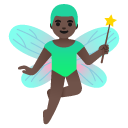
Appearance varies by platform and device. Google Noto, Twemoji, and OpenMoji are open-source.