👷🏿♂️
The Emoji
Man Construction Worker: Dark Skin Tone
U+1F477 U+1F3FF U+200D U+2642 U+FE0F · :man_construction_worker_dark_skin_tone:
Trend 48
Meaning layers
- interpretation
- Used to represent hard work, blue-collar pride, or manual labor. Sometimes used ironically when talking about 'building' something — a relationship, a brand, a side hustle, or even a glow-up.
- tiktok usage
- Appears in 'day in the life' blue-collar videos, trade school hype content, and ironically in 'I'm an architect' meme formats.
- irony level
- 4 / 10
Platform meanings
- meaning
- Symbol of blue-collar hustle, skilled trades pride, and authentic labor representation. Frequently used in trade school and construction TikTok communities.
- trend usage
- Common in #SkillsNotDegrees and #TradeLife content; used in POV videos of construction workers and in diversity-in-trades discussions.
- hashtags
- #TradeLife#ConstructionTikTok#BluCollarPride#SkillsNotDegrees#HardHatLife
- virality score
- 52 / 100
Cultural meanings
🇺🇸
Western / Gen-Z
Seen as a symbol of blue-collar pride and a counter-narrative to college-degree culture; often celebrated ironically or sincerely in trades-vs-degrees debates.
🇵🇰
Pakistan & India
Represents labor workers and construction industry professionals; also carries associations with migrant labor dignity and working-class respect.
🌍
Middle East
Strongly associated with the large construction workforce driving Gulf development; evokes both respect for labor and awareness of migrant worker conditions.
🌐
Global Neutral
Universally recognized as a construction worker symbol; the dark skin tone modifier adds a layer of representation that resonates globally.
🇧🇩
Bangladesh
Highly relevant given Bangladesh's large construction and RMG workforce; often used to represent hard labor and economic hustle.
🇱🇰
Sri Lanka
Associated with construction labor, infrastructure development, and the working-class dignity narrative within local digital communities.
🇨🇳
China
Linked to China's massive infrastructure and construction industry; seen as a symbol of national development pride and blue-collar contribution.
🇯🇵
Japan
Represents the dedicated craftsman archetype valued in Japanese culture; associated with precision, hard work, and professional pride in trades.
🇰🇷
South Korea
Used in contexts discussing construction labor, often tied to narratives around social class and the value of vocational education.
🇹🇼
Taiwan
Represents skilled tradespeople in Taiwan's active construction sector; associated with infrastructure growth and practical work ethic.
🇭🇰
Hong Kong
Connected to Hong Kong's dense construction landscape and the significant migrant construction workforce present in the city.
🇵🇭
Philippines
Strongly associated with OFW (Overseas Filipino Worker) culture, especially the many Filipinos working in construction abroad in the Middle East and beyond.
🇮🇩
Indonesia
Represents construction and infrastructure workers who are central to Indonesia's rapid urban development and public works projects.
🇹🇭
Thailand
Linked to Thailand's booming construction sector and the Burmese and Lao migrant workers who make up much of the labor force.
🇻🇳
Vietnam
Associated with Vietnam's fast-growing construction industry and the working-class pride of those building the country's urban future.
🇲🇾
Malaysia
Commonly connected to the large migrant construction workforce in Malaysia; also represents local trades professionals in digital conversations.
🇸🇦
Saudi Arabia
Carries significant weight given Saudi Arabia's Vision 2030 mega-projects and its reliance on a massive construction workforce, many of whom are dark-skinned migrants.
🇦🇪
UAE
Strongly evokes the construction workforce behind Dubai and Abu Dhabi's skylines; associated with labor rights discussions and migrant worker dignity.
🇪🇬
Egypt
Represents the storied tradition of construction and craftsmanship in Egyptian culture, as well as modern infrastructure workers.
🇹🇷
Turkey
Associated with Turkey's active construction sector and ongoing urban transformation projects; a symbol of the working class.
🇮🇷
Iran
Represents construction laborers and skilled tradespeople within Iran's domestic building industry; tied to economic resilience narratives.
🇳🇬
Nigeria
Celebrated as a symbol of hustle culture and entrepreneurial grit; also tied to discussions about improving infrastructure across the country.
🇿🇦
South Africa
Connected to post-apartheid construction and infrastructure development; the dark skin tone carries particular cultural resonance in discussions of labor equity.
🇬🇧
UK & Ireland
Used in the context of building trades that are culturally respected; associated with immigrant labor communities contributing to British infrastructure.
🇫🇷
France
Linked to France's construction sector and ongoing debates around immigrant workers' contributions to infrastructure and housing.
🇩🇪
Germany
Represents the highly respected Handwerk (craft/trade) tradition in Germany; associated with vocational training pride and skilled labor.
🇪🇸
Spain & Italy
Connected to construction booms and busts that defined economic narratives in the 2000s; used with both pride and irony in labor discussions.
🇧🇷
Brazil
Evokes Brazil's large informal construction workforce and the cultural celebration of working-class hustle and building one's own future.
🇲🇽
Mexico
Strongly associated with construction workers both domestically and in the context of Mexican migrant workers contributing to US infrastructure.
🌎
Latin America
Broadly represents blue-collar labor dignity and the working class across Latin America, where construction remains a primary employment sector.
🇦🇺
Australia & NZ
Associated with the culturally significant 'tradie' (tradesperson) identity, which is highly respected and well-compensated in both countries.
How its meaning shifted
- 2010
Emoji with skin tone modifiers did not yet exist; construction worker emojies were generic yellow-skin defaults with no gender or skin diversity.
- 2015
Skin tone modifiers were introduced by Unicode 8.0; early adoption of diverse skin tone emojis was celebrated but usage was still minimal in mainstream conversations.
- 2020
Gained visibility alongside broader social conversations about racial representation, diversity in media, and blue-collar worker appreciation during the COVID-19 pandemic.
- 2026
Firmly embedded in blue-collar pride culture online; regularly used in trades recruitment content, labor rights discussions, and diversity representation conversations across all platforms.
See it on every platform
Compare with
Adjacent emojis
Share & embed
Frequently asked
01What does the 👷🏿♂️ Man Construction Worker: Dark Skin Tone emoji mean?
A man working in construction, wearing a hard hat, depicted with dark skin tone. This is a ZWJ sequence combining the construction worker emoji with the male gender sign and dark skin tone modifier.
02What does 👷🏿♂️ mean on TikTok?
Symbol of blue-collar hustle, skilled trades pride, and authentic labor representation. Frequently used in trade school and construction TikTok communities.
03What does 👷🏿♂️ mean on WhatsApp?
Indicates someone is working, at a job site, or referencing construction/labor work in conversation.
04What does 👷🏿♂️ mean in Gen-Z slang?
Used to represent hard work, blue-collar pride, or manual labor. Sometimes used ironically when talking about 'building' something — a relationship, a brand, a side hustle, or even a glow-up.
05Is the 👷🏿♂️ emoji safe to use?
Represents a male construction worker with dark skin tone; used to celebrate labor, trades, and workforce diversity in a positive and inclusive way.
06What does 👷🏿♂️ mean in texting?
Evokes a sense of grounded, physical accomplishment and working-class dignity. For many users of color, it also carries a layer of cultural pride in representation.
07What is the shortcode for 👷🏿♂️?
The shortcode for Man Construction Worker: Dark Skin Tone is :man_construction_worker_dark_skin_tone:
08What does 👷🏿♂️ mean in dating?
Rarely used directly in flirting, but might be sent to tease someone who claims to be 'building something great' in their life or career.
Safety & usage
- Safe meaning
- Represents a male construction worker with dark skin tone; used to celebrate labor, trades, and workforce diversity in a positive and inclusive way.
- Caution
- In rare cases, could be used in a condescending or stereotyping manner that reduces dark-skinned individuals to manual labor roles.
Generally safe and positive; however, context matters — using it to stereotype or demean individuals based on race or occupation would be inappropriate.
How it looks across platforms
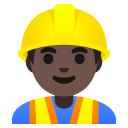
Appearance varies by platform and device. Google Noto, Twemoji, and OpenMoji are open-source.