🧚🏾♂️
The Emoji
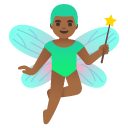
Man Fairy: Medium-dark Skin Tone
U+1F9DA U+1F3FE U+200D U+2642 U+FE0F · :man_fairy_mediumdark_skin_tone:
Trend 55
Meaning layers
- interpretation
- Used to embody magical, carefree, or whimsical energy. Often signals someone who is effortlessly charming, a little chaotic, or operating on their own vibes. Also used to represent a guy who is cute, ethereal, or unbothered by societal norms.
- tiktok usage
- Appears in videos about manifesting, fantasy aesthetics, cottagecore vibes, or when someone is calling themselves or another person magical/unreal. Also used ironically for overly dramatic or flamboyant behavior.
- irony level
- 5 / 10
Platform meanings
- meaning
- Represents magical, whimsical, or ethereal energy. Used in manifesting content, fantasy aesthetic TikToks, and representation videos celebrating dark skin tones in fantasy spaces.
- trend usage
- Featured in #FairyCore and #DarkSkinMagic trends. Used in 'POV you're a fairy' roleplays and cottagecore/dark fantasy crossover aesthetics. Also used ironically in 'unbothered fairy' meme formats.
- hashtags
- #FairyCore#MelaninMagic#DarkSkinFairy#ManifestingVibes#BlackFairyTale
- virality score
- 58 / 100
Cultural meanings
🇺🇸
Western / Gen-Z
Embraced as a symbol of magical self-expression, unbothered energy, and diverse representation in fantasy. Frequently used in manifesting culture and fairycore aesthetics, especially by Black Gen Z creators reclaiming fairy imagery.
🇵🇰
Pakistan & India
Relatively uncommon in mainstream usage; may be used by younger, Westernized, or LGBTQ+ individuals in urban areas to signal whimsy or magical thinking. Could carry subtle connotations of femininity or non-conformity that may be read differently across generational lines.
🌍
Middle East
Rarely used in mainstream communication. May be appreciated aesthetically in fantasy or gaming contexts but could be read as coded LGBTQ+ signaling in some communities, leading to cautious usage.
🌐
Global Neutral
Universally readable as a magical or fantastical figure. The medium-dark skin tone adds a layer of representation significance globally, often appreciated in discussions of diversity in fantasy.
🇧🇩
Bangladesh
Limited usage; primarily among younger, internet-savvy individuals influenced by Western social media. May be used in fantasy fandom spaces or to express whimsical moods.
🇱🇰
Sri Lanka
Niche usage among fantasy fandom communities and LGBTQ+ allies online. Generally interpreted as a whimsical or magical character without strong cultural associations.
🇨🇳
China
Not widely used in Chinese social media like WeChat or Weibo. May appear in gaming and fantasy fandom contexts. The male fairy concept may evoke comparison to xian (celestial beings) in Chinese mythology for culturally aware users.
🇯🇵
Japan
Resonates with anime and manga aesthetics, particularly fantasy genres. May be likened to elf or fairy characters in popular series. The skin tone modifier is less commonly used in Japan where default yellow skin tone emojis are more standard.
🇰🇷
South Korea
Used in fantasy aesthetics and idol fan communities. K-fantasy content has grown, and this emoji fits naturally into magical concept content. Skin tone usage is less common due to limited skin tone diversity normalization in Korean media.
🇹🇼
Taiwan
Appreciated in fantasy game and pop culture communities. Often used in creative and LGBTQ+ friendly spaces in Taiwan, where LGBTQ+ rights are more advanced than neighboring regions.
🇭🇰
Hong Kong
Used in creative, LGBTQ+, and fantasy fandom circles. May carry some resonance with Western fantasy aesthetics consumed by Hong Kong youth.
🇵🇭
Philippines
Connects to local folklore — the Philippines has rich fairy and magical creature traditions (diwata, engkanto). A male dark-skin fairy may be interpreted through this folkloric lens, adding local cultural depth.
🇮🇩
Indonesia
Used in fantasy gaming and anime fan communities. May evoke local spirit/magical being folklore (jin, peri). The skin tone is particularly relevant given Indonesia's diverse population.
🇹🇭
Thailand
Used in fantasy aesthetics and K-pop/anime adjacent fan communities. Thailand's LGBTQ+ visibility means this emoji is comfortably used in queer-friendly online spaces.
🇻🇳
Vietnam
Primarily used in gaming and fantasy fandom contexts. Less common in everyday messaging but appreciated in creative online communities.
🇲🇾
Malaysia
Used cautiously in some communities given conservative social norms, but embraced in gaming, fantasy fandom, and LGBTQ+ ally spaces. The skin tone is locally resonant given Malaysia's multiracial population.
🇸🇦
Saudi Arabia
Uncommon in mainstream use; fantasy creatures are a sensitive subject in some interpretations of Islamic culture. More likely to appear in private gaming or youth fandom contexts.
🇦🇪
UAE
More cosmopolitan usage due to diverse expat population; used in fantasy gaming, creative arts, and representation-positive communities. Less likely in traditional local Emirati communication.
🇪🇬
Egypt
Occasionally used in gaming and fantasy fan communities. The fairy concept maps loosely to mythological magical beings in Arabic folklore, though this emoji is not culturally specific to that tradition.
🇹🇷
Turkey
Used in fantasy game, anime, and creative communities. Turkish youth on social media may use it to signal magical energy or whimsical moods similar to Western Gen Z usage.
🇮🇷
Iran
Niche usage in underground creative and LGBTQ+ communities. Fantasy aesthetics are consumed online despite restrictions, and this emoji circulates in those spaces.
🇳🇬
Nigeria
Significant cultural resonance as part of the Afrofuturism and Black fantasy representation movement. Nigerian youth creators on TikTok and Instagram use it proudly as a symbol of dark skin magic and African fantastical identity.
🇿🇦
South Africa
Used in Black creative communities and LGBTQ+ spaces, particularly in Cape Town and Johannesburg youth culture. Ties into local movements celebrating Black magic and Afrofuturism.
🇬🇧
UK & Ireland
Common in Gen Z usage on TikTok and Twitter/X for fairy aesthetics, manifesting culture, and the 'unbothered fairy' meme. UK Black creatives use it strongly in representation-positive contexts.
🇫🇷
France
Used in fantasy and fairytale aesthetics. French youth on social media may use it in fantastical or whimsical contexts. Less politically charged than in Anglophone spaces but still recognized in representation discussions.
🇩🇪
Germany
Used in fantasy gaming, LGBTQ+ communities, and fairytale-adjacent aesthetics. Germany's rich fairy tale tradition (Grimm) gives the fairy emoji a culturally resonant backdrop.
🇪🇸
Spain & Italy
Used in fantasy aesthetics, gaming culture, and LGBTQ+ communities. Southern European fantasy traditions (elves, sprites) provide cultural context. Skin tone representation appreciated in multicultural urban communities.
🇧🇷
Brazil
Strong resonance in Afro-Brazilian communities celebrating Black magic and representation. Also used in LGBTQ+ culture and fantasy fandom. Brazil's diverse population makes the medium-dark skin tone particularly relevant and celebrated.
🇲🇽
Mexico
Used in fantasy and gaming communities and increasingly in LGBTQ+ spaces. Mexico's rich mythological tradition (duendes, magical creatures) provides a cultural backdrop that makes the fairy concept familiar.
🌎
Latin America
Broadly used in fantasy fandom, LGBTQ+ communities, and Afro-Latino representation spaces across Latin America. The skin tone is particularly significant in celebrating Afro-descendant identities in the region.
🇦🇺
Australia & NZ
Used in Gen Z social media similarly to UK/US contexts — fairy aesthetics, manifesting, LGBTQ+ expression, and diverse representation. Indigenous Australian and Māori communities may interpret magical being imagery through their own cultural lens.
How its meaning shifted
- 2010
This emoji did not exist in 2010. The base fairy emoji and skin tone modifiers were not yet part of Unicode, and the concept of gendered fairy variants was years away from development.
- 2015
Still non-existent as a specific emoji. The fairy emoji itself was not introduced until Unicode 10.0 in 2017. Any fairy representation used different makeshift combinations.
- 2020
Newly introduced and primarily used in fantasy aesthetics, LGBTQ+ representation, and early fairycore aesthetics on TikTok and Instagram. Gaining traction in Black representation spaces pushing for diverse fantasy imagery.
- 2026
Established in manifesting culture, fairycore aesthetics, Afrofuturism, and the 'unbothered fairy' meme ecosystem. A recognized symbol of magical self-expression, dark skin representation in fantasy, and chaotic good energy across major platforms.
See it on every platform
Adjacent emojis
- Often confused with
- angelman dancingperson in lotus position
Share & embed
Frequently asked
01What does the 🧚🏾♂️ Man Fairy: Medium-dark Skin Tone emoji mean?
A male-presenting fairy with medium-dark skin tone, depicted with wings and often holding a wand or magical elements. This is a ZWJ sequence combining the fairy emoji with a male sign and medium-dark skin tone modifier.
02What does 🧚🏾♂️ mean on TikTok?
Represents magical, whimsical, or ethereal energy. Used in manifesting content, fantasy aesthetic TikToks, and representation videos celebrating dark skin tones in fantasy spaces.
03What does 🧚🏾♂️ mean on WhatsApp?
Sent to describe someone as magical, dreamy, or too good to be true. Also used playfully to call someone a trickster or charmer.
04What does 🧚🏾♂️ mean in Gen-Z slang?
Used to embody magical, carefree, or whimsical energy. Often signals someone who is effortlessly charming, a little chaotic, or operating on their own vibes. Also used to represent a guy who is cute, ethereal, or unbothered by societal norms.
05Is the 🧚🏾♂️ emoji safe to use?
A whimsical representation of a male fairy with medium-dark skin tone, used for fantasy aesthetics, magical expression, representation, and playful vibes. Entirely safe for general audiences.
06What does 🧚🏾♂️ mean in texting?
Evokes a sense of escape from reality and childlike wonder. Associated with the Jungian archetype of the Trickster or the Puer Aeternus — the eternal youth who lives outside conventional rules. Using this emoji may signal a desire for magic, lightness, or being seen as enchanting and special.
07What is the shortcode for 🧚🏾♂️?
The shortcode for Man Fairy: Medium-dark Skin Tone is :man_fairy_mediumdark_skin_tone:
08What does 🧚🏾♂️ mean in dating?
Used flirtatiously to suggest someone is enchanting, spellbinding, or out of this world. A playful way to say 'you've bewitched me' or to signal that one is charming and a little mischievous.
Safety & usage
- Safe meaning
- A whimsical representation of a male fairy with medium-dark skin tone, used for fantasy aesthetics, magical expression, representation, and playful vibes. Entirely safe for general audiences.
- Caution
- In rare contexts, may be used mockingly to emasculate or demean men perceived as overly flamboyant or effeminate, particularly in homophobic online spaces.
Generally very safe. Be aware that in certain cultural contexts the emoji may be used to mock gender non-conformity. The skin tone modifier makes it a targeted representation emoji, and misuse in mockery of dark-skinned men or LGBTQ+ individuals is the primary concern.
How it looks across platforms
Appearance varies by platform and device. Google Noto, Twemoji, and OpenMoji are open-source.