💇🏿♂️
The Emoji
Man Getting Haircut: Dark Skin Tone
U+1F487 U+1F3FF U+200D U+2642 U+FE0F · :man_getting_haircut_dark_skin_tone:
Trend 55
Meaning layers
- interpretation
- Used to signal self-care, a fresh cut, or a glow-up moment. Often dropped in contexts where someone is treating themselves or preparing for an event.
- tiktok usage
- Appears in 'before and after' transformation videos, barbershop content, and self-care vlogs. Paired with 'fresh cut hits different' energy.
- irony level
- 2 / 10
Platform meanings
- meaning
- Represents barbershop culture, fresh cuts, self-care routines, and transformation content.
- trend usage
- Frequently used in barbershop POV videos, haircut reveal transitions, and 'getting ready' montages.
- hashtags
- #FreshCut#BarberLife#GlowUp#SelfCare#NewLook
- virality score
- 62 / 100
Cultural meanings
🇺🇸
Western / Gen-Z
Strongly associated with Black barbershop culture, self-care rituals, and the 'fresh cut' confidence boost. Often used with pride and swag.
🇵🇰
Pakistan & India
Represents a visit to the salon or nai (barber), a common social ritual. Skin tone modifier adds representation for South Asian men.
🌍
Middle East
Barbershops are deeply social spaces in Middle Eastern culture; the emoji resonates as a symbol of grooming and community.
🌐
Global Neutral
Universally understood as getting a haircut; the dark skin tone modifier adds diversity representation without altering the core meaning.
🇧🇩
Bangladesh
Reflects the local nai or saloon culture where haircuts are routine and social. Dark skin tone adds relatability for Bangladeshi users.
🇱🇰
Sri Lanka
Used to represent salon or barber visits, a common male grooming routine. Appreciated as a diverse skin tone representation.
🇨🇳
China
Less culturally specific; used literally to denote haircut appointments. Skin tone diversity is less emphasized in typical usage.
🇯🇵
Japan
Used literally for haircut contexts; barbershops (理容室) have a distinct cultural tradition. Diversity emoji usage is growing among younger Japanese users.
🇰🇷
South Korea
Associated with the rising men's grooming culture in Korea. Often used in K-beauty adjacent male grooming content.
🇹🇼
Taiwan
Used straightforwardly for haircut contexts; appreciated as part of global emoji diversity representation.
🇭🇰
Hong Kong
Used in grooming and lifestyle contexts; the barbershop culture in HK has both traditional and modern influences.
🇵🇭
Philippines
Barbershops are highly social community spaces in Filipino culture; this emoji resonates deeply with everyday male grooming rituals.
🇮🇩
Indonesia
Represents the widely popular barbershop scene in Indonesia, which has grown into a significant lifestyle industry.
🇹🇭
Thailand
Used in grooming contexts; Thailand's modern barbershop boom makes this emoji culturally relevant to lifestyle content.
🇻🇳
Vietnam
Reflects common barber visit culture; dark skin tone less personally relatable but appreciated for diversity.
🇲🇾
Malaysia
Barbershops are popular social hubs across Malaysia's diverse communities; the emoji is used casually for grooming updates.
🇸🇦
Saudi Arabia
Barbershops are significant cultural spaces for Saudi men; the emoji represents grooming and social bonding traditions.
🇦🇪
UAE
Used in UAE's cosmopolitan grooming culture; resonates with diverse expat communities and local grooming traditions.
🇪🇬
Egypt
Barbershops are central community spaces in Egyptian culture; this emoji aligns with male grooming and social rituals.
🇹🇷
Turkey
Turkish barbershop (berber) culture is iconic; this emoji connects to a rich tradition of male grooming and social gathering.
🇮🇷
Iran
Used for grooming contexts; the barbershop is a social institution in Iranian male culture.
🇳🇬
Nigeria
Deeply resonant in Nigerian culture where barbershops are hubs of community and style. The dark skin tone makes it particularly relatable and celebrated.
🇿🇦
South Africa
Strongly connects to South African Black barbershop culture and the social significance of grooming. Widely used and relatable.
🇬🇧
UK & Ireland
Used casually for haircut updates; resonates with Black British communities and the vibrant UK barbershop culture scene.
🇫🇷
France
Used for grooming contexts; particularly relevant to Afro-French communities who relate to the dark skin tone representation.
🇩🇪
Germany
Used straightforwardly for haircut appointments; growing barbershop culture in urban Germany increases its relevance.
🇪🇸
Spain & Italy
Used in grooming contexts; Southern European men's strong grooming culture makes this emoji relatable across communities.
🇧🇷
Brazil
Barbershops (barbearias) are culturally significant in Brazil, especially in Afro-Brazilian communities. This emoji resonates strongly with the dark skin tone representation.
🇲🇽
Mexico
Used for haircut and grooming updates; the barber shop is a social staple in Mexican male culture.
🌎
Latin America
Broadly relatable across Latin America where barbershops are community staples; dark skin tone resonates with Afro-Latino communities.
🇦🇺
Australia & NZ
Used casually for haircut updates; resonates with Aboriginal, Māori, and Pacific Islander communities as a more representative emoji.
How its meaning shifted
- 2010
This specific emoji did not exist yet; the base haircut emoji was limited and lacked skin tone or gender modifiers.
- 2015
Skin tone and gender modifiers began rolling out; early adopters started using this combination to celebrate diverse representation in emoji.
- 2020
Widely adopted across Black communities and barbershop culture content, especially during the self-care and wellness content boom of the pandemic era.
- 2026
Embedded in everyday grooming, self-care, and cultural identity expression. A staple in barbershop industry content, Black men's lifestyle spaces, and representation-forward communication.
See it on every platform
Adjacent emojis
- Opposite
- person baldno entrysleeping face
- Often confused with
- woman getting haircut dark skin toneman in tuxedo dark skin tonehaircut
- Can replace
- scissorssparklesflexed biceps dark skin tone
Share & embed
Frequently asked
01What does the 💇🏿♂️ Man Getting Haircut: Dark Skin Tone emoji mean?
A man with dark skin tone receiving a haircut or hair styling service, typically depicted seated with scissors or clippers near the head.
02What does 💇🏿♂️ mean on TikTok?
Represents barbershop culture, fresh cuts, self-care routines, and transformation content.
03What does 💇🏿♂️ mean on WhatsApp?
Telling someone you're at the barber or just got a haircut.
04What does 💇🏿♂️ mean in Gen-Z slang?
Used to signal self-care, a fresh cut, or a glow-up moment. Often dropped in contexts where someone is treating themselves or preparing for an event.
05Is the 💇🏿♂️ emoji safe to use?
Represents self-care, grooming, and barbershop culture in a positive and inclusive way.
06What does 💇🏿♂️ mean in texting?
Haircuts are psychologically tied to identity renewal and confidence boosts. This emoji carries an undertone of treating oneself and feeling refreshed or ready.
07What is the shortcode for 💇🏿♂️?
The shortcode for Man Getting Haircut: Dark Skin Tone is :man_getting_haircut_dark_skin_tone:
08What does 💇🏿♂️ mean in dating?
Sent to signal 'I'm getting cleaned up for you' or 'getting fresh before our date.' Subtle flex of personal grooming effort.
Safety & usage
- Safe meaning
- Represents self-care, grooming, and barbershop culture in a positive and inclusive way.
- Caution
- Rarely used in toxic contexts; could be used mockingly in colorist or appearance-shaming conversations, though this is uncommon.
Generally safe. The skin tone modifier may occasionally attract race-related commentary in toxic online spaces, but the emoji itself carries no inherently harmful meaning.
How it looks across platforms
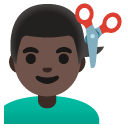
Appearance varies by platform and device. Google Noto, Twemoji, and OpenMoji are open-source.