💇🏽♂️
The Emoji
Man Getting Haircut: Medium Skin Tone
U+1F487 U+1F3FD U+200D U+2642 U+FE0F · :man_getting_haircut_medium_skin_tone:
Trend 55
Meaning layers
- interpretation
- Used to signal a fresh cut, a glow-up moment, or self-care. Also deployed ironically when someone is getting 'cut off' socially or metaphorically trimming toxic people from their life.
- tiktok usage
- Appears in 'fresh cut transformation' videos, before-and-after glow-up content, and ironically in 'cutting people off' narrative videos.
- irony level
- 4 / 10
Platform meanings
- meaning
- Represents a haircut transformation, self-care routine, or barbershop culture content.
- trend usage
- Frequently used in barber POV videos, glow-up transitions, and 'cutting people off' narrative storytelling trends.
- hashtags
- #FreshCut#BarberLife#GlowUp#NewLook#Transformation
- virality score
- 62 / 100
Cultural meanings
🇺🇸
Western / Gen-Z
Strongly associated with barbershop culture, fresh cut confidence, and glow-up moments — a badge of self-care pride. Also used ironically to say someone got 'cut off' socially.
🇵🇰
Pakistan & India
Represents the local nai (barber) experience, a deeply embedded social and grooming ritual — used to casually announce a barbershop visit or fresh look.
🌍
Middle East
Barbershop culture is prominent and respected; this emoji signals grooming pride, often used by young men announcing a fresh shave or haircut before events.
🌐
Global Neutral
Universally understood as representing a man getting a haircut — used across cultures to signal grooming, self-care, or a visit to the barber.
🇧🇩
Bangladesh
Used to represent barber visits, often a communal social activity — signals grooming readiness for celebrations like Eid or weddings.
🇱🇰
Sri Lanka
Signals a trip to the local barber, a routine social event — used casually in chats to update friends on grooming activities.
🇨🇳
China
Represents hair salon culture; men's grooming is increasingly trendy among younger generations — used to signal style consciousness and self-care.
🇯🇵
Japan
Reflects the highly professional and meticulous Japanese barbershop culture — used to express appreciation for precision grooming and aesthetic refinement.
🇰🇷
South Korea
Strongly linked to K-beauty and men's grooming trends; used to signal style updates, new haircuts inspired by K-pop idols, or salon visits.
🇹🇼
Taiwan
Used in casual digital communication to announce a fresh haircut or grooming day, fitting into Taiwan's active men's beauty culture.
🇭🇰
Hong Kong
Reflects the mix of traditional barbershop culture and modern grooming trends — used to signal a style refresh or upscale grooming visit.
🇵🇭
Philippines
Barbershops are popular social hubs; this emoji signals a grooming trip and is used casually in group chats to announce a fresh look.
🇮🇩
Indonesia
Represents the popular barbershop scene, particularly among urban Muslim youth — used to announce grooming sessions before Eid or social events.
🇹🇭
Thailand
Signals a visit to the barber or hair salon, common in Thai men's grooming culture — also used by younger Thais in glow-up content.
🇻🇳
Vietnam
Used to announce barbershop visits in a culture where men's grooming is a routine social activity — also appears in men's style content online.
🇲🇾
Malaysia
Reflects Malaysia's vibrant barbershop scene across ethnic communities — used to signal grooming days, especially before festivals or celebrations.
🇸🇦
Saudi Arabia
Grooming is deeply important culturally; this emoji signals a barber visit and is used proudly, especially ahead of social or religious occasions.
🇦🇪
UAE
Represents the luxury grooming culture in UAE — used among men to signal upscale barber visits, fresh cuts, and polished self-presentation.
🇪🇬
Egypt
Barbershops are central community spaces; this emoji is used casually to announce a grooming session or a new look to friends and family.
🇹🇷
Turkey
Reflects Turkey's iconic berber (barber) culture, one of the world's most respected — used to signal a traditional or modern barbershop experience.
🇮🇷
Iran
Represents men's grooming visits in a culture where barbershops are important social spaces — used casually among friends to announce a fresh cut.
🇳🇬
Nigeria
Barbershop culture is a cornerstone of community life — this emoji signals a fresh cut and is used with pride, often alongside Afro-Caribbean style content.
🇿🇦
South Africa
Represents vibrant township and urban barbershop culture — used to signal grooming pride, especially in youth and hip-hop communities.
🇬🇧
UK & Ireland
Used casually to signal a trip to the barber, often paired with UK barbershop slang — also used ironically in 'cutting people off' humor online.
🇫🇷
France
Reflects the growing men's grooming culture in France — used to signal a coiffeur visit or new style, particularly in urban and fashion-forward communities.
🇩🇪
Germany
Used pragmatically to announce a haircut appointment or fresh look — grooming is practical and the emoji is taken mostly at face value.
🇪🇸
Spain & Italy
Represents the Mediterranean grooming tradition where barbershops are social institutions — used proudly to signal a fresh cut and polished appearance.
🇧🇷
Brazil
Barbershop culture (barbearia) is massive and culturally rich in Brazil — this emoji signals pride in a fresh cut, often tied to fashion and social identity.
🇲🇽
Mexico
Reflects the vibrant barbería culture — used to announce a grooming session, especially ahead of quinceañeras, parties, or important events.
🌎
Latin America
Widely used across Latin America to signal a fresh barbershop visit, a cultural ritual tied to community, style, and masculine identity.
🇦🇺
Australia & NZ
Used casually to announce a haircut or grooming session — also appears in men's lifestyle content and is sometimes used ironically in social media humor.
How its meaning shifted
- 2010
Emoji with skin tone modifiers didn't exist yet — basic haircut emoji were gender-neutral and represented only the act of grooming without identity nuance.
- 2015
The man haircut emoji with skin tone modifiers was newly introduced via Unicode 8.0 — primarily used literally to announce barbershop visits or haircuts.
- 2020
Expanded into self-care culture discourse, glow-up content, and social media transformation trends — medium skin tone variant gained representation visibility.
- 2026
Deeply embedded in barbershop culture content, glow-up meme ecosystems, and 'cutting people off' social narratives — also used in men's wellness and grooming brand communication.
See it on every platform
Adjacent emojis
Share & embed
Frequently asked
01What does the 💇🏽♂️ Man Getting Haircut: Medium Skin Tone emoji mean?
A man with medium skin tone receiving a haircut, typically depicted seated with scissors or clippers near the head, sometimes with a cape.
02What does 💇🏽♂️ mean on TikTok?
Represents a haircut transformation, self-care routine, or barbershop culture content.
03What does 💇🏽♂️ mean on WhatsApp?
Telling friends you're at the barber or just got a haircut.
04What does 💇🏽♂️ mean in Gen-Z slang?
Used to signal a fresh cut, a glow-up moment, or self-care. Also deployed ironically when someone is getting 'cut off' socially or metaphorically trimming toxic people from their life.
05Is the 💇🏽♂️ emoji safe to use?
Represents grooming, self-care, and barbershop culture — entirely safe and positive in standard usage.
06What does 💇🏽♂️ mean in texting?
A haircut often symbolizes a fresh start or reclaiming control — psychologically linked to identity, confidence boosts, and transitional life moments.
07What is the shortcode for 💇🏽♂️?
The shortcode for Man Getting Haircut: Medium Skin Tone is :man_getting_haircut_medium_skin_tone:
08What does 💇🏽♂️ mean in dating?
Used to hint that someone is freshening up before a date — 'getting ready for you 💇🏽♂️' carries a flirtatious undertone of effort and self-presentation.
Safety & usage
- Safe meaning
- Represents grooming, self-care, and barbershop culture — entirely safe and positive in standard usage.
- Caution
- Can be used mockingly to say someone is being 'shaped up' or controlled by another person, or to dismiss someone as being 'cut off'.
No significant NSFW or harmful associations. Occasionally used in mild social mockery contexts but not considered toxic.
How it looks across platforms
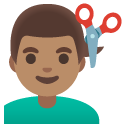
Appearance varies by platform and device. Google Noto, Twemoji, and OpenMoji are open-source.