💆♂️
The Emoji
Man Getting Massage
U+1F486 U+200D U+2642 U+FE0F · :man_getting_massage:
Trend 58
Meaning layers
- interpretation
- Used to express exhaustion, needing a mental break, or treating yourself after a tough day. Also used ironically to say 'I am not okay and I need someone to fix my brain.'
- tiktok usage
- Appears in 'self-care era' content, stress-relief videos, and ironically in 'this is fine' burnout culture posts.
- irony level
- 6 / 10
Platform meanings
- meaning
- Symbol of self-care culture, burnout recovery, and 'soft life' aesthetic; also ironic shorthand for being mentally fried.
- trend usage
- Used in 'soft life' trend videos, morning routine content, mental health check-in videos, and ironic 'I survived Monday' clips.
- hashtags
- #selfcare#softlife#treatyourself#mentalhealthcheck#spyday
- virality score
- 62 / 100
Cultural meanings
🇺🇸
Western / Gen-Z
Ironic burnout currency — used constantly to say 'I survived something stressful and now I need to recover.' Part of the 'soft life' and mental health vocabulary.
🇵🇰
Pakistan & India
Used to signal relaxation after a hard day or week; popular among urban youth in spa and wellness contexts, and occasionally in Bollywood/drama fan circles after an emotional episode.
🌍
Middle East
Associated with hammam culture and traditional spa rituals; used genuinely to reference relaxation, grooming, and self-care which are socially valued in many Gulf communities.
🌐
Global Neutral
Universally understood as relaxation, self-care, or someone getting a head massage; safe and positive across most global contexts.
🇧🇩
Bangladesh
Used among younger urban populations to express tiredness or the desire to relax; not deeply embedded culturally but understood as a self-care signal.
🇱🇰
Sri Lanka
Occasionally used in the context of Ayurvedic treatment culture and traditional massage practices; younger users also use it for general stress relief expression.
🇨🇳
China
Associated with traditional Chinese massage (tuina) culture; used genuinely in wellness contexts and ironically among overworked urban professionals expressing 996 culture exhaustion.
🇯🇵
Japan
Resonates with Japan's strong massage and onsen culture; used earnestly for self-care content and by salaryman culture to express exhaustion after long work hours.
🇰🇷
South Korea
Fits into Korea's strong wellness and skincare culture; used in self-care content, alongside jjimjilbang (spa) references, and by stressed students or workers.
🇹🇼
Taiwan
Used similarly to other East Asian contexts — relaxation, spa culture, and as ironic commentary on overwork and needing decompression.
🇭🇰
Hong Kong
Popular in the context of high-stress urban life; used to express needing a break from the intense work culture or genuine spa day celebrations.
🇵🇭
Philippines
Used among younger generations to express self-care goals and tiredness; massage culture is popular and affordable in the Philippines so it resonates authentically.
🇮🇩
Indonesia
Associated with traditional Balinese and Javanese massage culture; used genuinely in wellness contexts and as a chill/relaxing signal in casual chats.
🇹🇭
Thailand
Strongly resonates given Thailand's world-renowned massage culture; used authentically by locals and tourists alike to reference relaxation and wellness.
🇻🇳
Vietnam
Used to express relaxation and self-care; resonates with local massage culture and is common among younger urban users to signal needing a break.
🇲🇾
Malaysia
Used for relaxation and self-care signaling; fits into the urban wellness trend among Malaysian youth and professionals.
🇸🇦
Saudi Arabia
Wellness and spa culture are growing in Saudi Arabia; used by younger generations to signal self-care and relaxation, aligning with Vision 2030 lifestyle shifts.
🇦🇪
UAE
Dubai's luxury spa culture makes this emoji very relevant; used genuinely for high-end wellness experiences and aspirational lifestyle content.
🇪🇬
Egypt
Used generally for relaxation; traditional hammam culture lends cultural resonance, though it's more commonly used by younger urban Egyptians for general chill signaling.
🇹🇷
Turkey
Strong cultural resonance with hammam tradition; used both genuinely for spa references and as a general relaxation or 'treating myself' signal.
🇮🇷
Iran
Used in self-care and relaxation contexts; traditional hammam culture gives it cultural grounding, while younger users deploy it for general stress-relief expression.
🇳🇬
Nigeria
Used among urban youth and middle class to signal luxury, self-care, and treating oneself; part of the growing wellness and 'big man' treat yourself culture.
🇿🇦
South Africa
Used for self-care and relaxation signaling; fits into the urban wellness trend and is common in posts about spas, vacations, and decompressing.
🇬🇧
UK & Ireland
Used with dry British humor — 'just survived a meeting 💆♂️' — as well as genuinely for spa weekends and self-care content popular on Instagram.
🇫🇷
France
France's wellness and spa culture lends it authentic use; also used ironically in the context of existential stress or Parisian-style complaining.
🇩🇪
Germany
Used for genuine self-care and relaxation content; Germans appreciate wellness culture (sauna, spa) so it has authentic resonance alongside ironic overwork commentary.
🇪🇸
Spain & Italy
Used for relaxation and 'dolce vita' self-indulgence vibes; fits the Mediterranean lifestyle aesthetic and is used genuinely and jokingly after dramatic life events.
🇧🇷
Brazil
Used in wellness and self-care contexts; Brazil's strong culture of grooming and personal care (especially among men) gives it authentic resonance.
🇲🇽
Mexico
Used for self-care and relaxation, especially among younger urban users; deployed humorously after stressful family events or work situations.
🌎
Latin America
Broadly used across Latin America for self-care content, treating oneself, and ironically signaling exhaustion from work or family drama.
🇦🇺
Australia & NZ
Used casually for self-care signaling and beach/holiday relaxation content; fits the laid-back lifestyle aesthetic and is also used with dry ironic humor after stressful events.
How its meaning shifted
- 2010
Emoji did not yet exist in this form; early massage emojis were gender-neutral and rarely used outside of literal spa or wellness contexts.
- 2015
Gender-specific variants began emerging; used primarily in literal spa day and wellness contexts with minimal ironic usage.
- 2020
Usage surged with the rise of self-care culture and burnout discourse; became a key emoji in mental health conversations and pandemic stress content.
- 2026
Fully embedded in ironic burnout culture, soft life aesthetic, and men's wellness discourse; frequently used as a punchline for overwork and stress, and genuinely for self-care content.
See it on every platform
Adjacent emojis
- Often confused with
- man bowingperson facepalmingperson getting haircut
Share & embed
Frequently asked
01What does the 💆♂️ Man Getting Massage emoji mean?
A man receiving a head or facial massage, depicted with hands pressing on the sides of his head, eyes typically closed in relaxation.
02What does 💆♂️ mean on TikTok?
Symbol of self-care culture, burnout recovery, and 'soft life' aesthetic; also ironic shorthand for being mentally fried.
03What does 💆♂️ mean on WhatsApp?
Indicates the sender is tired, relaxing, or in need of rest. Commonly sent after venting about a hard day.
04What does 💆♂️ mean in Gen-Z slang?
Used to express exhaustion, needing a mental break, or treating yourself after a tough day. Also used ironically to say 'I am not okay and I need someone to fix my brain.'
05Is the 💆♂️ emoji safe to use?
Self-care, relaxation, spa treatment, stress relief, wellness, taking a break.
06What does 💆♂️ mean in texting?
Signals a desire to decompress and be cared for; often used when someone has reached their stress threshold and is either seeking or fantasizing about relief.
07What is the shortcode for 💆♂️?
The shortcode for Man Getting Massage is :man_getting_massage:
08What does 💆♂️ mean in dating?
Can be used flirtatiously to hint at wanting physical touch or pampering from a partner, subtly suggesting 'I'd love a massage from you.'
Safety & usage
- Safe meaning
- Self-care, relaxation, spa treatment, stress relief, wellness, taking a break.
- Caution
- Rarely misused; in some contexts could be used to mockingly tell someone to relax or dismiss their concerns with 'just go get a massage.'
Extremely low risk of harmful use. No significant NSFW or toxic connotations in standard usage across major platforms.
How it looks across platforms
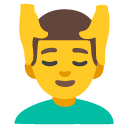
Appearance varies by platform and device. Google Noto, Twemoji, and OpenMoji are open-source.