🏌🏾♂️
The Emoji
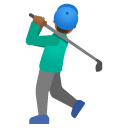
Man Golfing: Medium-dark Skin Tone
U+1F3CC U+1F3FE U+200D U+2642 U+FE0F · :man_golfing_mediumdark_skin_tone:
Trend 48
Meaning layers
- interpretation
- Used to signify wealth, privilege, leisure, or 'old money' energy. Often deployed ironically to mock corporate culture, boomer dads, or anyone acting excessively casual about serious situations.
- tiktok usage
- Appears in 'soft life' and 'rich aesthetic' content, or sarcastically when someone is completely unbothered by chaos around them. Common in 'not my problem' energy videos.
- irony level
- 6 / 10
Platform meanings
- meaning
- Represents wealth, leisure, an unbothered attitude, or the 'soft life' aesthetic. Used in both aspirational and ironic contexts.
- trend usage
- Appears in 'quiet luxury' and 'old money aesthetic' trends, as well as 'I don't care about drama' video captions and skits.
- hashtags
- #OldMoney#SoftLife#UnbotheredVibes#LuxuryLifestyle#GolfVibes
- virality score
- 42 / 100
Cultural meanings
🇺🇸
Western / Gen-Z
Primarily used ironically to mock wealthy, unbothered elites or to flex a 'soft life' aesthetic. Golf is seen as a sport of privilege and the emoji carries that connotation strongly.
🇵🇰
Pakistan & India
Golf is an elite and aspirational sport in both countries; the emoji is used to signal high social status, executive success, or aspirational lifestyle goals among the urban upper class.
🌍
Middle East
Golf is popular among the affluent and expat communities; the emoji signals wealth, luxury leisure, and a high-class lifestyle aligned with the region's prosperity-focused culture.
🌐
Global Neutral
Universally understood as a golf/sports emoji. Used by golfers worldwide to indicate the sport, and increasingly as a symbol of calm confidence or leisure.
🇧🇩
Bangladesh
Golf is a niche, elite sport; the emoji is rarely used by the general population but signals extreme affluence and social aspiration when it does appear.
🇱🇰
Sri Lanka
Golf has a colonial heritage in Sri Lanka and remains associated with the upper class and business elite. The emoji signals luxury and high society.
🇨🇳
China
Golf was banned as a symbol of bourgeois excess but has since made a comeback among the wealthy class. The emoji carries connotations of elite status and successful business networking.
🇯🇵
Japan
Golf is a very popular corporate and recreational sport in Japan. The emoji is used straightforwardly by golf enthusiasts and business professionals who use the sport for networking.
🇰🇷
South Korea
Golf is hugely popular across age groups and is associated with both professional achievement and leisure. The emoji is frequently used genuinely and aspirationally by Koreans on social media.
🇹🇼
Taiwan
Golf is popular among Taiwan's business class and retirees. The emoji is used to signal a comfortable, successful lifestyle and outdoor leisure.
🇭🇰
Hong Kong
Golf is a high-status sport in Hong Kong tied to business culture. The emoji signals executive class, networking, and success in a competitive urban context.
🇵🇭
Philippines
Golf is associated with the elite and wealthy class. The emoji is used to flex status or joke about the lifestyle of the rich and powerful, sometimes with ironic undertones.
🇮🇩
Indonesia
Golf is popular among Indonesia's business elite and upper class. The emoji signals wealth and ambition, often used by professionals and entrepreneurs.
🇹🇭
Thailand
Golf is extremely popular in Thailand across multiple social classes and is a major tourism draw. The emoji is used genuinely and widely with positive leisure connotations.
🇻🇳
Vietnam
Golf is growing rapidly in Vietnam as an aspirational sport for the emerging middle class and wealthy. The emoji signals success, aspiration, and modern prosperity.
🇲🇾
Malaysia
Golf is popular in Malaysia as both a leisure and business networking sport. The emoji is used to represent weekend leisure, corporate culture, and upscale lifestyle.
🇸🇦
Saudi Arabia
Golf is gaining popularity in Saudi Arabia as part of Vision 2030 sports initiatives. The emoji is used by affluent Saudis and expats to signal leisure and modern lifestyle.
🇦🇪
UAE
Golf is very popular in the UAE, with world-class courses in Dubai and Abu Dhabi. The emoji is frequently used in lifestyle and luxury content, carrying strong aspirational and elite connotations.
🇪🇬
Egypt
Golf is a niche sport for Egypt's elite and expat communities. The emoji signals high social status and wealth in Egyptian digital culture.
🇹🇷
Turkey
Golf is growing in Turkey among the urban wealthy and business class. The emoji signals ambition and affluence, often used in professional or lifestyle contexts.
🇮🇷
Iran
Golf is very niche and rarely associated with mainstream culture in Iran. The emoji, when used, signals international or elite culture and aspiration.
🇳🇬
Nigeria
Golf is popular among Nigeria's wealthy class and executives. The emoji is used to signal success, power, and elite social circles in Nigerian digital culture.
🇿🇦
South Africa
Golf has a strong cultural presence in South Africa with a large amateur and professional community. The emoji is used both genuinely by golfers and as a signal of the country's leisure culture.
🇬🇧
UK & Ireland
Golf has deep cultural roots, especially in Scotland and Ireland. The emoji is used by genuine golfers, and also humorously to mock 'golf dad' culture or posh weekend activities.
🇫🇷
France
Golf is considered a bourgeois leisure activity in France. The emoji carries class connotations and is sometimes used ironically to mock the privileged class or signal sophisticated leisure.
🇩🇪
Germany
Golf is popular among Germany's business and professional class. The emoji is used straightforwardly for sporting and leisure contexts, with some irony around corporate culture.
🇪🇸
Spain & Italy
Golf is popular in coastal and resort areas. The emoji signals summer leisure, vacation vibes, and an affluent Mediterranean lifestyle.
🇧🇷
Brazil
Golf is a sport of the Brazilian elite. The emoji signals extreme wealth and is often used ironically or aspirationally, sometimes in commentary about class inequality.
🇲🇽
Mexico
Golf is popular among Mexico's upper class and expat communities. The emoji signals luxury, success, and an elite social circle, sometimes used sarcastically about the wealthy.
🌎
Latin America
Across Latin America, golf is a marker of elite status. The emoji is used aspirationally by those who want to signal success or ironically to reference the wealthy upper class.
🇦🇺
Australia & NZ
Golf is a widely popular recreational sport across all ages in Australia and New Zealand. The emoji is used genuinely and casually by a broad demographic with minimal class stigma.
How its meaning shifted
- 2010
Rarely used — emoji golf representations were just being introduced and skin tone modifiers didn't yet exist. Golf emoji use was niche and literal.
- 2015
Skin tone modifiers were introduced in 2015, making this specific variant possible. Usage was still predominantly literal — actual golfers and sports fans.
- 2020
Began picking up ironic and meme usage, particularly as pandemic-era wealth gap discussions brought golf's elite connotations into focus. 'Unbothered executive' meme use grew.
- 2026
Firmly established in both the 'quiet luxury' aesthetic trend and ironic commentary on wealth and detachment. Widely recognized as the 'not my problem' or 'soft life' emoji in digital culture.
See it on every platform
Adjacent emojis
Share & embed
Frequently asked
01What does the 🏌🏾♂️ Man Golfing: Medium-dark Skin Tone emoji mean?
A man engaged in the sport of golf, shown in a swinging pose, with medium-dark skin tone applied via Fitzpatrick scale modifier. Part of the sports and activities emoji set.
02What does 🏌🏾♂️ mean on TikTok?
Represents wealth, leisure, an unbothered attitude, or the 'soft life' aesthetic. Used in both aspirational and ironic contexts.
03What does 🏌🏾♂️ mean on WhatsApp?
Signals that someone is relaxing, playing golf, or living their best leisure life. Can also mean 'I'm unbothered' in casual conversation.
04What does 🏌🏾♂️ mean in Gen-Z slang?
Used to signify wealth, privilege, leisure, or 'old money' energy. Often deployed ironically to mock corporate culture, boomer dads, or anyone acting excessively casual about serious situations.
05Is the 🏌🏾♂️ emoji safe to use?
A man playing golf — represents the sport, leisure activity, outdoor recreation, and in some contexts a chill or unbothered attitude.
06What does 🏌🏾♂️ mean in texting?
Golf as a symbol carries connotations of patience, precision, and socioeconomic status. The emoji can evoke feelings of relaxation and confidence but also detachment or indifference to urgent matters.
07What is the shortcode for 🏌🏾♂️?
The shortcode for Man Golfing: Medium-dark Skin Tone is :man_golfing_mediumdark_skin_tone:
08What does 🏌🏾♂️ mean in dating?
Rarely used as a direct flirt; sometimes dropped to imply 'I have money and time to spare' or to seem casually laid-back and low-effort in a charming way.
Safety & usage
- Safe meaning
- A man playing golf — represents the sport, leisure activity, outdoor recreation, and in some contexts a chill or unbothered attitude.
- Caution
- Can be used to mock racial stereotypes about who 'belongs' in golf, or deployed in contexts that belittle social struggles by trivializing them with elite leisure imagery.
Generally safe. The skin tone modifier adds representation value. Occasionally used in class-based mockery or ironic commentary about wealth inequality, but not inherently toxic.
How it looks across platforms
Appearance varies by platform and device. Google Noto, Twemoji, and OpenMoji are open-source.