👨🏼🦽➡️
The Emoji
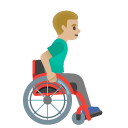
Man In Manual Wheelchair Facing Right: Medium-light Skin Tone
U+1F468 U+1F3FC U+200D U+1F9BD U+200D U+27A1 U+FE0F · :man_in_manual_wheelchair_facing_right_mediumlight_skin_tone:
Trend 22
Meaning layers
- interpretation
- Used to represent someone moving forward, navigating obstacles, or pushing through challenges — sometimes literally about disability representation, sometimes metaphorically about persisting despite barriers.
- tiktok usage
- Appears in disability awareness content, accessibility advocacy videos, and occasionally in 'moving forward' motivational contexts. Also used in POV videos by wheelchair users sharing their daily experiences.
- irony level
- 2 / 10
Platform meanings
- meaning
- Represents wheelchair users, disability pride, mobility independence, and forward movement in life narratives.
- trend usage
- Used in #DisabilityTikTok, wheelchair sports content, accessibility review videos, and 'day in my life' content by wheelchair users.
- hashtags
- #DisabilityTikTok#WheelchairLife#AccessibilityMatters#DisabilityPride#WheelchairUser
- virality score
- 28 / 100
Cultural meanings
🇺🇸
Western / Gen-Z
Widely understood as a disability representation emoji; Gen Z in Western contexts uses it in disability pride and accessibility advocacy, treating it as a straightforward identity marker without stigma.
🇵🇰
Pakistan & India
Primarily interpreted literally as representing a physically disabled person; disability representation is growing in mainstream social discourse, and this emoji may appear in posts about accessibility in urban infrastructure.
🌍
Middle East
Understood as representing a wheelchair user; disability awareness is increasing in Gulf states particularly, where government initiatives promote inclusion, and this emoji appears in related advocacy content.
🌐
Global Neutral
Universally understood as a person using a manual wheelchair moving to the right; interpreted as a symbol of mobility, disability, and accessibility across most global contexts.
🇧🇩
Bangladesh
Interpreted literally as a wheelchair user; used in contexts related to disability rights advocacy, which is a growing movement, and in discussions about accessibility in public infrastructure.
🇱🇰
Sri Lanka
Primarily a straightforward representation of a wheelchair user; used in disability awareness content and advocacy for better accessibility in public spaces.
🇨🇳
China
Understood as a disabled person in a wheelchair; used in accessibility advocacy and Paralympic-related content, with growing awareness around disability inclusion in urban planning.
🇯🇵
Japan
Interpreted as a physically disabled person using a wheelchair; Japan's strong culture of accessibility in public transit and spaces means this emoji appears in helpful context mapping accessible routes and facilities.
🇰🇷
South Korea
Recognized as a wheelchair user; used in disability rights discussions and increasingly in content about inclusive K-pop fan spaces and accessible venues for fans with disabilities.
🇹🇼
Taiwan
Understood straightforwardly as a wheelchair user moving forward; used in disability pride, accessibility advocacy, and content about inclusive public infrastructure.
🇭🇰
Hong Kong
Interpreted as a wheelchair user; used in urban accessibility discussions, disability advocacy, and content about navigating Hong Kong's challenging terrain as a wheelchair user.
🇵🇭
Philippines
Primarily seen as a disability representation emoji; used in contexts about accessible public transport, disability rights, and inclusion in schools and workplaces.
🇮🇩
Indonesia
Interpreted as a person with a physical disability using a wheelchair; used in disability awareness content and discussions about improving accessibility in Indonesian cities.
🇹🇭
Thailand
Understood as a wheelchair user; used in disability advocacy content and in discussions about accessibility at tourist sites and public spaces.
🇻🇳
Vietnam
Recognized as a physically disabled person in a wheelchair; used in disability rights content and discussions about improving infrastructure accessibility in Vietnamese cities.
🇲🇾
Malaysia
Interpreted literally as a wheelchair user; used in disability awareness posts, accessibility advocacy, and content about inclusive public facilities.
🇸🇦
Saudi Arabia
Understood as a person with a physical disability using a wheelchair; increasingly used in content related to Saudi Vision 2030's disability inclusion initiatives and accessible facility developments.
🇦🇪
UAE
Recognized as a wheelchair user; used in the context of the UAE's relatively strong disability inclusion infrastructure and advocacy for accessibility in smart city developments.
🇪🇬
Egypt
Interpreted as a wheelchair user; used in disability advocacy content and discussions about accessibility challenges in Egyptian cities, where infrastructure gaps are commonly discussed.
🇹🇷
Turkey
Understood as a physically disabled person using a wheelchair; used in disability rights discussions and content about accessibility improvements in Turkish public spaces.
🇮🇷
Iran
Interpreted as a wheelchair user; used in disability awareness content, though disability advocacy online faces more constraints in this context.
🇳🇬
Nigeria
Recognized as a person using a wheelchair; used in disability rights advocacy, content about accessibility challenges in Nigerian cities, and posts celebrating disabled athletes.
🇿🇦
South Africa
Understood as a wheelchair user; used in disability rights discussions, content about accessibility in South African cities, and posts related to Paralympic athletes.
🇬🇧
UK & Ireland
Widely recognized as a wheelchair user moving forward; used in disability pride content, accessibility advocacy, and commentary on UK infrastructure accessibility — often with nuanced understanding of disability representation.
🇫🇷
France
Interpreted as a person with a mobility disability using a wheelchair; used in disability rights content and discussions about French accessibility laws and their implementation in public spaces.
🇩🇪
Germany
Understood as a wheelchair user; used in disability inclusion discourse, accessibility standards advocacy, and content about Germany's relatively strong disability rights framework.
🇪🇸
Spain & Italy
Recognized as a wheelchair user; used in disability advocacy, content about accessibility in historic city centers with cobblestone streets, and disability pride events.
🇧🇷
Brazil
Interpreted as a wheelchair user moving forward; used in disability rights advocacy, content about accessibility challenges in Brazilian cities, and celebrations of Para-athletes during Paralympic season.
🇲🇽
Mexico
Understood as a physically disabled person in a wheelchair; used in disability awareness content and discussions about accessibility in Mexican public infrastructure.
🌎
Latin America
Broadly recognized as a wheelchair user; used across Latin American contexts in disability rights advocacy and growing conversations about inclusive urban design.
🇦🇺
Australia & NZ
Widely understood as a wheelchair user; used in disability pride content, accessibility advocacy, and discussions about inclusive design — with high cultural awareness of disability representation in both countries.
How its meaning shifted
- 2010
This specific emoji sequence did not exist; basic wheelchair emoji were not yet in Unicode. Disability was rarely represented in digital emoji communication.
- 2015
Basic wheelchair emojis began appearing in proposals; disability representation in emoji was a growing advocacy topic but this specific sequence was not yet available.
- 2020
Directional wheelchair emojis were introduced or in final proposal stages; used primarily in disability advocacy communities and by wheelchair users for self-representation online.
- 2026
Increasingly used as part of normalized disability representation; appears in mainstream content, accessibility discussions, disability pride movements, and by brands demonstrating inclusive communication.
See it on every platform
Compare with
Adjacent emojis
Share & embed
Frequently asked
01What does the 👨🏼🦽➡️ Man In Manual Wheelchair Facing Right: Medium-light Skin Tone emoji mean?
A man using a manual wheelchair, facing right, with medium-light skin tone. This is a ZWJ sequence combining the man emoji, medium-light skin tone modifier, manual wheelchair emoji, and rightward arrow.
02What does 👨🏼🦽➡️ mean on TikTok?
Represents wheelchair users, disability pride, mobility independence, and forward movement in life narratives.
03What does 👨🏼🦽➡️ mean on WhatsApp?
Used to represent a person using a wheelchair, often in conversations about disability, accessibility needs, or referencing someone who uses a wheelchair.
04What does 👨🏼🦽➡️ mean in Gen-Z slang?
Used to represent someone moving forward, navigating obstacles, or pushing through challenges — sometimes literally about disability representation, sometimes metaphorically about persisting despite barriers.
05Is the 👨🏼🦽➡️ emoji safe to use?
Representation of a man using a manual wheelchair, used for disability advocacy, identity expression, accessibility awareness, and inclusive communication.
06What does 👨🏼🦽➡️ mean in texting?
The rightward direction psychologically suggests progress and forward movement, evoking feelings of agency and autonomy. For disabled communities it carries strong identity pride; for others it can symbolize overcoming obstacles.
07What is the shortcode for 👨🏼🦽➡️?
The shortcode for Man In Manual Wheelchair Facing Right: Medium-light Skin Tone is :man_in_manual_wheelchair_facing_right_mediumlight_skin_tone:
08What does 👨🏼🦽➡️ mean in dating?
Rarely used in flirting contexts; when used by wheelchair users it can be a straightforward part of identity disclosure or casual self-description.
Safety & usage
- Safe meaning
- Representation of a man using a manual wheelchair, used for disability advocacy, identity expression, accessibility awareness, and inclusive communication.
- Caution
- Could theoretically be used mockingly in ableist contexts, though this is uncommon given the specificity of the emoji.
Generally very safe to use. Care should be taken to use this emoji respectfully and not in mocking or diminishing contexts related to disability. Avoid using it to make light of serious disabilities.
How it looks across platforms
Appearance varies by platform and device. Google Noto, Twemoji, and OpenMoji are open-source.