👨🏽🦽➡️
The Emoji
Man In Manual Wheelchair Facing Right: Medium Skin Tone
U+1F468 U+1F3FD U+200D U+1F9BD U+200D U+27A1 U+FE0F · :man_in_manual_wheelchair_facing_right_medium_skin_tone:
Trend 22
Meaning layers
- interpretation
- Used to signal moving forward, powering through obstacles, or self-reliance. Sometimes used humorously to say 'I'm rolling out' or 'watch me go.' Also used sincerely in disability visibility content.
- tiktok usage
- Appears in 'watch me handle this' energy videos, disability awareness content, and 'main character leaving the scene' aesthetics.
- irony level
- 3 / 10
Platform meanings
- meaning
- Forward motion, independence, disability pride, or comedic escape from a situation.
- trend usage
- Featured in disability TikTok (#DisabilityTikTok), motivational montages, and self-deprecating humor about avoiding problems.
- hashtags
- #DisabilityTikTok#WheelchairLife#RollingOut#DisabilityPride#MediumSkinTone
- virality score
- 28 / 100
Cultural meanings
🇺🇸
Western / Gen-Z
Used as a symbol of disability pride and forward motion; Gen Z in Western countries frequently pair it with empowerment language and normalize it in casual digital speech.
🇵🇰
Pakistan & India
Primarily interpreted literally as a person in a wheelchair; may carry sensitivity around disability stigma, but increasingly used positively in urban disability advocacy communities.
🌍
Middle East
Mostly understood in its literal sense; disability representation is growing online in Arab digital spaces, though cultural stigma around disability can affect how the emoji is received.
🌐
Global Neutral
Universally recognized as a person in a wheelchair moving forward; carries connotations of mobility, independence, and inclusion across cultures.
🇧🇩
Bangladesh
Interpreted literally, often used in healthcare or NGO contexts related to disability support; disability advocacy communities are beginning to embrace it online.
🇱🇰
Sri Lanka
Seen primarily in disability awareness and healthcare contexts; used by local NGOs and advocates to represent mobility support programs.
🇨🇳
China
Used in contexts of healthcare and disability representation; occasionally appears in Paralympic hype content but less common in casual digital communication.
🇯🇵
Japan
Associated with accessibility culture and Paralympic pride; Japan's strong adaptive sports culture gives this emoji positive connotations of athletic achievement and independence.
🇰🇷
South Korea
Used in disability rights discussions and K-content that features inclusive representation; increasingly visible in social welfare campaign posts.
🇹🇼
Taiwan
Appears in accessibility advocacy and disability pride contexts; Taiwan's active civil society around disability rights makes this emoji well-received.
🇭🇰
Hong Kong
Used in accessibility and social welfare discussions; also appears in content about the city's improving (or lacking) accessibility infrastructure.
🇵🇭
Philippines
Primarily used in healthcare, NGO, and disability support contexts; social media disability advocates are growing in visibility and use the emoji proudly.
🇮🇩
Indonesia
Appears in disability awareness content and adaptive sports coverage; the emoji is understood literally and used respectfully in most contexts.
🇹🇭
Thailand
Associated with disability welfare programs and Paralympic content; used in health and social support communities online.
🇻🇳
Vietnam
Primarily seen in disability advocacy and social welfare content; growing use among young online communities interested in inclusion.
🇲🇾
Malaysia
Used in disability rights, accessibility infrastructure debates, and NGO posts; the multicultural context makes it broadly understood without major cultural baggage.
🇸🇦
Saudi Arabia
Appears in disability welfare and accessibility content; Vision 2030 inclusion initiatives have increased positive visibility of disability representation online.
🇦🇪
UAE
Used in inclusive innovation, smart city, and disability advocacy contexts; Dubai's accessibility efforts make this emoji relevant in urban planning discussions.
🇪🇬
Egypt
Primarily literal interpretation; used in NGO and disability support content; increasing presence in social media advocacy for accessible public spaces.
🇹🇷
Turkey
Used in disability rights, Paralympic coverage, and social welfare contexts; appears in discussions about accessible public transportation and urban design.
🇮🇷
Iran
Interpreted literally in disability support and healthcare contexts; less common in casual digital speech but present in advocacy and charity content.
🇳🇬
Nigeria
Used in disability awareness and NGO content; growing adoption among Nigerian disability rights advocates on social platforms.
🇿🇦
South Africa
Appears in disability inclusion, Paralympic pride, and accessibility advocacy posts; resonates with communities pushing for greater disability representation.
🇬🇧
UK & Ireland
Used in disability pride, accessibility rights, and 'rolling away from this' humor; the UK's strong Disability Rights tradition gives the emoji positive cultural weight.
🇫🇷
France
Seen in Paralympic content, disability rights discussions, and accessibility campaign posts; also used humorously to signal making a stylish exit.
🇩🇪
Germany
Associated with strong disability rights culture (Behindertenrechte); used in accessibility advocacy, adaptive technology, and Paralympic content.
🇪🇸
Spain & Italy
Used in disability awareness campaigns and Paralympic coverage; also appears in humor contexts about making a quick getaway.
🇧🇷
Brazil
Popular during Paralympic seasons; used in disability pride and accessibility advocacy with growing Gen Z engagement in inclusive representation content.
🇲🇽
Mexico
Used in disability advocacy and social welfare content; appears in conversations about accessibility in public spaces and transportation.
🌎
Latin America
Broadly used across Latin America in disability representation and Paralympic contexts; increasingly adopted by young advocates for inclusive social media content.
🇦🇺
Australia & NZ
Used confidently in disability pride, adaptive sports, and accessibility advocacy; also common in casual 'rolling out' humor given the relaxed digital culture.
How its meaning shifted
- 2010
This specific emoji did not exist in 2010; wheelchair emoji representation was absent from standard Unicode sets, with disability largely unrepresented in emoji keyboards.
- 2015
Basic wheelchair emoji was beginning to be advocated for; representation conversations were gaining momentum but medium skin tone and directional variants did not yet exist.
- 2020
The emoji became available following Unicode's push for disability representation and skin tone modifiers; primarily used in disability advocacy and awareness content.
- 2026
Widely recognized across platforms for disability pride, motivational content, and casual humor; normalized in Gen Z digital speech and increasingly visible in mainstream media emoji usage.
See it on every platform
Compare with
Adjacent emojis
Share & embed
Frequently asked
01What does the 👨🏽🦽➡️ Man In Manual Wheelchair Facing Right: Medium Skin Tone emoji mean?
A man using a manual wheelchair, facing right, with medium skin tone. The rightward direction indicates forward movement or navigation.
02What does 👨🏽🦽➡️ mean on TikTok?
Forward motion, independence, disability pride, or comedic escape from a situation.
03What does 👨🏽🦽➡️ mean on WhatsApp?
Casually signals 'I'm out of here' or references wheelchair use in everyday conversation.
04What does 👨🏽🦽➡️ mean in Gen-Z slang?
Used to signal moving forward, powering through obstacles, or self-reliance. Sometimes used humorously to say 'I'm rolling out' or 'watch me go.' Also used sincerely in disability visibility content.
05Is the 👨🏽🦽➡️ emoji safe to use?
Represents disability, mobility, independence, and forward movement. Used in inclusive and supportive contexts.
06What does 👨🏽🦽➡️ mean in texting?
Evokes feelings of determination, self-sufficiency, and perseverance. For disabled individuals, it can carry deep personal pride and visibility; for others, it may prompt empathy or solidarity.
07What is the shortcode for 👨🏽🦽➡️?
The shortcode for Man In Manual Wheelchair Facing Right: Medium Skin Tone is :man_in_manual_wheelchair_facing_right_medium_skin_tone:
08What does 👨🏽🦽➡️ mean in dating?
Rarely used in flirting contexts; not a typical romantic emoji. Could appear in conversations between disabled people expressing identity.
Safety & usage
- Safe meaning
- Represents disability, mobility, independence, and forward movement. Used in inclusive and supportive contexts.
- Caution
- Could potentially be misused in mocking or ableist content, though this is relatively uncommon.
Use respectfully; avoid deploying in ableist jokes or contexts that mock disability. The emoji exists for representation and should be treated with dignity.
How it looks across platforms
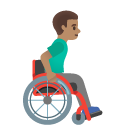
Appearance varies by platform and device. Google Noto, Twemoji, and OpenMoji are open-source.