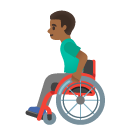
👨🏾🦽
The Emoji
Man In Manual Wheelchair: Medium-dark Skin Tone
U+1F468 U+1F3FE U+200D U+1F9BD · :man_in_manual_wheelchair_mediumdark_skin_tone:
Trend 38
Meaning layers
- interpretation
- Used to represent physical disability, accessibility advocacy, or solidarity with disabled communities. Sometimes used humorously to say 'I'm done walking' or 'my legs gave out' after exhaustion.
- tiktok usage
- Appears in disability awareness content, accessibility rant videos, or comedically after describing extreme fatigue or refusing to walk anywhere.
- irony level
- 4 / 10
Platform meanings
- meaning
- Represents disability advocacy, accessibility content, or exhaustion humor. Common in #DisabilityTikTok communities.
- trend usage
- Featured in 'day in my life as a wheelchair user' videos, accessibility fail compilations, and disability pride content.
- hashtags
- #DisabilityTikTok#WheelchairLife#AccessibilityMatters#DisabledAndProud#CripplePunk
- virality score
- 42 / 100
Cultural meanings
🇺🇸
Western / Gen-Z
Used as a disability identity symbol and advocacy emoji; embraced within CripplePunk and disability pride movements popular among Western Gen Z.
🇵🇰
Pakistan & India
Primarily interpreted literally to represent disabled individuals; used in disability awareness social media campaigns and charity drives.
🌍
Middle East
Understood as a representation of physical disability; used in social media posts about disability rights and charitable giving, particularly during Ramadan.
🌐
Global Neutral
Universally recognized as representing a person using a manual wheelchair; interpreted as a symbol of disability and mobility assistance.
🇧🇩
Bangladesh
Used in disability awareness contexts and NGO social media posts focused on rehabilitation and inclusive development programs.
🇱🇰
Sri Lanka
Interpreted as representing physical disability; appears in disability rights advocacy and government accessibility initiative posts.
🇨🇳
China
Used primarily in contexts related to disability services, Paralympic sports coverage, and accessibility infrastructure discussions on platforms like WeChat.
🇯🇵
Japan
Associated with welfare services, barrier-free accessibility (バリアフリー), and Paralympic representation; used respectfully in formal and advocacy contexts.
🇰🇷
South Korea
Seen in disability rights content and accessibility advocacy; also embraced by gaming communities discussing adaptive gaming and inclusive esports.
🇹🇼
Taiwan
Used in disability rights campaigns and government accessibility initiative posts; associated with inclusive design and barrier-free Taiwan movements.
🇭🇰
Hong Kong
Appears in social posts about accessible public transport and urban accessibility challenges; used straightforwardly for disability representation.
🇵🇭
Philippines
Used in PWD (Persons with Disabilities) rights content, charity posts, and social media campaigns promoting inclusive communities.
🇮🇩
Indonesia
Appears in disability awareness content and social posts about difabel (differently-abled) rights and inclusive education campaigns.
🇹🇭
Thailand
Used in disability welfare and accessibility posts; associated with government disability support programs and Paralympic athlete coverage.
🇻🇳
Vietnam
Seen in disability support charity posts and social media content about war veterans with disabilities and rehabilitation programs.
🇲🇾
Malaysia
Used in OKU (Orang Kurang Upaya) rights content and accessibility advocacy; appears in posts about inclusive public infrastructure.
🇸🇦
Saudi Arabia
Associated with disability welfare, charity (zakah) giving contexts, and government disability support programs; used respectfully.
🇦🇪
UAE
Appears in Dubai and Abu Dhabi accessibility initiative posts; associated with inclusive smart city projects and Paralympic sports coverage.
🇪🇬
Egypt
Used in disability awareness posts and charitable giving campaigns; associated with rehabilitation centers and disability support NGOs.
🇹🇷
Turkey
Appears in engelli (disabled person) rights content and accessibility infrastructure discussions on Turkish social media.
🇮🇷
Iran
Used in disability welfare and charitable contexts; appears in posts about disabled veterans and government disability support programs.
🇳🇬
Nigeria
Used in disability rights advocacy and inclusive development posts; associated with PWD rights campaigns and accessibility awareness in urban areas.
🇿🇦
South Africa
Appears in disability rights and inclusive society posts; associated with South African disability rights legislation and Paralympic sports.
🇬🇧
UK & Ireland
Used in disability rights advocacy, accessible travel content, and discussions about UK accessibility law; embraced in disabled communities online.
🇫🇷
France
Associated with handicap accessibility (accessibilité) discussions and posts about French disability rights law and Paralympic Games coverage.
🇩🇪
Germany
Used in Inklusion (inclusion) and Barrierefreiheit (barrier-free) content; appears in disability rights posts and accessibility infrastructure discussions.
🇪🇸
Spain & Italy
Used in disability awareness campaigns, accessible tourism content, and social media posts about Paralympic athletes from Spain and Italy.
🇧🇷
Brazil
Appears in PCD (Pessoa com Deficiência) rights content, accessible tourism posts, and disability pride events, especially around Paralympic coverage.
🇲🇽
Mexico
Used in disability rights and discapacidad awareness posts; associated with inclusive education campaigns and accessible public space advocacy.
🌎
Latin America
Broadly used across Latin America in disability rights content, inclusive development posts, and charitable campaign communications.
🇦🇺
Australia & NZ
Used in NDIS (National Disability Insurance Scheme) related content, disability pride events, and accessible travel recommendations.
How its meaning shifted
- 2010
This specific emoji did not exist; disability was rarely represented in digital communication and wheelchair representation was absent from standard emoji sets.
- 2015
Basic wheelchair emoji were emerging; skin tone modifiers and gender-specific variants were not yet standard, so representation was limited and generic.
- 2020
Gained significant traction following Unicode 12.0 additions; used heavily in disability pride content, COVID-19 vulnerable population discussions, and accessibility advocacy.
- 2026
Firmly established in disability identity and advocacy spaces; used across CripplePunk, adaptive sports, and inclusive design communities with growing mainstream awareness.
See it on every platform
Compare with
Adjacent emojis
Share & embed
Frequently asked
01What does the 👨🏾🦽 Man In Manual Wheelchair: Medium-dark Skin Tone emoji mean?
A man using a manual wheelchair, shown with medium-dark skin tone. Represents disability, mobility aid users, and physical accessibility.
02What does 👨🏾🦽 mean on TikTok?
Represents disability advocacy, accessibility content, or exhaustion humor. Common in #DisabilityTikTok communities.
03What does 👨🏾🦽 mean on WhatsApp?
Sent to indicate disability, mobility needs, or to flag accessibility concerns for a meeting location or venue.
04What does 👨🏾🦽 mean in Gen-Z slang?
Used to represent physical disability, accessibility advocacy, or solidarity with disabled communities. Sometimes used humorously to say 'I'm done walking' or 'my legs gave out' after exhaustion.
05Is the 👨🏾🦽 emoji safe to use?
Representation of a man using a manual wheelchair; used for disability identity, advocacy, and accessibility awareness.
06What does 👨🏾🦽 mean in texting?
Carries strong connotations of disability identity and pride. For disabled users it signals community and self-expression; for non-disabled users it can signal allyship or, if misused, ableism.
07What is the shortcode for 👨🏾🦽?
The shortcode for Man In Manual Wheelchair: Medium-dark Skin Tone is :man_in_manual_wheelchair_mediumdark_skin_tone:
08What does 👨🏾🦽 mean in dating?
Rarely used in flirting contexts; occasionally used by wheelchair users to represent themselves authentically in bios or profiles.
Safety & usage
- Safe meaning
- Representation of a man using a manual wheelchair; used for disability identity, advocacy, and accessibility awareness.
- Caution
- Can be misused mockingly in ableist contexts or used to demean disabled individuals; occasionally weaponized in toxic gaming or internet spaces.
Should never be used to mock or demean disabled people. Use with respect and context-awareness. Non-disabled users should be mindful not to use it for trivial exhaustion humor in ways that may minimize real disability experiences.
How it looks across platforms


Appearance varies by platform and device. Google Noto, Twemoji, and OpenMoji are open-source.