👨🏾🦼➡️
The Emoji
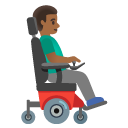
Man In Motorized Wheelchair Facing Right: Medium-dark Skin Tone
U+1F468 U+1F3FE U+200D U+1F9BC U+200D U+27A1 U+FE0F · :man_in_motorized_wheelchair_facing_right_mediumdark_skin_tone:
Trend 32
Meaning layers
- interpretation
- Used to signal moving forward, powering through obstacles, or being unstoppable. Sometimes used humorously to say 'I'm on my way' or 'nothing can stop me.' Also used genuinely to represent disabled identity with pride.
- tiktok usage
- Appears in disability pride content, 'day in my life' wheelchair user videos, and occasionally in comedic 'charging into the weekend' type captions.
- irony level
- 3 / 10
Platform meanings
- meaning
- Represents disability pride, mobility, or the humorous 'speeding away from problems' trope.
- trend usage
- Used in disability awareness TikToks, 'things wheelchair users want you to know' content, and viral escape-the-situation meme formats.
- hashtags
- #DisabilityPride#WheelchairLife#AccessibilityMatters#RollingThrough#DisabledAndProud
- virality score
- 38 / 100
Cultural meanings
🇺🇸
Western / Gen-Z
Embraced in disability pride and identity contexts; Gen Z uses it both genuinely for representation and humorously in 'speeding away' meme formats. Seen as an important symbol of inclusive representation.
🇵🇰
Pakistan & India
Primarily interpreted literally as representing a person with a disability using a motorized wheelchair. May carry some stigma in conservative contexts but increasingly used in disability awareness campaigns by NGOs and advocates.
🌍
Middle East
Generally understood as a disability representation symbol. Used in accessibility awareness content, though discussions around disability can still carry social sensitivity in some regional contexts.
🌐
Global Neutral
Universally understood as representing a person using a motorized wheelchair. Carries connotations of mobility assistance, disability, and forward movement regardless of cultural context.
🇧🇩
Bangladesh
Used in disability advocacy and social welfare contexts. Growing use in NGO communications and disability rights content as mobile internet expands.
🇱🇰
Sri Lanka
Primarily literal in interpretation — used in healthcare, disability support, and social welfare communications. Disability representation in emoji is relatively new in mainstream discourse.
🇨🇳
China
Used in accessibility and disability welfare discussions on platforms like WeChat and Weibo. Official campaigns around disability inclusion often feature this emoji type. Less meme usage compared to Western platforms.
🇯🇵
Japan
Japan has strong disability welfare systems and uses this emoji in official accessibility communications. Also used in disability community social media. The rightward direction aligns well with Japanese reading direction symbolism.
🇰🇷
South Korea
Used in disability rights discussions and accessibility technology content. K-culture's growing focus on inclusion has led to more visibility of disability emojis in mainstream content.
🇹🇼
Taiwan
Used in disability advocacy, assistive technology discussions, and healthcare communications. Taiwan's progressive social policies make disability representation relatively normalized in public discourse.
🇭🇰
Hong Kong
Appears in disability awareness campaigns and accessibility advocacy content. Used by local disability organizations in social media outreach.
🇵🇭
Philippines
Used in disability support group communications and NGO outreach. The disability community in the Philippines uses social media actively, and this emoji features in advocacy content.
🇮🇩
Indonesia
Used in disability awareness content, particularly around commemorative dates like International Day of Persons with Disabilities. Mostly literal interpretation.
🇹🇭
Thailand
Appears in healthcare and disability support communications. Used by Thai disability organizations in social media advocacy and awareness campaigns.
🇻🇳
Vietnam
Primarily used in disability welfare and healthcare contexts. Growing use in disability rights advocacy as smartphone penetration and social media use increases.
🇲🇾
Malaysia
Used in accessibility awareness campaigns and disability community social media. Malaysia's multicultural context means disability representation resonates across ethnic communities.
🇸🇦
Saudi Arabia
Used in disability welfare and inclusion discussions. Saudi Vision 2030 includes disability inclusion goals, which has increased visibility of disability-related content and emojis in public communications.
🇦🇪
UAE
Used in accessibility and inclusive design discussions, reflecting UAE's growing focus on smart city accessibility. Appears in corporate DEI communications in the region.
🇪🇬
Egypt
Used in disability advocacy content and NGO communications. Egyptian disability rights organizations use social media actively, and this emoji features in awareness campaigns.
🇹🇷
Turkey
Used in disability rights and accessibility discussions. Turkish disability organizations use this in social media campaigns, and it appears in healthcare communications.
🇮🇷
Iran
Used cautiously in disability awareness and welfare contexts. Disability discourse in Iran is primarily welfare-focused rather than rights-based, affecting how this emoji is contextualized.
🇳🇬
Nigeria
Used in disability inclusion advocacy and NGO communications. Nigeria's growing disability rights movement uses social media extensively, and this emoji features in awareness content.
🇿🇦
South Africa
Used in disability rights and accessibility advocacy, reflecting South Africa's constitutional commitment to disability inclusion. Appears in both English and vernacular language disability advocacy content.
🇬🇧
UK & Ireland
Strong disability rights culture means this emoji is used actively in advocacy, identity expression, and public discourse. The humor interpretation also exists but disability representation is taken seriously.
🇫🇷
France
Used in disability inclusion (handicap) advocacy content. French disability policy discussions and accessibility campaigns feature this emoji. Some use in general humor contexts.
🇩🇪
Germany
Used in accessibility advocacy and inclusive design discussions. Germany's strong social welfare system means disability representation is mainstream, and this emoji appears in official communications.
🇪🇸
Spain & Italy
Used in disability awareness campaigns and inclusion advocacy. Both countries have active disability rights organizations that use social media with this emoji type in outreach.
🇧🇷
Brazil
Used in disability rights advocacy and accessibility discussions. Brazil's large disability community uses social media actively, and this emoji features in both serious advocacy and occasional humor contexts.
🇲🇽
Mexico
Used in disability inclusion and accessibility awareness content. Mexican disability organizations use this in social media campaigns, with growing representation discourse.
🌎
Latin America
Across Latin America, primarily used in disability advocacy and inclusion awareness. Growing disability rights movements in the region are increasing the visibility of this emoji in public discourse.
🇦🇺
Australia & NZ
Strong disability rights culture; this emoji is used in advocacy, identity expression, and public accessibility discussions. Australia and NZ have robust NDIS and disability support systems that normalize disability representation.
How its meaning shifted
- 2010
This specific emoji did not exist in 2010. Wheelchair representation was minimal in digital communication, and disability emojis were largely absent from standard emoji sets.
- 2015
Still not yet introduced. Basic wheelchair emoji discussions were beginning in Unicode proposals, but directional and skin tone variants were years away.
- 2020
Motorized wheelchair emojis were introduced in 2019 (Unicode 12.0), so by 2020 they were newly available. Usage was primarily literal and representational, adopted by disability communities and advocates.
- 2026
Widely used across disability advocacy, identity representation, and meme culture. The medium-dark skin tone variant reflects growing awareness of intersectionality between race and disability. Appears in mainstream content alongside niche disability community use.
See it on every platform
Adjacent emojis
Share & embed
Frequently asked
01What does the 👨🏾🦼➡️ Man In Motorized Wheelchair Facing Right: Medium-dark Skin Tone emoji mean?
Depicts a man with medium-dark skin tone seated in a motorized wheelchair, facing right. The rightward direction indicates forward movement or progression.
02What does 👨🏾🦼➡️ mean on TikTok?
Represents disability pride, mobility, or the humorous 'speeding away from problems' trope.
03What does 👨🏾🦼➡️ mean on WhatsApp?
Typically used to represent a person in a motorized wheelchair, discuss accessibility topics, or humorously indicate someone is 'rolling out' of a conversation.
04What does 👨🏾🦼➡️ mean in Gen-Z slang?
Used to signal moving forward, powering through obstacles, or being unstoppable. Sometimes used humorously to say 'I'm on my way' or 'nothing can stop me.' Also used genuinely to represent disabled identity with pride.
05Is the 👨🏾🦼➡️ emoji safe to use?
Represents a man with medium-dark skin tone using a motorized wheelchair, moving forward. Used in disability representation, accessibility advocacy, and identity expression.
06What does 👨🏾🦼➡️ mean in texting?
Evokes feelings of independence, forward momentum, and self-determination. For disabled individuals, seeing this emoji can affirm identity and visibility. For others, it may prompt reflection on accessibility and inclusion.
07What is the shortcode for 👨🏾🦼➡️?
The shortcode for Man In Motorized Wheelchair Facing Right: Medium-dark Skin Tone is :man_in_motorized_wheelchair_facing_right_mediumdark_skin_tone:
08What does 👨🏾🦼➡️ mean in dating?
Rarely used in flirting contexts; if used, it might mean 'I'm rolling toward you' in a playful way, but this is uncommon.
Safety & usage
- Safe meaning
- Represents a man with medium-dark skin tone using a motorized wheelchair, moving forward. Used in disability representation, accessibility advocacy, and identity expression.
- Caution
- Could potentially be used mockingly in ableist contexts, though this is relatively rare given the specificity of the emoji.
As with all disability-related emojis, context matters greatly. Using this emoji to mock or diminish people with disabilities constitutes ableism. Appropriative use by non-disabled people purely for comedic purposes without awareness can be insensitive.
How it looks across platforms
Appearance varies by platform and device. Google Noto, Twemoji, and OpenMoji are open-source.