🚶♂️➡️
The Emoji
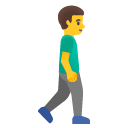
Man Walking Facing Right
U+1F6B6 U+200D U+2642 U+FE0F U+200D U+27A1 U+FE0F · :man_walking_facing_right:
Trend 55
Meaning layers
- interpretation
- Represents moving on, leaving a situation, or literally walking away from something or someone. Often used to show unbothered departure or passive ghosting energy.
- tiktok usage
- Used in captions when someone is done with drama, walking away from toxic situations, or literally describing a walk. Paired with motivational or unbothered content.
- irony level
- 4 / 10
Platform meanings
- meaning
- Symbolizes unbothered forward movement, used to show leaving drama, going on walks, or entering a main character moment.
- trend usage
- Featured in 'girl/guy who goes on walks' trend, NPC walking trends, and 'walking away from situationships' content.
- hashtags
- #walkingaway#maincharacter#walkwithme#unbothered#walkingenergy
- virality score
- 62 / 100
Cultural meanings
🇺🇸
Western / Gen-Z
Emblematic of 'walking away from toxicity' culture and the broader 'touch grass' movement — used ironically and sincerely in equal measure.
🇵🇰
Pakistan & India
Used casually in everyday chats to indicate going out for a walk or heading somewhere; also increasingly used among younger users to signal unbothered departure from drama.
🌍
Middle East
Used practically to mean going for a walk or traveling on foot; in Gulf countries where car culture dominates, it may carry a slightly humorous 'quaint' undertone.
🌐
Global Neutral
Universally understood as a man walking in a rightward direction — safe, clear, and functional across all communication contexts.
🇧🇩
Bangladesh
Used to indicate physical movement or commuting on foot, which is common in daily life; also used among youth to signal moving forward or leaving a situation.
🇱🇰
Sri Lanka
Practical use in conveying travel on foot; younger Sri Lankans use it in social media to express personal progress or stepping away from conflict.
🇨🇳
China
Used straightforwardly to mean walking or being on the move; in youth internet culture, it echoes the '躺平' (lying flat) contrast — actively choosing to walk forward instead.
🇯🇵
Japan
Appreciated for its directional specificity, which aligns with Japanese communication precision; used to indicate orderly movement or mindful walking practice.
🇰🇷
South Korea
Popular in health and fitness content tied to step-count challenges; also used in idol fan culture when fans describe going out for 'comfort walks' after emotional events.
🇹🇼
Taiwan
Used in casual conversation for being out and about; aligns with Taiwan's strong walking and hiking culture in urban and mountain contexts.
🇭🇰
Hong Kong
Common in messages about navigating the dense city on foot; subtly resonant given the cultural significance of walking and public presence in recent years.
🇵🇭
Philippines
Used casually to mean commuting or heading out; in meme culture it appears in 'NPC walking' joke formats popular in Filipino internet humor.
🇮🇩
Indonesia
Used practically for commuting and daily movement; in social media, adopted by younger users to signal perseverance and forward motion.
🇹🇭
Thailand
Used in tourism and travel content given Thailand's popular walking streets; also appears in personal growth content among Thai youth.
🇻🇳
Vietnam
Practical use in describing movement through busy city streets; increasingly used in motivational content about persevering and moving forward.
🇲🇾
Malaysia
Appears in fitness and wellness posts; also used colloquially among young Malaysians to say they're leaving or done with a situation.
🇸🇦
Saudi Arabia
Used mostly in a literal sense; in a car-dominant culture, using a walking emoji can also carry a humorous 'why would you walk?' undertone among youth.
🇦🇪
UAE
Used in travel and lifestyle content; expats and residents use it to describe exploring the city on foot, which contrasts with the region's car-centric culture.
🇪🇬
Egypt
Used to indicate movement or heading out; in Egyptian internet culture it may appear in humorous content about walking as a mode of transportation given traffic.
🇹🇷
Turkey
Common in casual messaging about going out; Turkish youth use it in motivational contexts about moving forward despite hardship.
🇮🇷
Iran
Used practically to indicate walking or going somewhere; in youth culture it appears in content about personal freedom and movement.
🇳🇬
Nigeria
Used to signal departure or dismissal in a humorous way; in Nigerian Twitter/X culture, it's a popular 'I'm leaving this chat' emoji.
🇿🇦
South Africa
Used casually for movement or travel on foot; in youth internet culture it signals walking away from problematic situations or people.
🇬🇧
UK & Ireland
Frequently used to describe going for a walk — a very culturally significant activity; also used sarcastically to mean 'I'm off then' in dry British humor.
🇫🇷
France
Associated with the beloved French tradition of strolling (la promenade); used in contexts ranging from casual walks to philosophical 'moving on' sentiments.
🇩🇪
Germany
Used practically and directly; Germans associate walking with discipline and health — used in fitness tracking posts and outdoor activity content.
🇪🇸
Spain & Italy
Connected to the paseo/passeggiata culture of evening strolls; used warmly in social contexts involving outdoor group walks and community movement.
🇧🇷
Brazil
Used in fitness and beach walk content; also appears in meme culture to signal leaving an awkward situation with humor.
🇲🇽
Mexico
Practical use in describing movement; in Mexican meme culture it appears in relatable content about walking long distances due to traffic or necessity.
🌎
Latin America
Broadly used across Latin America for walking, commuting, or leaving a situation; resonates with the physical reality of pedestrian-heavy daily life in many cities.
🇦🇺
Australia & NZ
Associated with bush walks, coastal strolls, and the outdoor lifestyle; used sincerely in fitness and nature content as well as humorously for 'I'm done here'.
How its meaning shifted
- 2010
This specific directional variant did not exist in 2010; the base walking emoji was used generically without directional nuance.
- 2015
Still pre-directional variant era; generic walking emoji carried all walking-related meanings without distinction for direction.
- 2020
Directional emoji variants began rolling out; early adoption focused on accessibility and clarity in wayfinding, maps, and navigation contexts.
- 2026
Fully integrated into everyday social expression — used for NPC memes, 'walking away' culture, main character aesthetics, and genuine wellness/walk content across all major platforms.
See it on every platform
Compare with
Adjacent emojis
- Often confused with
- man walkingperson walking facing rightman running
- Can replace
- man walkingperson walkingfootprints
Share & embed
Frequently asked
01What does the 🚶♂️➡️ Man Walking Facing Right emoji mean?
A man walking while facing to the right, used to indicate movement, walking, or travel in a rightward direction.
02What does 🚶♂️➡️ mean on TikTok?
Symbolizes unbothered forward movement, used to show leaving drama, going on walks, or entering a main character moment.
03What does 🚶♂️➡️ mean on WhatsApp?
I'm on my way / walking somewhere right now.
04What does 🚶♂️➡️ mean in Gen-Z slang?
Represents moving on, leaving a situation, or literally walking away from something or someone. Often used to show unbothered departure or passive ghosting energy.
05Is the 🚶♂️➡️ emoji safe to use?
A man walking to the right — universally benign, used to describe movement, travel, walks, or forward progress.
06What does 🚶♂️➡️ mean in texting?
Psychologically evokes agency and autonomy — the act of walking away or forward signals self-directed choice, which can be empowering or dismissive depending on context.
07What is the shortcode for 🚶♂️➡️?
The shortcode for Man Walking Facing Right is :man_walking_facing_right:
08What does 🚶♂️➡️ mean in dating?
Used passively to say 'I'm heading out, wish you were here' or to hint at leaving a boring situation — sometimes used to invite someone to follow.
Safety & usage
- Safe meaning
- A man walking to the right — universally benign, used to describe movement, travel, walks, or forward progress.
- Caution
- Can be used as a passive-aggressive dismissal or ghosting signal in interpersonal conflicts, but carries no inherently toxic meaning.
Extremely low risk emoji. In rare edge cases it can be used to signal someone is 'leaving' a relationship or conversation in a dismissive way, but this is context-dependent and not inherently harmful.
How it looks across platforms
Appearance varies by platform and device. Google Noto, Twemoji, and OpenMoji are open-source.