🧎🏿♂️➡️
The Emoji
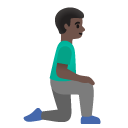
Man Kneeling Facing Right: Dark Skin Tone
U+1F9CE U+1F3FF U+200D U+2642 U+FE0F U+200D U+27A1 U+FE0F · :man_kneeling_facing_right_dark_skin_tone:
Trend 42
Meaning layers
- interpretation
- Used to show someone kneeling before something impressive, submitting to a situation, or ironically 'bowing down' to a king or queen. Also used in drag racing/gaming contexts to indicate moving forward while humbled.
- tiktok usage
- Appears in hype videos where someone is 'bowing down' to a performer or athlete, often stacked with crown emojis. Also used in 'I would kneel for this' trend captions.
- irony level
- 6 / 10
Platform meanings
- meaning
- Represents bowing down to someone iconic or a moment so impressive you have no choice but to submit. Common in reaction videos and stitch responses.
- trend usage
- Used in sports highlight reels, dance battle reactions, and 'respectfully, I kneel' commentary videos. Often layered with 👑 and 🔥 in captions.
- hashtags
- #KneelDown#BowDown#Respect#IconicMoment#WeKneel
- virality score
- 55 / 100
Cultural meanings
🇺🇸
Western / Gen-Z
Used heavily in ironic reverence culture — 'I kneel' is a Gen Z way of saying something is undeniably excellent. The dark skin tone adds racial representation and is generally embraced as part of inclusive emoji usage.
🇵🇰
Pakistan & India
The kneeling gesture resonates with cultural practices of showing respect to elders and religious supplication. May be used sincerely in religious contexts or light-heartedly to express being humbled.
🌍
Middle East
Kneeling carries strong associations with Islamic prayer (sujood) and respectful submission before God. Likely used in devotional or spiritual contexts, though the directional facing adds a less traditional nuance.
🌐
Global Neutral
Universally understood as a gesture of respect, submission, or humility. The directional facing-right element adds a sense of purposeful movement, making it accessible across cultures as a positive reverence symbol.
🇧🇩
Bangladesh
Similar to broader South Asian interpretation — kneeling is associated with respect for elders, religious practice, and humility. May appear in devotional social media posts or respectful acknowledgments.
🇱🇰
Sri Lanka
Kneeling is tied to both Buddhist and Hindu traditions of reverence and prayer. The emoji may be used in spiritual contexts or to express deep respect in interpersonal communication.
🇨🇳
China
Kneeling (跪) carries historically complex connotations in Chinese culture — associated with traditional rituals, filial piety, or extreme apology. May be used cautiously, with some interpreting it as overly dramatic.
🇯🇵
Japan
Bowing is the dominant gesture of respect in Japan, so kneeling may feel foreign or ceremonial. However, it could be used in gaming, anime, or chivalric fantasy contexts where kneeling before a superior is narratively familiar.
🇰🇷
South Korea
Associated with deep respect or dramatic emotional expression common in K-drama tropes. May be used humorously in fan culture to express devotion to K-pop idols or impressive performances.
🇹🇼
Taiwan
Used similarly to broader East Asian contexts — kneeling suggests deep respect or ceremonial submission. May appear in gaming communities or fan culture with ironic or sincere reverence.
🇭🇰
Hong Kong
Likely used in protest or solidarity contexts (echoing the 'taking a knee' gesture), as well as in casual respect expressions in pop culture commentary.
🇵🇭
Philippines
Kneeling is deeply tied to Catholic religious practice and respect for elders. The emoji may appear in religious posts, expressions of gratitude, or dramatic humorous contexts common in Filipino digital culture.
🇮🇩
Indonesia
Associated with Islamic prayer positions and traditional respectful gestures. May be used in spiritual contexts or humorously to express being completely humbled by something.
🇹🇭
Thailand
Kneeling relates to traditional Thai reverence gestures and Buddhist practice. May be used in respectful acknowledgment of royalty, religion, or impressive skill.
🇻🇳
Vietnam
Connected to traditional gestures of respect before elders and ancestors. May be used sincerely in family or community contexts, or lightly in digital spaces to express admiration.
🇲🇾
Malaysia
Used across its multicultural population to express respect — resonates with Islamic, Hindu, and Chinese Malaysian traditions of showing reverence through gesture.
🇸🇦
Saudi Arabia
Strongly associated with Islamic prayer and submission before God. Likely used in spiritual or devotional contexts, though secular use may be limited given cultural sensitivities around physical gestures.
🇦🇪
UAE
In the cosmopolitan UAE context, used both in traditional religious expressions of humility and in modern pop culture to react to impressive moments in entertainment and sports.
🇪🇬
Egypt
May carry religious connotations related to prayer and submission before God. Also used in casual digital contexts to express admiration or dramatic defeat in arguments.
🇹🇷
Turkey
Used to express deep respect or dramatic emotional acknowledgment. May appear in sports fan communities, pop culture discussions, and sincere expressions of admiration.
🇮🇷
Iran
Kneeling carries spiritual resonance in Islamic and Shia cultural contexts. Digital use may include both sincere religious expression and lighthearted admiration in private communication.
🇳🇬
Nigeria
Used to express deep respect — echoing cultural norms where kneeling before elders or royalty is a sign of honor. Also adopted in Afrobeats fan culture to hype exceptional artists or moments.
🇿🇦
South Africa
The kneeling gesture carries both cultural significance in traditional communities and political resonance connected to the 'taking a knee' movement against racial injustice. Used respectfully across contexts.
🇬🇧
UK & Ireland
Used primarily in ironic or humorous digital contexts — 'I am literally kneeling' as an expression of being overwhelmed by something brilliant. Also carries awareness of its protest symbolism.
🇫🇷
France
Generally used in ironic admiration or dramatic self-deprecation in digital discourse. French digital culture may use it in reaction to exceptional art, cuisine, or rhetoric.
🇩🇪
Germany
Practical and direct — used to express genuine respect or admiration without excessive irony. May appear in sports communities or professional acknowledgment contexts.
🇪🇸
Spain & Italy
Used with characteristic expressiveness to indicate intense admiration or theatrical submission to a beautiful moment — food, football, or art are common triggers.
🇧🇷
Brazil
Widely used in sports culture (especially football) to express reverence for legendary plays or players. Also appears in religious contexts and dramatic social media reactions.
🇲🇽
Mexico
Used to show deep respect in both religious and secular contexts. Common in football fan communities and pop culture reactions, often with high emotional intensity.
🌎
Latin America
Broadly used across Latin American digital culture to express admiration, devotion, and humility — resonates with both Catholic traditions and vibrant sports fan cultures.
🇦🇺
Australia & NZ
Used mostly in casual, ironic digital contexts to hype something impressive. May also carry awareness of its Indigenous and multicultural respect dimensions in more thoughtful usage.
How its meaning shifted
- 2010
This specific emoji did not exist in 2010. Standard emoji sets were far more limited and directional/skin-tone ZWJ sequences were not yet supported.
- 2015
Still not yet introduced. Emoji diversity efforts were beginning with skin tone modifiers, but complex ZWJ directional sequences were not yet available.
- 2020
Directional emoji sequences began rolling out and skin-tone inclusive kneeling emojis gained traction alongside the global 'taking a knee' protest movement, giving kneeling emojis broader cultural resonance.
- 2026
Used across Gen Z digital culture as shorthand for reverence, admiration, and ironic submission. The dark skin tone variant is embraced as part of normalized diverse emoji representation in inclusive digital communication.
See it on every platform
Adjacent emojis
- Often confused with
- man kneeling facing leftman in lotus positionperson facepalming
- Can replace
- folded handsperson bowingraising hands
Share & embed
Frequently asked
01What does the 🧎🏿♂️➡️ Man Kneeling Facing Right: Dark Skin Tone emoji mean?
A man with dark skin tone kneeling and facing to the right, depicted in a directional kneeling pose. Part of the ZWJ (Zero Width Joiner) sequence combining the kneeling man emoji with a rightward arrow.
02What does 🧎🏿♂️➡️ mean on TikTok?
Represents bowing down to someone iconic or a moment so impressive you have no choice but to submit. Common in reaction videos and stitch responses.
03What does 🧎🏿♂️➡️ mean on WhatsApp?
Expressing deep respect or humility toward someone in conversation. Can mean 'I bow to you' after losing a debate or acknowledging someone's skill.
04What does 🧎🏿♂️➡️ mean in Gen-Z slang?
Used to show someone kneeling before something impressive, submitting to a situation, or ironically 'bowing down' to a king or queen. Also used in drag racing/gaming contexts to indicate moving forward while humbled.
05Is the 🧎🏿♂️➡️ emoji safe to use?
Represents respect, humility, submission, prayer, or admiration. Generally positive and culturally respectful in most contexts.
06What does 🧎🏿♂️➡️ mean in texting?
Kneeling is universally associated with surrender, prayer, or deep respect across cultures. The directional facing-right element adds a sense of movement or purpose, suggesting active submission rather than static defeat.
07What is the shortcode for 🧎🏿♂️➡️?
The shortcode for Man Kneeling Facing Right: Dark Skin Tone is :man_kneeling_facing_right_dark_skin_tone:
08What does 🧎🏿♂️➡️ mean in dating?
Sent to express that someone has you completely smitten — 'I'm on my knees for you' energy. Playful way to show extreme admiration for a crush.
Safety & usage
- Safe meaning
- Represents respect, humility, submission, prayer, or admiration. Generally positive and culturally respectful in most contexts.
- Caution
- Could be used in degrading power-dynamic contexts to mock or demean someone, implying forced submission or humiliation.
The kneeling gesture carries political symbolism in some contexts (e.g., protest movements). In certain cultural or religious contexts, using it frivolously could be considered disrespectful. Generally safe but contextually sensitive.
How it looks across platforms
Appearance varies by platform and device. Google Noto, Twemoji, and OpenMoji are open-source.