🏋🏽♂️
The Emoji
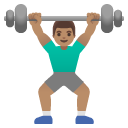
Man Lifting Weights: Medium Skin Tone
U+1F3CB U+1F3FD U+200D U+2642 U+FE0F · :man_lifting_weights_medium_skin_tone:
Trend 68
Meaning layers
- interpretation
- Used to flex gym dedication, signal 'gym bro' identity, or ironically post about skipping leg day. Often deployed in 'no days off' grind culture content.
- tiktok usage
- Appears in gym transformation videos, 'day in my life' fitness content, and ironically in videos about being too tired to work out.
- irony level
- 5 / 10
Platform meanings
- meaning
- Represents gym dedication, fitness goals, and workout content. Also used ironically in relatable 'I said I'd go to the gym' content.
- trend usage
- Appears in transformation videos, gym check-ins, fitness challenges, and 'POV: you're a gym bro' trend formats.
- hashtags
- #GymTok#FitTok#GainsTok#GymLife#WorkoutMotivation
- virality score
- 72 / 100
Cultural meanings
🇺🇸
Western / Gen-Z
Core symbol of gym bro culture and fitness identity, used both earnestly and ironically in meme content about hustle culture and self-improvement.
🇵🇰
Pakistan & India
Associated with the growing gym culture among urban youth; used to signal dedication to fitness and is popular in Punjabi gym content and fitness influencer circles.
🌍
Middle East
Resonates strongly with the booming gym culture in Gulf states and Levant; used to project discipline and masculinity in social media fitness content.
🌐
Global Neutral
Universally understood as representing weightlifting and physical fitness with minimal cultural ambiguity across most global audiences.
🇧🇩
Bangladesh
Increasingly used among urban youth as gym culture expands in Dhaka and major cities; primarily signals fitness aspirations and dedication.
🇱🇰
Sri Lanka
Used in fitness community posts and gym check-ins, reflecting a growing interest in strength training among younger Sri Lankans.
🇨🇳
China
Popular in fitness WeChat and Weibo content; associated with the growing 'peng' (fit/buff) aesthetic culture among Chinese youth.
🇯🇵
Japan
Used in gym and sports content, though Japanese fitness culture tends toward endurance sports; still widely understood as a weightlifting symbol.
🇰🇷
South Korea
Highly resonant with Korea's intense fitness and body image culture; frequently used in PT content and 'healthy glow' lifestyle posts.
🇹🇼
Taiwan
Common in fitness influencer content and gym check-in culture; associated with the health-conscious lifestyle trend popular in Taiwanese cities.
🇭🇰
Hong Kong
Used in fitness and wellness social media content; aligns with Hong Kong's active lifestyle culture and CrossFit/gym boom.
🇵🇭
Philippines
Popular in gym selfie culture and fitness motivation posts; resonates with the strong bodybuilding and fitness influencer community.
🇮🇩
Indonesia
Widely used in gym content across Instagram and TikTok; aligns with the growing fitness culture in urban Indonesian youth communities.
🇹🇭
Thailand
Associated with Muay Thai and gym culture; used in fitness posts with strong cultural overlap with martial arts training content.
🇻🇳
Vietnam
Increasingly common in urban youth fitness content; signals modern, health-conscious lifestyle especially among Ho Chi Minh City gym communities.
🇲🇾
Malaysia
Used in fitness social media content across ethnic communities; signals dedication to health in an increasingly gym-savvy population.
🇸🇦
Saudi Arabia
Extremely relevant given the Kingdom's booming gym culture post-Vision 2030; used heavily in male fitness content and national sports promotion.
🇦🇪
UAE
Associated with the Dubai fitness lifestyle phenomenon; used prolifically by gym influencers and the aspirational health content culture of the Emirates.
🇪🇬
Egypt
Used in Cairo and Alexandria gym community content; reflects the rapid growth of gym culture among Egyptian youth and fitness influencers.
🇹🇷
Turkey
Common in Turkish fitness and bodybuilding content; associated with the strong gym culture in Istanbul and major Turkish cities.
🇮🇷
Iran
Used in private fitness communities and social media gym content; fitness culture is vibrant despite social media restrictions.
🇳🇬
Nigeria
Associated with Lagos gym culture and the 'body goals' movement; used in Afrobeats fitness content and Nigerian gym influencer spaces.
🇿🇦
South Africa
Common in Cape Town and Johannesburg gym and CrossFit communities; signals fitness dedication in a health-conscious urban culture.
🇬🇧
UK & Ireland
Used in gym lad culture content and fitness posts; associated with the British 'graft' mentality and gym selfie culture.
🇫🇷
France
Used in French fitness content though with slightly less cultural intensity than Anglo gym culture; associated with health and sport rather than bodybuilding.
🇩🇪
Germany
Common in German fitness content; associated with disciplined training culture and the strong German sports and bodybuilding tradition.
🇪🇸
Spain & Italy
Used in Mediterranean fitness content; often combined with beach body aesthetics and summer preparation culture.
🇧🇷
Brazil
Extremely common given Brazil's intense gym culture; strongly associated with bodybuilding, aesthetics, and the Brazilian fitness lifestyle.
🇲🇽
Mexico
Used in Mexican gym and calisthenics content; reflects growing fitness culture particularly among urban youth and lucha libre-inspired strength content.
🌎
Latin America
Broadly resonates across Latin America's growing gym culture; associated with body-positive fitness movements and aesthetic training goals.
🇦🇺
Australia & NZ
Common in Australian gym culture content; associated with outdoor fitness lifestyle, surf gym aesthetics, and the laid-back but dedicated Aussie fitness identity.
How its meaning shifted
- 2010
Rarely used; emoji culture was nascent and skin tone modifiers didn't yet exist. The base weightlifter emoji was primarily used literally in sports contexts.
- 2015
Skin tone modifiers introduced in Unicode 8.0 (2015); began appearing in fitness social media content with increased gym selfie culture growth.
- 2020
Exploded with pandemic fitness content as home workouts and gym reopening culture dominated social media; became a staple of hustle culture and self-improvement discourse.
- 2026
Deeply embedded in fitness influencer culture, used both sincerely and with heavy irony in post-hustle culture commentary; a recognized symbol of gym bro identity and wellness lifestyle branding.
See it on every platform
Adjacent emojis
- Often confused with
- construction workerperson playing water polosuperhero
- Can replace
- flexed bicepsfiretrophy
Share & embed
Frequently asked
01What does the 🏋🏽♂️ Man Lifting Weights: Medium Skin Tone emoji mean?
A man with medium skin tone lifting a barbell overhead, representing weightlifting, strength training, and physical fitness.
02What does 🏋🏽♂️ mean on TikTok?
Represents gym dedication, fitness goals, and workout content. Also used ironically in relatable 'I said I'd go to the gym' content.
03What does 🏋🏽♂️ mean on WhatsApp?
Signals going to or coming back from the gym. Used in group chats to announce workout sessions or invite friends.
04What does 🏋🏽♂️ mean in Gen-Z slang?
Used to flex gym dedication, signal 'gym bro' identity, or ironically post about skipping leg day. Often deployed in 'no days off' grind culture content.
05Is the 🏋🏽♂️ emoji safe to use?
Represents gym activity, weightlifting, physical fitness, and athletic dedication in an entirely safe and positive context.
06What does 🏋🏽♂️ mean in texting?
Signals a desire to project strength, discipline, and self-improvement. Often tied to identity formation around physical prowess and hustle culture.
07What is the shortcode for 🏋🏽♂️?
The shortcode for Man Lifting Weights: Medium Skin Tone is :man_lifting_weights_medium_skin_tone:
08What does 🏋🏽♂️ mean in dating?
Used to subtly flex physical fitness or invite someone to 'come watch me lift.' Can be a low-key flex in DMs.
Safety & usage
- Safe meaning
- Represents gym activity, weightlifting, physical fitness, and athletic dedication in an entirely safe and positive context.
- Caution
- Can be used in body-shaming contexts, toxic masculinity discourse, or to mock people who don't conform to gym culture body standards.
Occasionally weaponized in 'gym bro' toxic fitness advice spaces where extreme dieting or steroid use is normalized. Generally very low risk.
How it looks across platforms
Appearance varies by platform and device. Google Noto, Twemoji, and OpenMoji are open-source.