👱🏾♂️
The Emoji
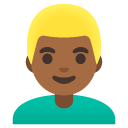
Man: Medium-dark Skin Tone, Blond Hair
U+1F471 U+1F3FE U+200D U+2642 U+FE0F · :man_mediumdark_skin_tone_blond_hair:
Trend 32
Meaning layers
- interpretation
- Often used to represent a mixed-heritage or biracial identity, sometimes used humorously to describe someone with an unexpected or rare look combo. Can also be used as a self-identifier by people with medium-dark complexions and naturally lighter or dyed blond hair.
- tiktok usage
- Used in 'describe yourself in emoji' trends, identity reveal videos, or to represent characters in stories. Sometimes appears in 'rare combo' or 'unexpected aesthetic' content.
- irony level
- 3 / 10
Platform meanings
- meaning
- Used in self-identification, character creation videos, and 'describe yourself with emojis' trends. Also appears in diverse casting or representation discussions.
- trend usage
- Appears in trends like 'emoji that looks like me,' skin tone + hair combo challenges, and identity-affirmation content.
- hashtags
- #emojiidentity#melaninandblonde#mixedheritage#charactercreator#rarecombination
- virality score
- 38 / 100
Cultural meanings
🇺🇸
Western / Gen-Z
Seen as a representation of mixed heritage or dyed blond hair on darker skin, often celebrated as a cool, unique aesthetic. Gen Z uses it to affirm diverse beauty standards and non-traditional looks.
🇵🇰
Pakistan & India
Less commonly used as self-representation due to rarity of this natural look; may be used to describe a specific person or a Bollywood character with dyed hair. Can sometimes evoke curiosity or surprise.
🌍
Middle East
Occasionally used to represent someone with dyed blond hair, which is a popular style in some Middle Eastern urban cultures. The combination of dark skin and blond hair may be seen as fashionable or Western-influenced.
🌐
Global Neutral
Understood universally as a man with a medium-dark skin tone and blond hair, used for general representation or to describe a specific person's appearance without deeper cultural connotation.
🇧🇩
Bangladesh
Rarely used as self-representation; more likely used to describe a foreign person or a character in media. May be seen as exotic or unfamiliar in casual conversation.
🇱🇰
Sri Lanka
Similar to Bangladesh usage — more likely used to describe a fictional character or a person of mixed heritage seen in media than as personal identification.
🇨🇳
China
May be used to represent a mixed-race character or a foreigner with an unusual appearance. Blond hair is strongly associated with Western or non-Asian identity, so this combination may read as distinctly 'foreign.'
🇯🇵
Japan
Could represent a mixed-heritage character or a Japanese person with dyed blond hair, which is culturally common in Japan's fashion and youth subculture (gyaru, visual kei influences).
🇰🇷
South Korea
Blond hair is trendy in Korean pop culture; this emoji could represent a K-pop adjacent aesthetic or someone who has bleached their hair. The darker skin tone may be less commonly self-identified in conservative contexts.
🇹🇼
Taiwan
Used similarly to South Korea — could represent someone with dyed hair or a mixed-heritage person. Taiwanese youth culture embraces diverse hair colors, making this feel fashionable rather than unusual.
🇭🇰
Hong Kong
In cosmopolitan Hong Kong, this emoji is used neutrally to represent a person with this look, whether mixed-heritage or fashion-forward with dyed hair. No strong stigma attached.
🇵🇭
Philippines
Some Filipinos with mixed Spanish, American, or other heritage may identify with this emoji. It can also represent a specific friend or celebrity with a similar look.
🇮🇩
Indonesia
Less common as self-representation; more likely used to describe a person with a distinctive or foreign look. Blond hair on darker skin may be seen as stylish or unusual depending on context.
🇹🇭
Thailand
Could represent someone with dyed hair (very common in Thai youth fashion) or a mixed-heritage person. Thais may associate it with trendy, fashion-forward identity.
🇻🇳
Vietnam
Likely used to describe a foreign or mixed-heritage person. Dyed blond hair is growing in popularity among Vietnamese youth, so this may also represent a fashion-forward individual.
🇲🇾
Malaysia
Malaysia's multiracial society means this emoji could represent someone of mixed Malay, Indian, or other heritage. It may also just describe a person's chosen hair color without deeper identity significance.
🇸🇦
Saudi Arabia
Blond hair is naturally occurring among some Arab populations; this emoji could represent a darker-skinned Arab man with natural or dyed blond hair. Used casually to describe appearance.
🇦🇪
UAE
In the UAE's diverse population, this emoji could represent any number of nationalities. It may be used to describe an expatriate or a local with dyed hair in casual conversation.
🇪🇬
Egypt
Could represent a person of mixed heritage or someone with dyed hair; Egyptians with naturally varied hair tones exist, so this may be used as genuine self-representation or to describe someone specific.
🇹🇷
Turkey
Turkey's diverse genetic heritage means blond hair on darker skin is not entirely uncommon. This emoji could be used casually to describe someone's look without strong cultural overtones.
🇮🇷
Iran
Iranians have diverse features; this emoji could represent someone with a mix of darker complexion and lighter hair. Dyed blond hair is also fashionable in urban Iran, making this a relatable look.
🇳🇬
Nigeria
In Nigeria, this emoji may be used to represent a mixed-heritage person or someone who has bleached or dyed their hair blond, a growing fashion trend. Could also be used humorously in meme contexts.
🇿🇦
South Africa
South Africa's diverse population makes this emoji relatable for mixed-heritage individuals. It may represent a 'Coloured' (mixed-race) identity or simply someone with dyed hair in casual usage.
🇬🇧
UK & Ireland
In the diverse UK, this emoji is used by people of mixed heritage or those with dyed blond hair to self-represent. It's also used casually to describe someone in conversation without strong irony.
🇫🇷
France
France's large mixed-heritage population means this emoji could represent a Franco-African or North African person with blond-dyed hair. Used casually in description or self-identification.
🇩🇪
Germany
In Germany's increasingly diverse society, this emoji may represent a person of African or Middle Eastern descent with blond-dyed hair, or used neutrally in digital communication.
🇪🇸
Spain & Italy
Mediterranean populations sometimes have naturally darker complexions; this emoji could represent someone from Southern Europe or Latin America with blond hair. Used casually and without strong cultural weight.
🇧🇷
Brazil
Brazil's extremely diverse genetic heritage makes this a very relatable emoji — Afro-Brazilian men with blond-dyed or mixed-genetic hair tones exist widely. Used naturally and without irony as self-representation.
🇲🇽
Mexico
In Mexico, mixed-heritage (mestizo and Afro-Mexican) individuals may use this emoji to self-represent. It can also describe a specific person or celebrity with this appearance.
🌎
Latin America
Across Latin America's diverse populations, this emoji is used genuinely to represent mixed-heritage men with lighter hair. It's one of the more universally relatable emoji combos in the region.
🇦🇺
Australia & NZ
In multicultural Australia and New Zealand, this emoji is used for self-representation by men with this look or to describe someone in conversation. It is associated with diversity and inclusion messaging.
How its meaning shifted
- 2010
This specific emoji combination did not exist in 2010; human emoji were a single generic yellow figure with no skin tone or hair color modifiers available.
- 2015
Skin tone modifiers were introduced by Unicode in 2015, but the blond hair + skin tone combination was not yet fully standardized. Early diverse emoji were celebrated but had limited platform support.
- 2020
By 2020, this emoji was fully supported across major platforms and used for identity representation, particularly in conversations about diverse beauty standards and mixed-race identity.
- 2026
In 2026, this emoji is used naturally for self-identification, in diverse character representation, and in meme culture around genetic traits and character customization. It is a niche but stable part of the emoji lexicon.
See it on every platform
Compare with
Adjacent emojis
Share & embed
Frequently asked
01What does the 👱🏾♂️ Man: Medium-dark Skin Tone, Blond Hair emoji mean?
A man with medium-dark skin tone and blond hair, represented as a human figure emoji combining the man gender modifier, medium-dark skin tone modifier (Fitzpatrick scale type 5), and blond hair characteristic.
02What does 👱🏾♂️ mean on TikTok?
Used in self-identification, character creation videos, and 'describe yourself with emojis' trends. Also appears in diverse casting or representation discussions.
03What does 👱🏾♂️ mean on WhatsApp?
Used to represent a person in conversations — 'my friend looks like 👱🏾♂️' or to describe someone's vibe or appearance.
04What does 👱🏾♂️ mean in Gen-Z slang?
Often used to represent a mixed-heritage or biracial identity, sometimes used humorously to describe someone with an unexpected or rare look combo. Can also be used as a self-identifier by people with medium-dark complexions and naturally lighter or dyed blond hair.
05Is the 👱🏾♂️ emoji safe to use?
A representation of a man with medium-dark skin tone and blond hair, used for identity expression, casual description, and representation in diverse digital communication.
06What does 👱🏾♂️ mean in texting?
The combination of medium-dark skin tone with blond hair can evoke feelings of uniqueness or pride in a distinctive appearance. For users who identify with this look, it can be affirming and validating, particularly for those of mixed heritage or those who dye their hair.
07What is the shortcode for 👱🏾♂️?
The shortcode for Man: Medium-dark Skin Tone, Blond Hair is :man_mediumdark_skin_tone_blond_hair:
08What does 👱🏾♂️ mean in dating?
Occasionally used to describe a crush or partner with this specific look — 'he looks like 👱🏾♂️ and I'm obsessed.' Can be used playfully to hint at a type.
Safety & usage
- Safe meaning
- A representation of a man with medium-dark skin tone and blond hair, used for identity expression, casual description, and representation in diverse digital communication.
- Caution
- In rare cases, could be used mockingly to comment on someone's appearance as 'unusual' or to make jokes about unexpected genetic combinations, though this is uncommon.
Generally safe with no widespread toxic usage patterns. Should not be used to mock or fetishize mixed-heritage appearances. The emoji is a positive representation tool when used respectfully.
How it looks across platforms
Appearance varies by platform and device. Google Noto, Twemoji, and OpenMoji are open-source.