🤾🏼♂️
The Emoji
Man Playing Handball: Medium-light Skin Tone
U+1F93E U+1F3FC U+200D U+2642 U+FE0F · :man_playing_handball_mediumlight_skin_tone:
Trend 22
Meaning layers
- interpretation
- Used to signal athleticism, gym culture, or competitive energy. Sometimes used ironically to represent someone trying too hard or being extra aggressive in casual situations.
- tiktok usage
- Appears in sports highlight captions, gym motivation videos, or ironically when someone is being overly competitive about something trivial.
- irony level
- 4 / 10
Platform meanings
- meaning
- Represents athletic energy, sports hype, or competitive motivation. Also used ironically for dramatic overreactions.
- trend usage
- Used in sports POV videos, gym transformation content, handball highlight reels, and ironically in 'going too hard' trend captions.
- hashtags
- #handball#athleticlife#sportsemoji#gymtok#competitivespirit
- virality score
- 28 / 100
Cultural meanings
🇺🇸
Western / Gen-Z
Used casually among sporty Gen Z circles, often ironically to represent someone being overly competitive or going all-out at something mundane.
🇵🇰
Pakistan & India
Associated with sports culture generally; handball is niche so it may be loosely interpreted as any athletic or competitive activity. Occasionally used to cheer on sportspeople.
🌍
Middle East
Handball is popular in some Middle Eastern countries like Qatar and Egypt; the emoji carries genuine sports enthusiasm there. Skin tone representation is appreciated for inclusivity.
🌐
Global Neutral
Universally understood as representing athletic activity or sports participation, regardless of handball's popularity in a given region.
🇧🇩
Bangladesh
Sports emoji use is growing; this would be interpreted as a generic athletic or sports figure rather than specifically handball.
🇱🇰
Sri Lanka
Handball is uncommon in Sri Lanka so the emoji is likely interpreted as a general sports or throwing action rather than a specific sport.
🇨🇳
China
Handball has moderate recognition in China; the emoji could be used in sports contexts but is less common than football or basketball emoji.
🇯🇵
Japan
Japan has a strong handball culture especially at the women's level; this emoji is recognized and used legitimately in sports conversations.
🇰🇷
South Korea
Handball is a well-known sport in South Korea with Olympic history; the emoji is used authentically in sports discussion and fan content.
🇹🇼
Taiwan
Recognized as a sports emoji; used in athletic and fitness contexts, though handball itself has limited mainstream popularity.
🇭🇰
Hong Kong
Used in general sports contexts; handball is relatively niche so it may be interpreted as a broader athletic symbol.
🇵🇭
Philippines
Basketball dominates sports culture so this emoji is often interpreted as a generic sporty/athletic figure rather than specifically handball.
🇮🇩
Indonesia
Handball is emerging in Indonesia; the emoji is mostly used as a general sports or active lifestyle symbol.
🇹🇭
Thailand
Recognized as a sports figure; handball is not widely played so usage trends toward general athletic meaning.
🇻🇳
Vietnam
Sports emoji usage is increasing; this emoji is interpreted as athletic energy or general sports participation rather than handball specifically.
🇲🇾
Malaysia
Used in sports and fitness communities; handball is niche but the athletic imagery resonates with active lifestyle content.
🇸🇦
Saudi Arabia
Handball is popular in Saudi Arabia and the Gulf region; the emoji is used authentically in sports fan content and athletic discussions.
🇦🇪
UAE
The UAE has a growing handball scene; used in sports contexts with genuine recognition, especially among youth and sports enthusiasts.
🇪🇬
Egypt
Egypt is a handball powerhouse in Africa; this emoji carries strong sports cultural resonance and is used proudly in handball fan discussions.
🇹🇷
Turkey
Turkey has a growing handball culture; the emoji is used in sports contexts with increasing recognition among younger audiences.
🇮🇷
Iran
Used in sports and fitness contexts; handball is known but not dominant so interpretation leans toward general athleticism.
🇳🇬
Nigeria
Sports culture is strong but handball is niche; the emoji is often read as general athletic energy or competitive spirit.
🇿🇦
South Africa
Handball is not widely played; the emoji is used as a general sports symbol in fitness and athletic lifestyle content.
🇬🇧
UK & Ireland
Handball has limited following in the UK; the emoji is mostly used as a general athletic symbol or ironically in competitive contexts.
🇫🇷
France
France is a dominant handball nation globally; the emoji is widely recognized and used with genuine sports pride and fan enthusiasm.
🇩🇪
Germany
Germany has a strong handball culture; the emoji is used authentically and frequently in sports discussions, fan content, and Bundesliga commentary.
🇪🇸
Spain & Italy
Spain and Italy both have professional handball leagues; the emoji is recognized in sports circles though football dominates cultural conversation.
🇧🇷
Brazil
Handball exists but is overshadowed by football and volleyball; the emoji is used occasionally in sports contexts with general athletic interpretation.
🇲🇽
Mexico
Handball is niche in Mexico; the emoji is typically interpreted as a general sports or athletic figure rather than the specific sport.
🌎
Latin America
Across Latin America handball is relatively uncommon; the emoji reads as generic athletic energy, often used in fitness and sports motivation content.
🇦🇺
Australia & NZ
Handball in Australia refers to a different playground game; this emoji might cause mild confusion but is generally read as the Olympic sport in sports contexts.
How its meaning shifted
- 2010
Emoji did not exist yet; handball representation in digital communication was essentially absent.
- 2015
The base handball emoji was introduced around this period; used primarily in literal sports contexts by handball fans and athletes.
- 2020
Skin tone variants increased usage for personal representation; became more common in fitness, gym, and sports motivation content across platforms.
- 2026
Used in a mix of literal sports contexts, fitness culture content, and ironic meme usage. Representation-focused usage remains steady; niche but consistent presence in sports communities globally.
See it on every platform
Adjacent emojis
- Often confused with
- person bouncing ballperson playing water polorugby football
- Can replace
- basketballperson runningflexed biceps
Share & embed
Frequently asked
01What does the 🤾🏼♂️ Man Playing Handball: Medium-light Skin Tone emoji mean?
A man with medium-light skin tone playing handball, depicted mid-throw or in an athletic stance typical of the sport.
02What does 🤾🏼♂️ mean on TikTok?
Represents athletic energy, sports hype, or competitive motivation. Also used ironically for dramatic overreactions.
03What does 🤾🏼♂️ mean on WhatsApp?
Tells someone you're playing sports, being active, or about to go hard at something.
04What does 🤾🏼♂️ mean in Gen-Z slang?
Used to signal athleticism, gym culture, or competitive energy. Sometimes used ironically to represent someone trying too hard or being extra aggressive in casual situations.
05Is the 🤾🏼♂️ emoji safe to use?
Represents handball sport and athletic activity; clean, positive, and sports-affirming in nearly all contexts.
06What does 🤾🏼♂️ mean in texting?
Conveys a strong sense of physicality, determination, and competitive spirit. Often evokes feelings of empowerment and athletic pride. The skin tone modifier adds a layer of personal identity and representation.
07What is the shortcode for 🤾🏼♂️?
The shortcode for Man Playing Handball: Medium-light Skin Tone is :man_playing_handball_mediumlight_skin_tone:
08What does 🤾🏼♂️ mean in dating?
Could be used to show off an active lifestyle or hint at physical fitness, signaling attractiveness through athleticism.
Safety & usage
- Safe meaning
- Represents handball sport and athletic activity; clean, positive, and sports-affirming in nearly all contexts.
- Caution
- Extremely rare misuse; could theoretically be used to imply throwing or aggression in a hostile context but this is highly unusual.
No significant safety concerns. The emoji is overwhelmingly used in benign sports and fitness contexts. Skin tone modifier is generally used for personal representation and is not a source of controversy.
How it looks across platforms
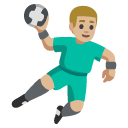
Appearance varies by platform and device. Google Noto, Twemoji, and OpenMoji are open-source.