🏃🏽♂️
The Emoji
Man Running: Medium Skin Tone
U+1F3C3 U+1F3FD U+200D U+2642 U+FE0F · :man_running_medium_skin_tone:
Trend 68
Meaning layers
- interpretation
- Used to signal escaping awkward situations, ghosting, fleeing drama, or 'getting out of there' energy. Also used genuinely for fitness motivation or race-related content.
- tiktok usage
- Appears in 'running away from my problems' trends, escape montages, and fitness motivation videos. Often paired with chaotic or stressful content captions.
- irony level
- 7 / 10
Platform meanings
- meaning
- Escape, fleeing drama, fitness motivation, or humorous avoidance of responsibilities and feelings.
- trend usage
- Used in 'running from my problems' duets, fitness transformation videos, and chaotic life-update captions. Frequently appears in comment sections as a reaction to overwhelming situations.
- hashtags
- #RunningFromProblems#FitnessMotivation#MorningRun#RunningAway#GymTok
- virality score
- 72 / 100
Cultural meanings
🇺🇸
Western / Gen-Z
Primarily used ironically to mean 'escaping this situation immediately' — one of the go-to emojis for humor about avoidance, ghosting, or fleeing responsibilities. Also used earnestly for fitness content.
🇵🇰
Pakistan & India
Used heavily in cricket, fitness, and motivational content — 'running toward success' framing is common. Also appears in morning walk/run culture posts among health-conscious urban communities.
🌍
Middle East
Associated with fitness culture, morning running routines, and marathon events. Used in Gulf countries especially around fitness challenges and marathon events like the Dubai Run or Riyadh Marathon.
🌐
Global Neutral
Universally understood as physical running or movement — the skin tone modifier makes it feel more personal and representative, broadly positive and non-controversial.
🇧🇩
Bangladesh
Used primarily in literal fitness and sports contexts; growing use in motivational content among urban youth. Less ironic usage compared to Western Gen Z.
🇱🇰
Sri Lanka
Associated with athletics, school sports day culture, and fitness motivation. Used in social media posts about morning exercise routines and national marathon events.
🇨🇳
China
Used in fitness app contexts, marathon culture (major Chinese cities host popular marathons), and motivational WeChat/Weibo content. Skin tone representation is noted but not widely debated.
🇯🇵
Japan
Strongly associated with taikai (athletic meets), ekiden relay races, and the deeply embedded running culture in Japanese society. Used earnestly in fitness and athletic contexts with minimal ironic usage.
🇰🇷
South Korea
Popular in fitness and K-health trend content. Used in running challenge posts on KakaoTalk and Instagram; also appears in idol fan content where idols are shown exercising.
🇹🇼
Taiwan
Used in fitness and outdoor activity content, particularly around popular trail running and urban marathon culture. Straightforward positive connotation.
🇭🇰
Hong Kong
Tied to the popular urban running culture and charity runs like the Standard Chartered Hong Kong Marathon. Used practically and motivationally with little ironic layering.
🇵🇭
Philippines
Used in fitness content, fun run event promotions (a hugely popular activity in the Philippines), and motivational social media posts. Bright, positive connotation.
🇮🇩
Indonesia
Associated with the growing urban running community and health movement. Used in Instagram fitness content and motivational captions by Indonesian millennials and Gen Z.
🇹🇭
Thailand
Linked to running events, fitness culture, and motivational LINE and Instagram posts. Thai running clubs frequently use it in group chat communications.
🇻🇳
Vietnam
Used in fitness and marathon content, particularly around the growing Vietnamese running community. Motivational and aspirational framing dominates.
🇲🇾
Malaysia
Common in the active running community content on Instagram and Facebook. Also used in Ramadan fitness posts and charity run event promotions.
🇸🇦
Saudi Arabia
Associated with Vision 2030 fitness initiatives, the Riyadh Marathon, and growing gym culture. Used in male fitness spaces; culturally straightforward with positive connotation.
🇦🇪
UAE
Heavily used around the Dubai Marathon, fitness influencer content, and the UAE's strong gym/wellness culture. One of the more active emoji-using regions for this symbol.
🇪🇬
Egypt
Used in fitness and sports content; Cairo Marathon and running culture posts. Youth use it in motivational contexts and occasionally in escape/avoidance humor borrowed from Western meme culture.
🇹🇷
Turkey
Tied to Istanbul Marathon content (one of the world's iconic races crossing two continents) and general fitness motivation posts on Instagram and Twitter.
🇮🇷
Iran
Used in fitness and sports content, particularly among urban youth. Associated with morning exercise routines, athletics, and motivational social media posts.
🇳🇬
Nigeria
Used in fitness content and sports motivation, particularly around sprinting and athletics given Nigeria's strong track tradition. Also adopted in hustle culture captions — 'grinding and running toward the bag.'
🇿🇦
South Africa
Associated with Comrades Marathon culture (a deeply important cultural event), parkrun communities, and broader running culture. Strong positive and community-oriented connotation.
🇬🇧
UK & Ireland
Used both ironically (fleeing awkward situations) and literally for parkrun, Marathon de Londres, and general fitness content. Gen Z British users adopt the escape/avoidance irony heavily.
🇫🇷
France
Linked to Paris Marathon culture and general jogging ('footing') as a French urban lifestyle staple. Used straightforwardly in fitness content with some adoption of ironic escape humor among younger users.
🇩🇪
Germany
Associated with disciplined fitness culture, marathon training, and outdoor running. Germans tend to use it literally and practically — for fitness tracking shares and running club posts.
🇪🇸
Spain & Italy
Used in marathon and fun run contexts (Madrid, Rome, Barcelona marathons are major cultural events). Also used by younger users in escape/avoidance humor borrowed from global meme culture.
🇧🇷
Brazil
Tied to São Paulo Marathon, beach running culture, and the Brazilian fitness obsession. Used enthusiastically in fitness content and also in escape humor — 'correndo das responsabilidades' (running from responsibilities).
🇲🇽
Mexico
Associated with fitness content, the Mexico City Marathon, and hustle/grind culture captions. Gen Z Mexicans also use it in the ironic escape-from-problems framing.
🌎
Latin America
Broadly used across Latin America for fitness motivation, running events, and hustle culture content. The escape/avoidance irony is increasingly adopted among younger social media users.
🇦🇺
Australia & NZ
Strongly tied to parkrun culture (hugely popular in both countries), City2Surf, and outdoor running lifestyle. Used earnestly for fitness and also ironically among younger Australians familiar with global meme culture.
How its meaning shifted
- 2010
Barely in use — emoji were new and skin tone modifiers did not yet exist. Generic running emoji used primarily as a literal representation of running or physical activity.
- 2015
Skin tone modifiers introduced (Unicode 8.0, 2015). Medium skin tone variant became available, marking a shift toward personal representation. Usage remained largely literal — fitness, sports, movement.
- 2020
Explosion of ironic 'running from my problems' usage accelerated by pandemic humor and TikTok meme culture. Became a staple of escape/avoidance communication alongside genuine fitness content.
- 2026
Dual identity firmly established: genuine fitness/running culture marker AND ironic escape emoji. Medium skin tone variant widely appreciated for representation. Used across all platforms with high contextual flexibility.
See it on every platform
Adjacent emojis
- Often confused with
- person walkingperson climbingperson biking
- Can replace
- person runningathletic shoeflexed biceps
Share & embed
Frequently asked
01What does the 🏃🏽♂️ Man Running: Medium Skin Tone emoji mean?
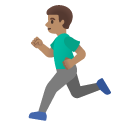
A man with medium skin tone depicted running, shown in profile view mid-stride with one foot raised and arms in motion.
02What does 🏃🏽♂️ mean on TikTok?
Escape, fleeing drama, fitness motivation, or humorous avoidance of responsibilities and feelings.
03What does 🏃🏽♂️ mean on WhatsApp?
Sent to indicate someone is literally running/on their way, or humorously fleeing from a topic mid-conversation.
04What does 🏃🏽♂️ mean in Gen-Z slang?
Used to signal escaping awkward situations, ghosting, fleeing drama, or 'getting out of there' energy. Also used genuinely for fitness motivation or race-related content.
05Is the 🏃🏽♂️ emoji safe to use?
Physical running, exercise, fitness motivation, movement, escaping situations humorously, urgency, speed.
06What does 🏃🏽♂️ mean in texting?
Running symbolizes both forward momentum and avoidance. Psychologically it can represent ambition and goal-chasing, or alternatively the flight response in stress-avoidance situations.
07What is the shortcode for 🏃🏽♂️?
The shortcode for Man Running: Medium Skin Tone is :man_running_medium_skin_tone:
08What does 🏃🏽♂️ mean in dating?
Rarely used as a flirt tool; sometimes sent after a risky or vulnerable message as 'I said what I said, now I'm running away haha.' Can imply nervous energy.
Safety & usage
- Safe meaning
- Physical running, exercise, fitness motivation, movement, escaping situations humorously, urgency, speed.
- Caution
- Can be used to mock someone for 'running away' from accountability or responsibility; occasionally used passive-aggressively to dismiss serious conversations.
No significant safety concerns. The skin tone modifier makes it a representation choice — some may note the absence of their own skin tone in responses. No NSFW or coded harmful uses documented.
How it looks across platforms
Appearance varies by platform and device. Google Noto, Twemoji, and OpenMoji are open-source.