🏄🏻♂️
The Emoji
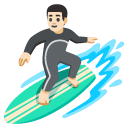
Man Surfing: Light Skin Tone
U+1F3C4 U+1F3FB U+200D U+2642 U+FE0F · :man_surfing_light_skin_tone:
Trend 55
Meaning layers
- interpretation
- Used to signal a laid-back, carefree 'going with the flow' attitude. Often expresses that someone is unbothered, coasting through life, or handling things effortlessly.
- tiktok usage
- Appears in beach lifestyle content, summer POVs, and 'main character energy' videos. Also used in 'not my problem' or 'vibing' captions.
- irony level
- 3 / 10
Platform meanings
- meaning
- Represents a chill, coastal, unbothered persona. Used in summer content, beach lifestyle vlogs, and 'flow state' narratives.
- trend usage
- Appears in 'day in my life at the beach' videos, surf culture content, and ironic 'not my problem' trend overlays.
- hashtags
- #SurfLife#BeachVibes#CoastalGrandkid#SummerPOV#GoWithTheFlow
- virality score
- 58 / 100
Cultural meanings
🇺🇸
Western / Gen-Z
Primarily signals a carefree, coastal lifestyle or the 'unbothered' personality archetype. Also used ironically to describe riding waves of chaos.
🇵🇰
Pakistan & India
Less common in everyday use; typically used literally for beach or water sports content. Occasionally adopted by coastal city youth (Mumbai, Karachi) in travel posts.
🌍
Middle East
Used in travel and leisure contexts, especially when visiting international beach destinations. Associated with luxury beach resorts and water sports in the Gulf.
🌐
Global Neutral
Universally understood as representing surfing and the beach lifestyle. Carries a broadly positive, carefree connotation across cultures.
🇧🇩
Bangladesh
Rarely used outside of literal water/beach context; Cox's Bazar beach content may feature it. Primarily a travel or sports emoji for Bangladeshi users.
🇱🇰
Sri Lanka
Associated with beach tourism and coastal life, given Sri Lanka's extensive coastline. Used by locals and tourists sharing beach and surf content.
🇨🇳
China
Used in travel content for exotic beach destinations like Sanya or Hawaii. Represents an aspirational Western leisure lifestyle among younger users.
🇯🇵
Japan
Japan has an active surf culture (notably in Shonan and Chiba), so this emoji is used genuinely in surf community posts. Also carries a cool, 'California dream' connotation.
🇰🇷
South Korea
Primarily associated with summer beach culture in Busan and Jeju. Used in summer K-content, travel Instagrams, and among younger Koreans embracing outdoor sports.
🇹🇼
Taiwan
Used in beach and surf content, particularly around Kenting and the East Coast. Represents a relaxed, outdoorsy lifestyle popular among Taiwanese youth.
🇭🇰
Hong Kong
Associated with water sports at Stanley Beach and travel to international surf spots. Used in outdoor lifestyle and travel content by HK youth.
🇵🇭
Philippines
Very relatable given the archipelago's surf culture (Siargao, La Union). Widely used in authentic surf content and beach lifestyle posts.
🇮🇩
Indonesia
Deeply resonant — Bali's world-class surf culture makes this emoji very relevant. Used extensively in surf, travel, and coastal lifestyle content by locals and tourists.
🇹🇭
Thailand
Associated with beach tourism in Phuket, Koh Samui, and surf spots in the south. Used in tourism and lifestyle content, often by international visitors.
🇻🇳
Vietnam
Emerging surf scene in Da Nang and Mui Ne means growing authentic use. Also used in beach tourism content across Vietnam's long coastline.
🇲🇾
Malaysia
Used in beach travel content for Langkawi, Tioman, and East Malaysian beaches. Associated with leisure, tourism, and water sports among Malaysian youth.
🇸🇦
Saudi Arabia
Increasingly used as the Kingdom develops beach and tourism infrastructure on the Red Sea. Associated with Vision 2030 leisure culture and NEOM/Red Sea Project.
🇦🇪
UAE
Commonly used in Dubai and Abu Dhabi beach and water sports content. Represents the aspirational leisure lifestyle and beach club culture of the Gulf.
🇪🇬
Egypt
Used in Red Sea resort content (Sharm el-Sheikh, Hurghada) and Mediterranean beach posts. Popular among Egyptian youth and travel influencers.
🇹🇷
Turkey
Used in Aegean and Mediterranean beach content, particularly around Bodrum, Antalya, and Alanya. Represents summer holiday (tatil) culture.
🇮🇷
Iran
Less common due to cultural and access restrictions on mixed beach activities. Used mainly in travel content about foreign beach destinations or Caspian Sea resorts.
🇳🇬
Nigeria
Used in beach lifestyle content around Lagos (Bar Beach, Elegushi). Associated with aspiration, luxury vacations abroad, and afrobeats beach party culture.
🇿🇦
South Africa
Very relevant given SA's vibrant surf culture (Jeffrey's Bay, Durban, Cape Town). Used authentically in surf content and coastal lifestyle posts.
🇬🇧
UK & Ireland
Used somewhat ironically given the lack of prime surf weather, but also genuinely in Cornwall, Devon, and Bundoran surf community content. Represents summer holiday aspiration.
🇫🇷
France
Used in Biarritz and Atlantic coast surf content — France has a strong surf culture. Also appears in summer Côte d'Azur beach posts.
🇩🇪
Germany
Less common for literal use given inland geography; used more to signal vacation mode, summer holidays, or aspirational beach travel.
🇪🇸
Spain & Italy
Very relatable — used in Canary Islands, Basque surf culture, Sardinian and Sicilian beach posts. Represents Mediterranean summer lifestyle authentically.
🇧🇷
Brazil
Highly relevant — Brazil has a massive surf culture from Rio to Santa Catarina. Used extensively and authentically in surf content, beach posts, and summer lifestyle.
🇲🇽
Mexico
Used in surf content from Puerto Escondido, Oaxaca, Baja California, and Sayulita. Represents coastal Mexican lifestyle and growing surf tourism.
🌎
Latin America
Used across Latin America in beach and surf content, especially in coastal countries like Peru, Chile, Colombia, and Costa Rica with strong surf traditions.
🇦🇺
Australia & NZ
Extremely culturally resonant — surfing is a core part of Australian and NZ identity. Used authentically, enthusiastically, and frequently across all platforms.
How its meaning shifted
- 2010
Primarily used literally to represent the sport of surfing or a beach vacation. Skin tone variants did not yet exist; generic yellow default was standard.
- 2015
Skin tone modifiers introduced (Unicode 8.0 era). Still largely literal use, appearing in travel and sports contexts. Began appearing in summer lifestyle content.
- 2020
Expanded beyond literal surfing to represent carefree, unbothered energy. The 'riding the wave of chaos' meme usage emerged. Coastal aesthetic trend boosted its use.
- 2026
Firmly established as a dual-use emoji — literal surf culture AND ironic/metaphorical 'vibing through chaos' symbol. Integrated into coastal grandmother aesthetic, Gen Z chill signaling, and summer content cycles.
See it on every platform
Adjacent emojis
- Often confused with
- person swimmingman rowing boatperson playing water polo
- Can replace
- water wavebeach with umbrellasun
Share & embed
Frequently asked
01What does the 🏄🏻♂️ Man Surfing: Light Skin Tone emoji mean?
A male figure with light skin tone riding a surfboard on a wave, representing the sport of surfing.
02What does 🏄🏻♂️ mean on TikTok?
Represents a chill, coastal, unbothered persona. Used in summer content, beach lifestyle vlogs, and 'flow state' narratives.
03What does 🏄🏻♂️ mean on WhatsApp?
Signals a relaxed mood, beach trip plans, or that someone is in a good, carefree headspace.
04What does 🏄🏻♂️ mean in Gen-Z slang?
Used to signal a laid-back, carefree 'going with the flow' attitude. Often expresses that someone is unbothered, coasting through life, or handling things effortlessly.
05Is the 🏄🏻♂️ emoji safe to use?
Surfing, beach lifestyle, summer vibes, going with the flow, carefree attitude.
06What does 🏄🏻♂️ mean in texting?
Evokes a sense of liberation and flow state — psychologically linked to mindfulness in motion and the concept of 'going with the wave' rather than resisting life's currents.
07What is the shortcode for 🏄🏻♂️?
The shortcode for Man Surfing: Light Skin Tone is :man_surfing_light_skin_tone:
08What does 🏄🏻♂️ mean in dating?
Used to signal an adventurous, outdoorsy personality; can be a subtle flex of being athletic or beach-fit. Sometimes used as a casual, breezy flirt opener.
Safety & usage
- Safe meaning
- Surfing, beach lifestyle, summer vibes, going with the flow, carefree attitude.
- Caution
- Extremely rarely misused; could theoretically be used to mock someone for being oblivious to a serious situation.
No significant toxicity risk. The light skin tone modifier is a neutral personal choice and does not carry harmful connotations in this context.
How it looks across platforms
Appearance varies by platform and device. Google Noto, Twemoji, and OpenMoji are open-source.