🚶🏾♂️
The Emoji
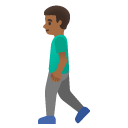
Man Walking: Medium-dark Skin Tone
U+1F6B6 U+1F3FE U+200D U+2642 U+FE0F · :man_walking_mediumdark_skin_tone:
Trend 58
Meaning layers
- interpretation
- Used to signal 'I'm out of here,' unbothered energy, leaving a toxic situation, or simply moving forward in life. Often paired with phrases like 'not my problem anymore' or 'walking away from drama.'
- tiktok usage
- Appears in 'main character walking away' POV content, 'leaving that era behind' videos, and casual 'mind your business' energy posts.
- irony level
- 4 / 10
Platform meanings
- meaning
- Signals unbothered, moving-on energy. Used in POV videos about walking away from toxic situations, glow-up content, or 'main character' aesthetics.
- trend usage
- Featured in 'leaving that version of me behind' trends, 'walking into my era' transitions, and slo-mo aesthetic walking videos.
- hashtags
- #walkingaway#maincharacter#unbothered#newera#glowup
- virality score
- 62 / 100
Cultural meanings
🇺🇸
Western / Gen-Z
Primarily used to signal 'walking away' from drama, toxic people, or old habits — deeply embedded in unbothered and main-character aesthetics. The medium-dark skin tone is embraced as natural representation.
🇵🇰
Pakistan & India
Used literally to indicate walking, commuting, or being on the move in everyday chats. The darker skin tone may prompt colorism-aware commentary in some online spaces, though younger users treat it neutrally.
🌍
Middle East
Commonly used in a literal sense for travel, commuting, or outdoor activity. Skin tone representation is increasingly normalized among younger, globally-connected users.
🌐
Global Neutral
Universally understood as 'a person walking' — used across languages and cultures to signal movement, commuting, or transition without ambiguity.
🇧🇩
Bangladesh
Used in everyday messaging to indicate someone is on their way, walking to a destination, or currently commuting. Younger users adopt the unbothered meaning from global social media trends.
🇱🇰
Sri Lanka
Primarily literal in meaning — walking to work, market, or school. Social media-savvy youth may use it with the global 'moving on' subtext.
🇨🇳
China
Used mainly in literal contexts — walking, commuting, exercise. The skin tone is noted but not particularly significant; emoji skin tones are used with less social weight in Chinese digital culture.
🇯🇵
Japan
Interpreted literally for walking, commuting, or travel. Japanese digital culture tends toward neutral or default skin-tone emoji use, so medium-dark tone usage may be seen as a deliberate identity statement.
🇰🇷
South Korea
Primarily used for walking or light exercise contexts. K-culture's emoji usage is heavily trend-influenced, and the 'walking away from drama' meaning is gaining traction among younger users.
🇹🇼
Taiwan
Used in casual chats to signal someone is out and about or on their way. Younger Taiwanese users follow global Gen Z trends in applying the 'unbothered walk' meaning.
🇭🇰
Hong Kong
Commonly used to indicate commuting or being on the move in a fast-paced urban context. The skin tone is used as a representation choice rather than a cultural statement.
🇵🇭
Philippines
Used both literally for walking and travel, and increasingly in the global 'leaving drama behind' context thanks to heavy social media engagement. Representation aspect is positively received.
🇮🇩
Indonesia
Applied in everyday messaging for movement and travel. Growing use among youth in the 'walking away from negativity' trend context via TikTok and Instagram influence.
🇹🇭
Thailand
Mainly literal — walking, being outside, or traveling. Thai social media users are adopting global emoji trend meanings, including the 'main character walk' aesthetic.
🇻🇳
Vietnam
Used casually to indicate walking, going out, or commuting. Vietnamese Gen Z users on TikTok increasingly apply the global 'moving forward' trend usage.
🇲🇾
Malaysia
Used both literally and in the global 'walking away' meme context. Malaysia's multicultural context means skin tone representation is sometimes discussed and positively noted.
🇸🇦
Saudi Arabia
Primarily used in a literal sense for outdoor walks, exercise, or travel. The fitness and wellness community uses it prominently; skin tone is increasingly normalized.
🇦🇪
UAE
In the UAE's diverse, cosmopolitan digital culture, used both literally and with global Gen Z connotations. Expatriate communities use it with its Western-internet meanings more frequently.
🇪🇬
Egypt
Commonly used to signal walking, going out, or being on the move. The 'leaving drama behind' meaning is catching on among Egyptian youth active on TikTok and Instagram.
🇹🇷
Turkey
Used in everyday chats for walking and movement. Turkish Gen Z users on TikTok have adopted the global 'walking away from toxic things' trend usage.
🇮🇷
Iran
Used literally for walking and travel in messaging. Among younger, globally-connected Iranians, the 'moving on' symbolism resonates especially in contexts of personal freedom and resilience.
🇳🇬
Nigeria
Strongly resonant — the medium-dark skin tone is widely embraced as accurate representation. Used both literally and in 'main character energy' and 'moving forward' contexts popular in Nigerian Twitter and TikTok.
🇿🇦
South Africa
Positively received as representation of Black South Africans in digital spaces. Used literally and in motivational, 'level up,' and 'leaving behind' contexts.
🇬🇧
UK & Ireland
Used in the global Gen Z 'walking away' context and literally for walks, commutes, or travel. Representation is normalized and positively received in diverse UK communities.
🇫🇷
France
Used mainly in a literal context for walking, strolling, or being on the move. The French social media scene adopts global emoji trends, so the 'unbothered exit' meaning is familiar to younger users.
🇩🇪
Germany
Primarily literal in German digital culture — walking, exercise, commuting. The skin tone is used consciously for representation in increasingly diverse German online spaces.
🇪🇸
Spain & Italy
Used casually for walking or going out. Southern European youth with strong TikTok and Instagram presence have adopted the 'walking away from drama' meaning.
🇧🇷
Brazil
Widely used in both literal and expressive contexts. Brazilian social media culture embraces the 'moving on' meaning enthusiastically, and the medium-dark skin tone reflects Brazil's diverse population well.
🇲🇽
Mexico
Used for walking and commuting in everyday chats, and the 'leaving drama behind' meaning is popular among Mexican TikTok and Instagram youth.
🌎
Latin America
Broadly used across Latin America for movement and travel, with the 'walking away from negativity' meaning gaining traction through TikTok. Skin tone representation is especially relevant in Afro-Latino communities.
🇦🇺
Australia & NZ
Used in the global Gen Z 'unbothered walk' context and literally for outdoor activity — walking trails, beach walks, commutes. Diversity representation is normalized and encouraged.
How its meaning shifted
- 2010
Skin tone modifiers did not yet exist for this emoji; the base walking person emoji was used generically without identity specificity, primarily for literal walking or travel contexts.
- 2015
Skin tone modifiers were introduced in Unicode 8.0. The medium-dark tone variant began appearing as users selected tones matching their own identity, primarily in literal walking, commuting, and travel contexts.
- 2020
Usage expanded beyond literal meaning; the emoji became associated with 'walking away' memes, self-improvement content, and early main-character aesthetics. Representation conversations made skin tone selection more intentional.
- 2026
Fully integrated into Gen Z visual vocabulary for unbothered energy, main-character aesthetics, and 'moving forward' narratives. Skin tone is normalized as personal expression; medium-dark tone is widely used in BIPOC digital communities.
See it on every platform
Compare with
Adjacent emojis
Share & embed
Frequently asked
01What does the 🚶🏾♂️ Man Walking: Medium-dark Skin Tone emoji mean?
A man walking depicted with a medium-dark skin tone, shown in profile view taking a step forward. Part of the Unicode walking person sequence with gender and skin tone modifiers.
02What does 🚶🏾♂️ mean on TikTok?
Signals unbothered, moving-on energy. Used in POV videos about walking away from toxic situations, glow-up content, or 'main character' aesthetics.
03What does 🚶🏾♂️ mean on WhatsApp?
Casually used to say 'I'm on my way,' 'heading out,' or 'I'm done with this conversation.'
04What does 🚶🏾♂️ mean in Gen-Z slang?
Used to signal 'I'm out of here,' unbothered energy, leaving a toxic situation, or simply moving forward in life. Often paired with phrases like 'not my problem anymore' or 'walking away from drama.'
05Is the 🚶🏾♂️ emoji safe to use?
A man walking — used for travel, commuting, exercise, and moving forward in life. Positive representation of medium-dark skinned men in everyday, dignified activities.
06What does 🚶🏾♂️ mean in texting?
Walking symbolizes forward momentum and autonomy. This emoji taps into psychological themes of agency and self-directed movement, often used when someone feels empowered to leave a situation or simply exist on their own terms.
07What is the shortcode for 🚶🏾♂️?
The shortcode for Man Walking: Medium-dark Skin Tone is :man_walking_mediumdark_skin_tone:
08What does 🚶🏾♂️ mean in dating?
Low flirt potential; sometimes used humorously to say 'I'm coming over' or 'heading your way' in a chill, low-pressure way.
Safety & usage
- Safe meaning
- A man walking — used for travel, commuting, exercise, and moving forward in life. Positive representation of medium-dark skinned men in everyday, dignified activities.
- Caution
- Rarely used in toxic contexts; occasionally co-opted in dismissive 'walking away' replies to shut down conversations without engagement.
Generally safe. In rare cases, could be used dismissively in online arguments. No significant misuse patterns identified. Skin tone representation is overwhelmingly used positively.
How it looks across platforms
Appearance varies by platform and device. Google Noto, Twemoji, and OpenMoji are open-source.