👨🏿🦯➡️
The Emoji
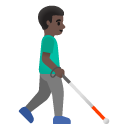
Man With White Cane Facing Right: Dark Skin Tone
U+1F468 U+1F3FF U+200D U+1F9AF U+200D U+27A1 U+FE0F · :man_with_white_cane_facing_right_dark_skin_tone:
Trend 28
Meaning layers
- interpretation
- Used to signal independence, navigating life blind to drama or toxicity, or metaphorically moving forward without needing to see the chaos around you.
- tiktok usage
- Appears in 'walking away from problems' edits and 'unbothered' content, often paired with dismissive captions.
- irony level
- 4 / 10
Platform meanings
- meaning
- Symbol of being unbothered, moving forward, or humorously pretending not to notice something.
- trend usage
- Used in transition videos where the creator 'walks away' from a situation, synced to trending audio.
- hashtags
- #unbothered#walkingaway#cantememe#blindtothedrama#movingforward
- virality score
- 32 / 100
Cultural meanings
🇺🇸
Western / Gen-Z
Frequently repurposed as a metaphor for being unbothered or willfully ignoring drama, detached from its literal disability meaning.
🇵🇰
Pakistan & India
Primarily interpreted literally as representing a visually impaired person; used in disability awareness and charitable social media content.
🌍
Middle East
Used in disability advocacy contexts and Islamic charity discussions around supporting people with visual impairments.
🌐
Global Neutral
Universally understood as representing a person using a white cane for visual impairment, symbolizing independence and mobility.
🇧🇩
Bangladesh
Associated with disability rights messaging and NGO awareness campaigns about supporting the blind community.
🇱🇰
Sri Lanka
Used in health awareness and social service posts; represents community care for visually impaired individuals.
🇨🇳
China
Seen in disability welfare discussions and government accessibility initiative posts; also used to signal 'moving forward' in motivational content.
🇯🇵
Japan
Interpreted respectfully as representing visual impairment; appears in accessibility infrastructure discussions and disability pride content.
🇰🇷
South Korea
Used in disability representation discussions and K-social media posts about inclusive design and accessibility.
🇹🇼
Taiwan
Featured in disability rights advocacy and universal design conversations; carries a neutral, respectful tone.
🇭🇰
Hong Kong
Used in social media posts about accessibility in urban environments and disability community support.
🇵🇭
Philippines
Commonly used in charitable and disability support posts; associated with community empathy and inclusion programs.
🇮🇩
Indonesia
Appears in disability awareness campaigns and Islamic social welfare content about caring for the visually impaired.
🇹🇭
Thailand
Used in disability inclusion posts and social media awareness about white cane mobility training.
🇻🇳
Vietnam
Primarily associated with disability charities and social support programs; used respectfully in awareness content.
🇲🇾
Malaysia
Used in disability rights and inclusive education discussions; also appears in motivational content about moving forward.
🇸🇦
Saudi Arabia
Found in disability welfare and zakat-related charity posts; represents care obligations toward the visually impaired.
🇦🇪
UAE
Used in inclusion and accessibility posts, particularly around smart city and accessible infrastructure initiatives.
🇪🇬
Egypt
Appears in disability awareness and charity content; associated with organizations supporting the visually impaired.
🇹🇷
Turkey
Used in disability rights discussions and social media posts about accessible public spaces and welfare services.
🇮🇷
Iran
Primarily used in disability support and welfare contexts; represents community care for visually impaired individuals.
🇳🇬
Nigeria
Used in disability advocacy and NGO content; the dark skin tone makes it particularly resonant for local representation.
🇿🇦
South Africa
Significant for its dark skin tone representation; used in disability inclusion campaigns and empowerment content.
🇬🇧
UK & Ireland
Used in disability representation and accessibility advocacy; occasionally repurposed sarcastically to signal ignoring something.
🇫🇷
France
Appears in disability rights and inclusion discussions; the rightward movement is sometimes used metaphorically for progress.
🇩🇪
Germany
Used in accessibility and disability welfare posts; associated with discussions about inclusive infrastructure and Behindertenrechte.
🇪🇸
Spain & Italy
Found in disability awareness campaigns and social media posts about accessible tourism and urban mobility.
🇧🇷
Brazil
Used in disability rights and inclusion content; the dark skin tone resonates strongly with Afro-Brazilian representation.
🇲🇽
Mexico
Appears in disability support and awareness posts; occasionally used metaphorically for moving forward without looking back.
🌎
Latin America
Used across Latin America in disability awareness campaigns; the dark skin tone adds Afro-Latino representation value.
🇦🇺
Australia & NZ
Used in disability inclusion and NDIS-related discussions; appears in accessibility advocacy and representation content.
How its meaning shifted
- 2010
This specific emoji did not exist; general disability representation online was minimal and largely text-based.
- 2015
Early emoji sets had basic disability representations, but skin tone modifiers and directional variants were not yet available.
- 2020
Emoji with skin tone and gender variants became standard; used primarily in disability representation and awareness contexts.
- 2026
Widely used both for genuine disability representation and metaphorically in 'unbothered' and 'walking away from drama' internet culture.
See it on every platform
Compare with
Adjacent emojis
Share & embed
Frequently asked
01What does the 👨🏿🦯➡️ Man With White Cane Facing Right: Dark Skin Tone emoji mean?
A man with dark skin tone using a white cane, depicted facing right, indicating mobility aid use for visual impairment or blindness.
02What does 👨🏿🦯➡️ mean on TikTok?
Symbol of being unbothered, moving forward, or humorously pretending not to notice something.
03What does 👨🏿🦯➡️ mean on WhatsApp?
Represents someone walking away from a conversation or situation, or literally referencing a visually impaired person.
04What does 👨🏿🦯➡️ mean in Gen-Z slang?
Used to signal independence, navigating life blind to drama or toxicity, or metaphorically moving forward without needing to see the chaos around you.
05Is the 👨🏿🦯➡️ emoji safe to use?
Representation of a visually impaired man using a white cane; used for disability awareness, inclusion, and empowerment.
06What does 👨🏿🦯➡️ mean in texting?
Evokes admiration for independence and perseverance; can also carry connotations of navigating uncertainty with confidence.
07What is the shortcode for 👨🏿🦯➡️?
The shortcode for Man With White Cane Facing Right: Dark Skin Tone is :man_with_white_cane_facing_right_dark_skin_tone:
08What does 👨🏿🦯➡️ mean in dating?
Rarely used in flirting; occasionally used humorously to say 'I'm walking away from you' or 'I don't see you like that.'
Safety & usage
- Safe meaning
- Representation of a visually impaired man using a white cane; used for disability awareness, inclusion, and empowerment.
- Caution
- Occasionally misused in mocking contexts to imply someone is blind to obvious facts, which can trivialize disability.
Care should be taken not to use this emoji in ways that mock or trivialize visual impairment or disability more broadly.
How it looks across platforms
Appearance varies by platform and device. Google Noto, Twemoji, and OpenMoji are open-source.