👨🏼🦯
The Emoji
Man With White Cane: Medium-light Skin Tone
U+1F468 U+1F3FC U+200D U+1F9AF · :man_with_white_cane_mediumlight_skin_tone:
Trend 28
Meaning layers
- interpretation
- Used both literally to represent visual impairment or disability, and metaphorically to describe someone who is completely oblivious, clueless, or 'not seeing' an obvious situation or red flag.
- tiktok usage
- Appears in videos about navigating life obstacles, 'blind to the truth' storylines, or ironic commentary about people who refuse to see obvious signs in relationships or situations.
- irony level
- 5 / 10
Platform meanings
- meaning
- Used in disability representation content, accessibility awareness videos, and also metaphorically in skits about being oblivious to red flags or life's obvious signs.
- trend usage
- Appears in trending sounds about 'not seeing' drama, navigating life's obstacles, disability lifestyle content, and motivational videos about overcoming challenges.
- hashtags
- #DisabilityAwareness#BlindTikTok#AccessibilityMatters#NotSeeing#DisabilityRepresentation
- virality score
- 32 / 100
Cultural meanings
🇺🇸
Western / Gen-Z
Gen Z in Western contexts use this emoji both for genuine disability representation advocacy and ironically to describe being 'blind to red flags' or deliberately oblivious in social situations.
🇵🇰
Pakistan & India
In South Asian digital spaces, this emoji is primarily used literally to discuss visual impairment, disability rights, and accessibility concerns, with growing use in disability advocacy communities.
🌍
Middle East
Used primarily in sincere contexts related to disability awareness, religious narratives about patience and resilience in the face of hardship, and charitable giving discussions.
🌐
Global Neutral
Universally recognized as a representation of a visually impaired person using a white cane, used across all global contexts for disability-related communication.
🇧🇩
Bangladesh
Used in discussions about disability rights, accessibility infrastructure, and in social media posts related to disability support organizations and awareness campaigns.
🇱🇰
Sri Lanka
Appears in disability advocacy content, discussions about accessibility challenges in public spaces, and in community support discussions for visually impaired individuals.
🇨🇳
China
Used in WeChat and Weibo equivalents to discuss visual disability topics, though less commonly than in Western platforms; appears in accessibility and health content.
🇯🇵
Japan
In Japanese digital culture, this emoji is used respectfully and sincerely for disability representation, aligning with Japanese cultural values of consideration for others and social harmony.
🇰🇷
South Korea
Used in Korean social media in disability advocacy contexts, accessibility design discussions, and K-content creator spaces that address disability representation.
🇹🇼
Taiwan
Appears in disability rights advocacy content, accessibility awareness posts, and in sincere discussions about inclusive society building in Taiwanese digital spaces.
🇭🇰
Hong Kong
Used in accessibility advocacy and disability support contexts, with some metaphorical usage in political commentary about 'not seeing' certain social realities.
🇵🇭
Philippines
Used in disability awareness content on Filipino social media, often tied to charitable causes, empathy expressions, and community support for visually impaired individuals.
🇮🇩
Indonesia
Appears in disability awareness campaigns, religious charity discussions (zakat/sadaqah for disabled), and accessibility advocacy in Indonesian digital communities.
🇹🇭
Thailand
Used in Thai social media for disability representation, accessibility discussions, and occasionally in humorous contexts about someone being unaware of their surroundings.
🇻🇳
Vietnam
Primarily used in sincere disability awareness contexts in Vietnamese social media, tied to discussions about support systems for visually impaired community members.
🇲🇾
Malaysia
Used in Malaysian disability rights discussions, accessibility advocacy, and in multicultural community discussions about inclusive society and support for disabled individuals.
🇸🇦
Saudi Arabia
Used in contexts related to disability support under Islamic principles of care for the vulnerable, accessibility in modern Saudi infrastructure, and disability rights discussions.
🇦🇪
UAE
Appears in UAE disability awareness campaigns, accessibility discussions in a rapidly modernizing society, and inclusive design conversations in professional contexts.
🇪🇬
Egypt
Used primarily in sincere disability awareness contexts, often tied to charitable and religious narratives about caring for those with disabilities in Egyptian digital culture.
🇹🇷
Turkey
Used in Turkish social media for disability representation, accessibility advocacy, and occasionally in metaphorical contexts about being oblivious to social or political issues.
🇮🇷
Iran
Used in sincere disability awareness contexts, discussions about support systems for visually impaired individuals, and accessibility challenges in urban spaces.
🇳🇬
Nigeria
Appears in Nigerian disability advocacy content, discussions about accessibility infrastructure, and empathy-driven social media posts about supporting disabled community members.
🇿🇦
South Africa
Used in South African disability rights discussions, accessibility awareness campaigns, and in conversations about inclusive design in public spaces and workplaces.
🇬🇧
UK & Ireland
British and Irish users use this emoji in disability representation contexts, accessibility advocacy, and occasionally in dry humor about someone being 'blind' to obvious situations.
🇫🇷
France
Used in French disability awareness contexts, accessibility rights discussions, and occasionally in ironic commentary about political or social blindness in French cultural discourse.
🇩🇪
Germany
Germans use this emoji primarily in sincere disability representation contexts, accessibility compliance discussions in professional settings, and inclusive design advocacy.
🇪🇸
Spain & Italy
Used in Southern European disability awareness contexts, accessibility discussions, and occasionally in expressive emotional commentary about someone being oblivious.
🇧🇷
Brazil
Brazilian users employ this emoji in disability advocacy content, accessibility awareness campaigns, and in humorous social media contexts about navigating life's obstacles.
🇲🇽
Mexico
Used in Mexican disability rights discussions, accessibility awareness, and in expressive digital communication about being unaware or navigating difficult situations.
🌎
Latin America
Across Latin America, this emoji appears in disability support communities, accessibility advocacy, and in relatable content about navigating life's challenges with resilience.
🇦🇺
Australia & NZ
Australians and New Zealanders use this emoji in disability advocacy, accessibility discussions, and with characteristic dry humor about being 'blind to the obvious'.
How its meaning shifted
- 2010
This specific emoji did not exist in 2010; white cane and disability emojis were not part of the Unicode standard, and disability representation in emoji form was essentially absent.
- 2015
Still not available in 2015; disability emoji representation was a known gap in the Unicode standard, with advocacy groups pushing for more inclusive emoji sets.
- 2020
Introduced as part of Unicode's disability representation initiative, this emoji was newly available and primarily used earnestly in disability advocacy, accessibility discussions, and representation conversations.
- 2026
By 2026, the emoji is established in both sincere disability representation contexts and metaphorical 'blind to the obvious' ironic usage, with strong presence in accessibility advocacy and Gen Z ironic commentary.
See it on every platform
Compare with
Adjacent emojis
- Opposite
- eyeseyesee no evil monkey
- Often confused with
- man walkingman with probing caneolder man
Share & embed
Frequently asked
01What does the 👨🏼🦯 Man With White Cane: Medium-light Skin Tone emoji mean?
A man with medium-light skin tone using a white cane, representing a person who is blind or visually impaired. The white cane is an internationally recognized symbol of blindness and visual disability.
02What does 👨🏼🦯 mean on TikTok?
Used in disability representation content, accessibility awareness videos, and also metaphorically in skits about being oblivious to red flags or life's obvious signs.
03What does 👨🏼🦯 mean on WhatsApp?
Typically used to indicate disability, visual impairment, or to express that someone is being oblivious. Sometimes used in accessibility-related group discussions.
04What does 👨🏼🦯 mean in Gen-Z slang?
Used both literally to represent visual impairment or disability, and metaphorically to describe someone who is completely oblivious, clueless, or 'not seeing' an obvious situation or red flag.
05Is the 👨🏼🦯 emoji safe to use?
Represents a visually impaired man with a white cane; used for disability representation, accessibility advocacy, and empathetic communication about visual impairment.
06What does 👨🏼🦯 mean in texting?
This emoji evokes feelings of empathy and admiration for resilience. It can trigger awareness of one's own privilege regarding sight and mobility, and is often used by disability advocates to foster inclusion and reduce stigma around visual impairment.
07What is the shortcode for 👨🏼🦯?
The shortcode for Man With White Cane: Medium-light Skin Tone is :man_with_white_cane_mediumlight_skin_tone:
08What does 👨🏼🦯 mean in dating?
Rarely used in flirting contexts; might be self-deprecatingly used as 'I'm blind to your flaws' or 'I only see you' in playful romantic banter.
Safety & usage
- Safe meaning
- Represents a visually impaired man with a white cane; used for disability representation, accessibility advocacy, and empathetic communication about visual impairment.
- Caution
- Could potentially be used mockingly to demean or stereotype visually impaired individuals, though this usage is uncommon and broadly condemned.
Care should be taken not to use this emoji in mocking or ableist contexts. Metaphorical use (e.g., 'blind to red flags') is generally accepted, but using it to demean disability is harmful and inappropriate.
How it looks across platforms
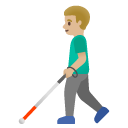


Appearance varies by platform and device. Google Noto, Twemoji, and OpenMoji are open-source.