👨🏾🤝👨🏿
The Emoji
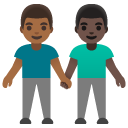
Men Holding Hands: Medium-dark Skin Tone, Dark Skin Tone
U+1F468 U+1F3FE U+200D U+1F91D U+200D U+1F468 U+1F3FF · :men_holding_hands_mediumdark_skin_tone_dark_skin_tone:
Trend 58
Meaning layers
- interpretation
- Used to show brotherhood, hype your homie, express solidarity with the LGBTQ+ community, or celebrate Black and Brown male bonds. Can be purely platonic or romantic depending on context.
- tiktok usage
- Appears in videos celebrating Black and Brown male friendships, LGBTQ+ content highlighting diverse couples, or wholesome 'found family' moments. Often dropped in comments to hype up two friends or a couple.
- irony level
- 2 / 10
Platform meanings
- meaning
- Represents close male bonds, LGBTQ+ pride, or Brotherhood between men of darker skin tones. Frequently used to hype up a duo or express solidarity.
- trend usage
- Dropped in duet videos, comment sections hyping male friendships, and Pride month content. Used alongside relationship reveal trends and 'meet my person' videos.
- hashtags
- #BlackLove#BrownBoysSupportingBrownBoys#PrideTok#MaleHoldingHands#BlackAndBrownPride
- virality score
- 62 / 100
Cultural meanings
🇺🇸
Western / Gen-Z
Widely understood as a symbol of either close male friendship or a same-sex romantic relationship, both interpretations celebrated in inclusive spaces. Skin tone specificity is appreciated as meaningful representation for Black and Brown LGBTQ+ men.
🇵🇰
Pakistan & India
The holding-hands gesture between men is culturally common and not inherently romantic, so this emoji may be read as straightforward male friendship. However, in urban and online progressive circles, the LGBTQ+ connotation is increasingly recognized and sometimes contested given local social norms.
🌍
Middle East
Holding hands between men is a common platonic gesture in many Middle Eastern cultures, so this may be read simply as friendship. The LGBTQ+ interpretation is generally not acknowledged publicly due to legal and social restrictions on same-sex relationships in the region.
🌐
Global Neutral
Broadly interpreted as a symbol of male companionship, solidarity, or partnership. The specific skin tones add a layer of racial representation that is increasingly meaningful in global diversity conversations.
🇧🇩
Bangladesh
The platonic male hand-holding tradition means this emoji is likely interpreted as close friendship or brotherhood. Same-sex romantic readings are not widely recognized in mainstream culture due to social and legal constraints.
🇱🇰
Sri Lanka
Seen primarily as a symbol of male camaraderie or friendship, reflecting local norms where male physical affection is platonic. LGBTQ+ connotations are emerging in younger, digitally connected demographics.
🇨🇳
China
May be interpreted as male friendship or solidarity, with the LGBTQ+ meaning known among younger, internet-savvy users but not widely discussed openly due to cultural and governmental pressures on LGBTQ+ visibility.
🇯🇵
Japan
Understood by younger generations as potentially representing a same-sex male couple, fitting into the broader acceptance of 'BL' (Boys' Love) culture online. Skin-tone diversity is less commonly discussed but symbolically noted.
🇰🇷
South Korea
Gen Z Koreans familiar with global LGBTQ+ discourse may recognize the romantic or queer reading, while older generations see it as male camaraderie. The darker skin tones may evoke solidarity with global racial diversity movements.
🇹🇼
Taiwan
In one of Asia's most LGBTQ+-progressive countries, this emoji is likely understood as a symbol of same-sex male partnership or solidarity. The skin tone combination adds a layer of multicultural representation that is positively received.
🇭🇰
Hong Kong
Urban, globally connected users recognize both the friendship and LGBTQ+ romantic interpretations. The skin-tone specificity resonates in Hong Kong's diverse expat and activist communities.
🇵🇭
Philippines
Seen as a symbol of brotherhood or close male friendship in mainstream culture. Among younger, LGBTQ+-aware Filipinos, it signals same-sex male relationships and racial representation, particularly resonant in a country with high skin tone diversity.
🇮🇩
Indonesia
Primarily interpreted as male friendship given cultural norms around male physical closeness. The romantic or LGBTQ+ reading is recognized in progressive urban circles but not widely mainstream.
🇹🇭
Thailand
Thailand's relatively open attitude toward gender and sexuality means many users recognize both the friendship and romantic meanings. The emoji is positively received in LGBTQ+ communities, with the skin tones appreciated for their diversity.
🇻🇳
Vietnam
Largely interpreted as close male friendship. The LGBTQ+ reading is growing in awareness among younger, urban Vietnamese but is not the dominant interpretation.
🇲🇾
Malaysia
The platonic male friendship reading dominates given cultural and religious contexts. LGBTQ+ interpretations are known among progressive youth but are navigated carefully in public discourse.
🇸🇦
Saudi Arabia
Male hand-holding is a common platonic gesture, so this emoji is likely read as friendship or brotherhood. The romantic or LGBTQ+ interpretation is not publicly recognized due to strict social and legal norms.
🇦🇪
UAE
Similar to Saudi Arabia, platonic male hand-holding is culturally familiar, so the friendship reading dominates. Among expatriate and younger populations, the LGBTQ+ meaning is recognized but rarely expressed openly.
🇪🇬
Egypt
Seen predominantly as a symbol of brotherly affection or friendship, a common sight in Egyptian public culture. The LGBTQ+ connotation is known in progressive online spaces but not acknowledged in mainstream public discourse.
🇹🇷
Turkey
Interpreted as close male friendship or solidarity in mainstream culture. The LGBTQ+ meaning is recognized by younger, urban, and online-active Turks, though public expression is politically sensitive.
🇮🇷
Iran
Male hand-holding as platonic affection is culturally familiar, so this reads as brotherhood or friendship. Same-sex romantic interpretation is not publicly expressed due to legal restrictions.
🇳🇬
Nigeria
Seen as a symbol of strong male friendship or brotherhood, with deep resonance for celebrating Black male bonds. LGBTQ+ interpretations are known online but are sensitive given legal and cultural contexts around same-sex relationships.
🇿🇦
South Africa
In one of Africa's most constitutionally progressive nations on LGBTQ+ rights, this emoji carries both friendship and romantic meanings. The skin tones are particularly resonant in a country with deep awareness of race and representation.
🇬🇧
UK & Ireland
Widely understood as either a close male friendship or a same-sex romantic relationship. The skin tone specificity is appreciated in increasingly diverse and LGBTQ+-affirming British and Irish social media spaces.
🇫🇷
France
Read as a symbol of male solidarity or romantic partnership. French digital culture appreciates the diversity representation, with the LGBTQ+ meaning being broadly recognized especially among younger generations.
🇩🇪
Germany
Interpreted as brotherhood, close friendship, or a same-sex romantic relationship. Germany's strong LGBTQ+ rights culture means the queer reading is well understood and positively embraced alongside the skin-tone diversity message.
🇪🇸
Spain & Italy
Seen as close male friendship or a romantic same-sex couple. Spain's progressive LGBTQ+ policies and Italy's growing visibility of queer culture both shape a positive reception, with skin tone diversity noted as meaningful.
🇧🇷
Brazil
Resonates strongly as both a celebration of Black and Brown male brotherhood (deeply culturally significant) and LGBTQ+ love. Brazil's vibrant Pride culture and large Afro-Brazilian community make both dimensions particularly meaningful.
🇲🇽
Mexico
Interpreted as close male friendship or a same-sex romantic relationship. The skin tones are significant in a country with a large mixed-race population, and LGBTQ+ visibility is growing especially in urban youth culture.
🌎
Latin America
Broadly seen as a symbol of strong male bonds and fraternity, with LGBTQ+ readings gaining traction in urban, progressive circles. The darker skin tones resonate in recognizing Afro-Latino and Indigenous male representation.
🇦🇺
Australia & NZ
Understood as either a close male friendship or a same-sex couple, both interpretations welcomed in Australia and New Zealand's inclusive cultural environments. The skin tone combination is seen as a positive step in diverse representation.
How its meaning shifted
- 2010
This specific emoji did not exist yet. Male partnership emojis were not yet part of Unicode, and skin tone modifiers had not been introduced. Representation of same-sex couples in emoji form was entirely absent.
- 2015
Basic same-sex couple emojis began appearing following Unicode 8.0 and Apple's introduction of diverse skin tones. This specific combination was not yet available, but early versions of men-holding-hands emojis started gaining attention in LGBTQ+ communities.
- 2020
Widely available across major platforms following Unicode's expanded skin tone combinations for couple emojis. Used actively in Pride month content, Black Lives Matter solidarity posts, and LGBTQ+ representation discussions, gaining meaningful traction online.
- 2026
A normalized symbol of Black and Brown male bonds, LGBTQ+ love, and diverse representation. Used fluidly across platonic and romantic contexts, increasingly present in mainstream media, brand content, and everyday digital communication among younger generations.
See it on every platform
Compare with
Adjacent emojis
Share & embed
Frequently asked
01What does the 👨🏾🤝👨🏿 Men Holding Hands: Medium-dark Skin Tone, Dark Skin Tone emoji mean?
Two men holding hands, with the left figure having a medium-dark skin tone and the right figure having a dark skin tone. Represents partnership, brotherhood, friendship, solidarity, or romantic relationships between two men of these specific skin tones.
02What does 👨🏾🤝👨🏿 mean on TikTok?
Represents close male bonds, LGBTQ+ pride, or Brotherhood between men of darker skin tones. Frequently used to hype up a duo or express solidarity.
03What does 👨🏾🤝👨🏿 mean on WhatsApp?
Sent between close male friends to express brotherly love or solidarity. Within LGBTQ+ circles, used to acknowledge a relationship or express support.
04What does 👨🏾🤝👨🏿 mean in Gen-Z slang?
Used to show brotherhood, hype your homie, express solidarity with the LGBTQ+ community, or celebrate Black and Brown male bonds. Can be purely platonic or romantic depending on context.
05Is the 👨🏾🤝👨🏿 emoji safe to use?
Represents male friendship, brotherhood, solidarity, and same-sex romantic relationships between men of medium-dark and dark skin tones. A positive symbol of love, connection, and representation.
06What does 👨🏾🤝👨🏿 mean in texting?
The act of holding hands is a universally powerful symbol of connection and trust. When depicted with specific skin tones, it carries additional emotional weight around racial identity, representation, and visibility for marginalized communities, evoking a sense of belonging and validation.
07What is the shortcode for 👨🏾🤝👨🏿?
The shortcode for Men Holding Hands: Medium-dark Skin Tone, Dark Skin Tone is :men_holding_hands_mediumdark_skin_tone_dark_skin_tone:
08What does 👨🏾🤝👨🏿 mean in dating?
Used by gay or bisexual men of darker skin tones to express romantic interest or to indicate they are in or seeking a same-sex relationship. Can also be used to show support for a partner publicly.
Safety & usage
- Safe meaning
- Represents male friendship, brotherhood, solidarity, and same-sex romantic relationships between men of medium-dark and dark skin tones. A positive symbol of love, connection, and representation.
- Caution
- Extremely rarely weaponized, but could theoretically be used mockingly in homophobic or racist contexts, though this is not a common pattern.
Generally a safe and positive emoji. In contexts where LGBTQ+ content is restricted or monitored (certain countries or platforms), users should be aware that its LGBTQ+ association may carry social or legal sensitivity. No significant misuse patterns documented.
How it looks across platforms


Appearance varies by platform and device. Google Noto, Twemoji, and OpenMoji are open-source.