👱🏿
The Emoji
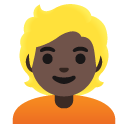
Person: Dark Skin Tone, Blond Hair
U+1F471 U+1F3FF · :person_dark_skin_tone_blond_hair:
Trend 45
Meaning layers
- interpretation
- Used to represent uniqueness, mixed heritage, or simply a self-identifier for people with dark skin and blond/bleached hair. Also used ironically or playfully when describing someone who stands out or defies expectations.
- tiktok usage
- Appears in videos about hair transformations, bleached/dyed hair on dark skin, and cultural identity content.
- irony level
- 3 / 10
Platform meanings
- meaning
- Represents hair transformation videos, bleached hair trends, and dark-skin beauty content.
- trend usage
- Used in hashtags and captions related to #BlondeHair on dark skin tone tutorials and challenge videos.
- hashtags
- #DarkSkinBlonde#HairTransformation#MelaninBlonde#BleachedHair#RepresentationMatters
- virality score
- 52 / 100
Cultural meanings
🇺🇸
Western / Gen-Z
Embraced as a symbol of self-expression and beauty diversity, often used by those challenging traditional beauty norms around hair color and skin tone.
🇵🇰
Pakistan & India
Less commonly used as a self-identifier due to different beauty standards; may be used curiously or in the context of Bollywood or international celebrity styles.
🌍
Middle East
Occasionally used in beauty and fashion contexts, particularly when referencing trends of dyeing hair blond, which is popular in some urban areas.
🌐
Global Neutral
Used globally as a straightforward representation of a person with dark skin and blond hair, often for self-identification or descriptive purposes.
🇧🇩
Bangladesh
Rarely used as a self-identifier; more likely seen in international beauty or social media content discussions.
🇱🇰
Sri Lanka
Used primarily in the context of international fashion or media, not widely self-identifying.
🇨🇳
China
May be used to describe or reference a foreign or mixed-heritage individual; blond hair on dark skin is seen as exotic or fashion-forward.
🇯🇵
Japan
Interpreted as a fashion statement, as dyeing hair blond is trendy in Japan; the dark skin tone adds an element of international diversity.
🇰🇷
South Korea
Associated with K-beauty influenced discussions about hair dye trends; dark skin with blond hair may be seen as a bold, unconventional look.
🇹🇼
Taiwan
Used in fashion and beauty discussions; represents a daring, individualistic style choice.
🇭🇰
Hong Kong
Seen in fashion-forward contexts; represents a cosmopolitan, diverse aesthetic.
🇵🇭
Philippines
Used in beauty and hair discussions; blond hair on dark skin is becoming more accepted and trendy among younger generations.
🇮🇩
Indonesia
Appears in beauty content and social media; represents a bold fashion choice that challenges local beauty norms.
🇹🇭
Thailand
Used in beauty and fashion contexts; blond hair is seen as trendy and modern, especially among younger Thais.
🇻🇳
Vietnam
Less common as a self-identifier; more likely used in the context of international beauty trends or K-pop influenced content.
🇲🇾
Malaysia
Seen in diverse, multicultural contexts; represents individuality and bold style in a multi-ethnic society.
🇸🇦
Saudi Arabia
Used cautiously; blond hair is common through dyeing but dark skin tone adds a layer of identity complexity in a culturally conservative context.
🇦🇪
UAE
Used in cosmopolitan Dubai/Abu Dhabi contexts; represents the diverse international population and bold fashion choices.
🇪🇬
Egypt
Occasionally used to reference people with mixed heritage or those who dye their hair blond, which is common in urban Egypt.
🇹🇷
Turkey
Used in fashion and beauty content; dark skin with blond hair is seen as a striking, individual style statement.
🇮🇷
Iran
Rarely used as a self-identifier; may appear in discussions of international beauty or diaspora identity.
🇳🇬
Nigeria
Widely embraced as a self-identifier, especially as bleached and blond hair is very trendy in Nigerian fashion and entertainment.
🇿🇦
South Africa
Used by people of diverse backgrounds; resonates strongly in a country with mixed racial heritage and diverse beauty expressions.
🇬🇧
UK & Ireland
Used by Afro-British and mixed-heritage communities; associated with bold self-expression and representation in beauty.
🇫🇷
France
Used in discussions of diversity and beauty, particularly in Afro-French communities who embrace blond hair as a fashion statement.
🇩🇪
Germany
Used in diversity and inclusion contexts; represents the growing multicultural demographic and challenges traditional beauty ideals.
🇪🇸
Spain & Italy
Used in beauty and fashion content, particularly in contexts celebrating Afro-European identity and diverse aesthetics.
🇧🇷
Brazil
Strongly resonates in Brazil's diverse racial landscape; blond hair on dark skin is common and celebrated, especially in Afro-Brazilian communities.
🇲🇽
Mexico
Used in discussions of Afro-Mexican identity and diverse beauty; gaining visibility with the recognition of Afro-descendant communities.
🌎
Latin America
Resonates across Latin America in discussions of Afro-descendant identity, mixed heritage, and bold beauty choices.
🇦🇺
Australia & NZ
Used by Indigenous and Pacific Islander communities as well as the broader multicultural population to express diverse identity and bold style.
How its meaning shifted
- 2010
This specific emoji combination did not exist; skin tone modifiers were not introduced until Unicode 8.0 in 2015.
- 2015
Newly introduced as part of the skin tone modifier update; primarily used for representation and inclusivity, though adoption was slow.
- 2020
Gained more traction as conversations about diversity, colorism, and representation in beauty became mainstream on social media.
- 2026
Regularly used as a self-identifier by dark-skinned individuals with blond/bleached hair, embedded in beauty culture, identity posts, and diversity discussions across platforms.
See it on every platform
Adjacent emojis
Share & embed
Frequently asked
01What does the 👱🏿 Person: Dark Skin Tone, Blond Hair emoji mean?
A person with dark skin tone and blond hair, representing a human figure that combines a deeper complexion with light-colored hair.
02What does 👱🏿 mean on TikTok?
Represents hair transformation videos, bleached hair trends, and dark-skin beauty content.
03What does 👱🏿 mean on WhatsApp?
Used in personal chats as a self-identifier or to describe a friend with dark skin and blond hair.
04What does 👱🏿 mean in Gen-Z slang?
Used to represent uniqueness, mixed heritage, or simply a self-identifier for people with dark skin and blond/bleached hair. Also used ironically or playfully when describing someone who stands out or defies expectations.
05Is the 👱🏿 emoji safe to use?
A representation emoji for a person with dark skin tone and blond hair, used for self-identification, diversity advocacy, and beauty expression.
06What does 👱🏿 mean in texting?
This emoji carries emotional weight around identity, representation, and beauty standards. For those who identify with it, it can evoke feelings of visibility and validation.
07What is the shortcode for 👱🏿?
The shortcode for Person: Dark Skin Tone, Blond Hair is :person_dark_skin_tone_blond_hair:
08What does 👱🏿 mean in dating?
Can be used flirtatiously as a self-representation emoji in DMs, especially by someone with dark skin and blond hair or to compliment someone with that look.
Safety & usage
- Safe meaning
- A representation emoji for a person with dark skin tone and blond hair, used for self-identification, diversity advocacy, and beauty expression.
- Caution
- Could theoretically be used in racist or colorist contexts to mock or stereotype individuals with these features, though this is uncommon.
Minimal risk of misuse. Occasionally embroiled in discussions about colorism or appropriation, but generally considered a positive representation tool.
How it looks across platforms


Appearance varies by platform and device. Google Noto, Twemoji, and OpenMoji are open-source.