👱🏿♂️
The Emoji
Man: Dark Skin Tone, Blond Hair
U+1F471 U+1F3FF U+200D U+2642 U+FE0F · :man_dark_skin_tone_blond_hair:
Trend 35
Meaning layers
- interpretation
- Used to represent a specific look or vibe — often a dark-skinned man with bleached or naturally blond hair. Seen as stylish, unique, or fashion-forward. Sometimes used in self-representation by users who actually have this look.
- tiktok usage
- Appears in comment sections when someone is describing a guy with this specific aesthetic. Sometimes used in 'describe yourself in emojis' trends.
- irony level
- 2 / 10
Platform meanings
- meaning
- Represents a dark-skinned man with blond hair, often used to describe a specific aesthetic or person in comment discussions.
- trend usage
- Appears in 'describe your type' trends, 'emoji that represents me' challenges, and comment threads discussing celebrities or influencers with this look.
- hashtags
- #blackboyjoy#blondehair#melanin#naturalhair#hairbleach
- virality score
- 38 / 100
Cultural meanings
🇺🇸
Western / Gen-Z
Seen as a cool, fashion-forward representation — Gen Z appreciates the inclusivity and uses it to describe someone with this distinctive look or as self-representation.
🇵🇰
Pakistan & India
Less commonly used in everyday chat; may appear in discussions about Western fashion trends or Bollywood/Hollywood celebrity hair discussions, but the combination is seen as exotic or unusual.
🌍
Middle East
Rarely used in casual conversation; the blond hair on a dark-skinned man is sometimes associated with a Westernized look or someone who has dyed their hair, which carries varied cultural opinions.
🌐
Global Neutral
Understood universally as a man with dark skin and blond hair; used straightforwardly for identification and representation.
🇧🇩
Bangladesh
Uncommon in everyday use; when used, it's typically to describe someone seen as having an unusual or Western-influenced appearance.
🇱🇰
Sri Lanka
Rarely appears in local digital communication; may be used among younger, more globally connected users to describe international celebrities or fashion-forward individuals.
🇨🇳
China
Infrequently used; blond hair on dark-skinned individuals is an uncommon aesthetic in Chinese media, so this emoji is mostly seen in discussions of foreign celebrities or global fashion.
🇯🇵
Japan
Used occasionally in discussions of Black celebrities popular in Japan (like NBA players or hip-hop artists). The combination of dark skin and blond hair is seen as striking and associated with cool Western or American culture.
🇰🇷
South Korea
Associated with the global hip-hop aesthetic that K-pop and Korean youth culture has adopted. Used when discussing American artists or K-pop idols inspired by this look.
🇹🇼
Taiwan
Similar to South Korean usage — linked to hip-hop and American pop culture aesthetics; seen as an artistic and bold fashion choice.
🇭🇰
Hong Kong
Used in fashion-forward conversations; the blond hair on dark skin combination is associated with a distinctive street-style aesthetic popular among global youth culture followers.
🇵🇭
Philippines
Used by younger Filipinos who follow American pop culture and hip-hop; associated with cool, confident, and edgy aesthetics.
🇮🇩
Indonesia
Appears in social media discussions about Western celebrities or Indonesian influencers inspired by Black American fashion culture.
🇹🇭
Thailand
Occasionally used in discussions of international fashion or celebrity culture; the look is seen as bold and Western-influenced.
🇻🇳
Vietnam
Primarily appears in the context of discussing foreign celebrities; not common in everyday Vietnamese digital communication.
🇲🇾
Malaysia
Used among the younger, globally connected population to represent a bold style statement, often in discussions of music culture and fashion.
🇸🇦
Saudi Arabia
Uncommon in everyday use; may appear in contexts discussing Western media or sports figures. The appearance is considered distinctive and foreign.
🇦🇪
UAE
More frequently seen due to the cosmopolitan nature of UAE's population; used among diverse expatriate communities and in discussions of global fashion and sports.
🇪🇬
Egypt
Rarely used in everyday communication; may appear in discussions of American sports figures or musicians, where the blond hair look is seen as a notable style choice.
🇹🇷
Turkey
Occasionally appears in celebrity gossip or fashion discussions; the combination is seen as an eye-catching Western aesthetic.
🇮🇷
Iran
Very rarely used; primarily appears in discussions of foreign media or celebrities among younger, internet-savvy users.
🇳🇬
Nigeria
Has significant cultural resonance — bleaching or dyeing hair blond is a real trend among Nigerian men in fashion and music (Afrobeats culture), making this emoji more relevant and sometimes used as self-representation.
🇿🇦
South Africa
Culturally meaningful; blond locs or bleached hair is a known style among South African youth and musicians, so this emoji resonates with local fashion culture.
🇬🇧
UK & Ireland
Used casually and with cultural awareness; UK's diverse population means many Black British men with blond hair exist, making this a relatable self-representation emoji.
🇫🇷
France
Used in fashion-forward conversations; France's large Afro-Caribbean population and its vibrant fashion scene make this emoji more resonant than in many other European contexts.
🇩🇪
Germany
Used mostly in descriptive contexts; the combination is noted as distinctive and associated with American or Caribbean cultural influences in German digital spaces.
🇪🇸
Spain & Italy
Appears in discussions of football players or musicians who sport this look; the aesthetic is seen as bold and American-influenced.
🇧🇷
Brazil
Culturally relevant — Brazil has a rich Afro-Brazilian culture and hair bleaching/dyeing trends among Black Brazilian men, making this emoji used with genuine recognition and pride.
🇲🇽
Mexico
Less common in everyday use; appears mainly in discussions of American celebrity culture or hip-hop aesthetics.
🌎
Latin America
Usage varies across Latin America; in countries with larger Afro-descendant populations (Colombia, Cuba, Dominican Republic), it carries more personal resonance as a style statement.
🇦🇺
Australia & NZ
Used casually among diverse youth communities; in Australia's multicultural cities, this emoji is used straightforwardly for representation and description.
How its meaning shifted
- 2010
Did not exist — skin tone modifiers and ZWJ sequences were not yet part of Unicode, making diverse representation in emoji impossible during this period.
- 2015
Newly introduced with Unicode 8.0 skin tone support; used primarily by activists and diversity advocates celebrating the expanded emoji palette. Still very niche.
- 2020
Growing use as emoji culture matured and people began using skin-tone-specific emojis for self-representation. Gained traction in Black Twitter and Instagram communities discussing hair and fashion.
- 2026
Normalized as a self-representation and descriptive tool; regularly appears in social media bios, TikTok comments, and celebrity discussion threads. Associated with Afrobeats aesthetics and the broader 'melanin + bold color' fashion movement.
See it on every platform
Compare with
Adjacent emojis
Share & embed
Frequently asked
01What does the 👱🏿♂️ Man: Dark Skin Tone, Blond Hair emoji mean?
A man with dark skin tone and blond hair, represented as a combination of the man emoji with dark skin tone modifier and blond hair. This is a ZWJ sequence combining 👱 (blond-haired person), 🏿 (dark skin tone), and ♂️ (male sign).
02What does 👱🏿♂️ mean on TikTok?
Represents a dark-skinned man with blond hair, often used to describe a specific aesthetic or person in comment discussions.
03What does 👱🏿♂️ mean on WhatsApp?
Used to describe or reference a man with dark skin and blond hair in conversation, often pointing to a specific person being discussed.
04What does 👱🏿♂️ mean in Gen-Z slang?
Used to represent a specific look or vibe — often a dark-skinned man with bleached or naturally blond hair. Seen as stylish, unique, or fashion-forward. Sometimes used in self-representation by users who actually have this look.
05Is the 👱🏿♂️ emoji safe to use?
A representation of a dark-skinned man with blond hair; used for identity expression, description, and inclusive representation.
06What does 👱🏿♂️ mean in texting?
This emoji carries strong identity significance — it's one of the few representations of a less commonly depicted combination (dark skin + blond hair), and for those who identify with it, its use can feel affirming and validating.
07What is the shortcode for 👱🏿♂️?
The shortcode for Man: Dark Skin Tone, Blond Hair is :man_dark_skin_tone_blond_hair:
08What does 👱🏿♂️ mean in dating?
May be sent by someone describing their type or referencing a specific person they find attractive with this look. Could be used flirtatiously to say 'this is what I'm into.'
Safety & usage
- Safe meaning
- A representation of a dark-skinned man with blond hair; used for identity expression, description, and inclusive representation.
- Caution
- Occasionally misused in mocking contexts to ridicule men who bleach their hair, or used in racially insensitive jokes about appearance. Very rare but possible.
Generally safe to use. Context matters — using this emoji to mock someone's appearance or as part of a racially charged joke would be inappropriate. In most contexts it is neutral to positive.
How it looks across platforms
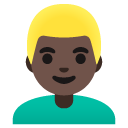
Appearance varies by platform and device. Google Noto, Twemoji, and OpenMoji are open-source.