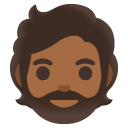
🧔🏾
The Emoji
Person: Medium-dark Skin Tone, Beard
U+1F9D4 U+1F3FE · :person_mediumdark_skin_tone_beard:
Trend 52
Meaning layers
- interpretation
- Used to represent a rugged, bearded dude — often associated with 'zaddy' energy, lumberjack vibes, or just a regular bearded homie. Sometimes used ironically for the 'I own three flannel shirts and a French press' archetype.
- tiktok usage
- Appears in 'types of men' videos, POV content about rugged or handsome bearded men, and thirst-comment threads under DIY or outdoor content.
- irony level
- 4 / 10
Platform meanings
- meaning
- Symbol for a rugged, bearded man — used in thirst comments, 'types of guys' videos, and masculine aesthetic content.
- trend usage
- Frequently seen in comment sections of bearded men's lifestyle, grooming, or outdoor survival content. Also used in POV skits.
- hashtags
- #beardgang#beardedmen#beardsofcolor#blackbeard#beardlife
- virality score
- 58 / 100
Cultural meanings
🇺🇸
Western / Gen-Z
Represents the 'bearded zaddy' archetype or a stylish man of color — used with admiration or humor in social media contexts.
🇵🇰
Pakistan & India
Carries significance related to Muslim religious identity as many Muslim men grow beards for faith-based reasons; also used to represent South Asian men with beards in casual chat.
🌍
Middle East
Strongly associated with Islamic practice and religious identity — the beard is a sunnah and using this emoji can signal devoutness or cultural pride.
🌐
Global Neutral
Universally understood as a bearded person with a medium-dark complexion — used without strong cultural charge as a representation of appearance.
🇧🇩
Bangladesh
Similar to Pakistan/India context — associated with religious piety among Muslim men and widely used to represent bearded male family members.
🇱🇰
Sri Lanka
Used to represent bearded men in general; less religious charge than in predominantly Muslim contexts, often used casually in family or social conversations.
🇨🇳
China
Beards are not traditionally common in Chinese culture; this emoji may be used to represent foreigners, older men, or characters in historical dramas.
🇯🇵
Japan
Associated with ruggedness or foreignness in Japanese pop culture; used in contexts referencing non-Japanese characters or a specific 'macho' aesthetic.
🇰🇷
South Korea
Beards are gaining popularity among younger Korean men; this emoji may represent a trendy, mature, or unconventional masculine aesthetic.
🇹🇼
Taiwan
Used similarly to South Korea — associated with a stylish or alternative masculine look, increasingly normalized in urban youth culture.
🇭🇰
Hong Kong
May be used to represent expats or Western-influenced men; also gaining casual use among younger demographics.
🇵🇭
Philippines
Commonly used to depict a rugged or 'Papa Bear' type figure; associated with Filipino men who sport beards as a modern style statement.
🇮🇩
Indonesia
Carries dual meaning — religious (associated with Muslim men observing sunnah) and fashionable among younger urban Indonesian men.
🇹🇭
Thailand
Less common culturally as beards are less typical; may be used to represent foreign men or a 'tough guy' character type.
🇻🇳
Vietnam
Rarely used to self-identify; more likely used to describe others or reference international media characters with beards.
🇲🇾
Malaysia
Strong religious and cultural associations with Muslim Malay men growing beards; also used casually among diverse Malaysian demographics.
🇸🇦
Saudi Arabia
Highly significant — beards are tied to Islamic identity and tradition; this emoji is commonly used to represent devout or traditionally masculine Saudi men.
🇦🇪
UAE
Used across the diverse UAE population — among Emirati men it may reflect religious or traditional identity; among expats, it's used more casually.
🇪🇬
Egypt
Beards are associated with religiosity and traditional masculinity in Egyptian culture; widely understood and respected in that context.
🇹🇷
Turkey
Carries both religious and secular masculine connotations; popular among younger Turks as a style symbol as well as among more conservative groups.
🇮🇷
Iran
Beards have complex meaning in Iranian culture — religious, political, and stylistic interpretations coexist; used across many social contexts.
🇳🇬
Nigeria
Represents a stylish, masculine man; increasingly popular with Nigeria's booming grooming and fashion culture — often used with pride.
🇿🇦
South Africa
Used to represent bearded South African men across racial demographics; resonates with the growing beard grooming culture in urban SA.
🇬🇧
UK & Ireland
Associated with hipster, artisanal, or 'lumbersexual' aesthetics but also used straightforwardly to represent a bearded man of color.
🇫🇷
France
Used to represent a stylish, perhaps intellectual bearded man; France's diverse population makes the medium-dark skin tone relatable to many users.
🇩🇪
Germany
Pragmatic usage — typically straightforward representation of a bearded man; may appear in diversity-oriented conversations.
🇪🇸
Spain & Italy
Beards are a celebrated part of Mediterranean masculinity; this emoji resonates well and is used with pride to represent bearded men.
🇧🇷
Brazil
Used warmly to represent bearded men — beard culture is popular in Brazil, and the medium-dark tone aligns with Brazil's diverse population.
🇲🇽
Mexico
Associated with masculine identity and pride; used casually in conversations about appearance and frequently in grooming culture content.
🌎
Latin America
Broadly used across Latin America to represent a bearded man of color — resonates with the region's diverse racial identities and strong beard culture.
🇦🇺
Australia & NZ
Used casually to represent a bearded mate or a rugged outdoorsy type; also used in multicultural communities to self-represent.
How its meaning shifted
- 2010
Emoji with beards and skin tones did not exist in 2010; beard representation was absent from the emoji lexicon entirely.
- 2015
Skin tone modifiers were introduced in 2015 but beard-specific emojis were not yet available; users relied on generic person emojis.
- 2020
The bearded person emoji with skin tones gained traction as beard culture peaked globally and representation became a priority; used widely in grooming and lifestyle communities.
- 2026
Normalized as a self-representation tool for bearded men of color; used across social platforms in identity, humor, and cultural contexts with increasing nuance.
See it on every platform
Compare with
Adjacent emojis
Share & embed
Frequently asked
01What does the 🧔🏾 Person: Medium-dark Skin Tone, Beard emoji mean?
A person with a beard displayed with a medium-dark skin tone modifier. Represents a bearded individual, commonly interpreted as a man with a beard.
02What does 🧔🏾 mean on TikTok?
Symbol for a rugged, bearded man — used in thirst comments, 'types of guys' videos, and masculine aesthetic content.
03What does 🧔🏾 mean on WhatsApp?
Represents a bearded friend, family member, or self-reference. Commonly used to describe or summon a bearded person in a group chat.
04What does 🧔🏾 mean in Gen-Z slang?
Used to represent a rugged, bearded dude — often associated with 'zaddy' energy, lumberjack vibes, or just a regular bearded homie. Sometimes used ironically for the 'I own three flannel shirts and a French press' archetype.
05Is the 🧔🏾 emoji safe to use?
Representation of a bearded person with medium-dark skin tone — used for self-identification, complimenting appearance, or describing someone.
06What does 🧔🏾 mean in texting?
Beards in many cultures are associated with maturity, masculinity, and confidence. Using this emoji with medium-dark skin tone can be an act of self-representation and cultural identity affirmation.
07What is the shortcode for 🧔🏾?
The shortcode for Person: Medium-dark Skin Tone, Beard is :person_mediumdark_skin_tone_beard:
08What does 🧔🏾 mean in dating?
Sent to compliment a bearded partner or crush — implies attraction to bearded men, often accompanied by fire or heart-eyes emoji.
Safety & usage
- Safe meaning
- Representation of a bearded person with medium-dark skin tone — used for self-identification, complimenting appearance, or describing someone.
- Caution
- Could be used in stereotyping contexts — e.g., racial profiling jokes or reductive comments about religious identity based on beard appearance.
In some contexts, beard emojis have been used alongside Islamophobic or racially coded commentary; context monitoring is advised on large platforms.
How it looks across platforms


Appearance varies by platform and device. Google Noto, Twemoji, and OpenMoji are open-source.