🧑🏼🦱
The Emoji
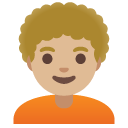
Person: Medium-light Skin Tone, Curly Hair
U+1F9D1 U+1F3FC U+200D U+1F9B1 · :person_mediumlight_skin_tone_curly_hair:
Trend 35
Meaning layers
- interpretation
- Used as a self-representative avatar by people who identify with this look, or ironically as a 'main character' stand-in when talking about oneself in third person.
- tiktok usage
- Placed in captions or comments to signal 'this is me' or to tag a friend who has curly hair and lighter-medium skin, often in relatable content threads.
- irony level
- 3 / 10
Platform meanings
- meaning
- Self-identification emoji used in captions and duets; signals curly-haired, medium-light skinned representation in relatable content.
- trend usage
- Used in 'curly hair struggles' trends, 'this is literally me' comment chains, and emoji-coded storytelling videos.
- hashtags
- #curlyhairtiktok#representation#thisismetho#emojiself#curlygirl
- virality score
- 42 / 100
Cultural meanings
🇺🇸
Western / Gen-Z
Widely used as a self-portrait emoji among Gen Z individuals with curly hair and lighter-medium skin tones; embraced in identity-positive and natural hair communities.
🇵🇰
Pakistan & India
May represent individuals of mixed or lighter South Asian heritage with natural wavy or curly hair; used in urban youth contexts for self-representation online.
🌍
Middle East
Occasionally used by individuals with lighter skin tones and naturally curly or wavy hair common in parts of the Levant and North Africa; seen as a relatable avatar.
🌐
Global Neutral
Functions as a universally understood human figure emoji; interpreted simply as 'a person' without deeper cultural layering in most international contexts.
🇧🇩
Bangladesh
Less commonly used for self-representation given predominant darker skin tones in the region; may appear in international or diaspora community contexts.
🇱🇰
Sri Lanka
Used by lighter-skinned Sri Lankan youth in diaspora or cosmopolitan settings; appreciated in discussions about diverse South Asian representation.
🇨🇳
China
Primarily interpreted as a generic foreign or Western-looking person due to the curly hair and skin tone; not commonly used for self-identification.
🇯🇵
Japan
Seen as representing a foreign or mixed-heritage individual; used in anime and manga fan communities where characters with curly hair have a distinct aesthetic.
🇰🇷
South Korea
Associated with Western or mixed-race appearance; may appear in K-pop fan communities when referencing non-East Asian artists or international fans.
🇹🇼
Taiwan
Interpreted as a representation of a Western or mixed individual; used in international student or expat communities on the island.
🇭🇰
Hong Kong
Used in diverse, cosmopolitan social media contexts; appreciated in HK's multicultural circles for representing Eurasian or mixed-heritage individuals.
🇵🇭
Philippines
Relatable for some Filipinos with lighter mestizo skin tones and naturally wavy or curly hair; used in self-identification posts by mixed-heritage users.
🇮🇩
Indonesia
Used by individuals of mixed heritage or those with naturally lighter skin and curly hair; appears in urban youth culture and natural hair acceptance communities.
🇹🇭
Thailand
Interpreted as a foreign or half-Thai (luk khrueng) individual; used in contexts celebrating mixed heritage and international identity.
🇻🇳
Vietnam
Primarily seen as representing someone of mixed Western-Asian heritage; used in diaspora communities and by Vietnamese youth in international settings.
🇲🇾
Malaysia
Relatable for Eurasian Malaysians or those of mixed Malay-Western descent; used in inclusive beauty and identity communities online.
🇸🇦
Saudi Arabia
May represent individuals of mixed Arab-Western or Levantine heritage with lighter skin; used cautiously in modest social media contexts.
🇦🇪
UAE
In the UAE's multicultural environment, this emoji is used freely by expats and mixed-heritage residents to represent themselves in diverse online communities.
🇪🇬
Egypt
Relatable for Egyptians with lighter Mediterranean skin tones and naturally curly hair; used in beauty and identity posts celebrating natural hair texture.
🇹🇷
Turkey
Highly relatable in Turkey where lighter skin tones and naturally curly hair are common; used for self-identification in social media and dating contexts.
🇮🇷
Iran
Represents Iranians or Persians with lighter skin tones and naturally curly or wavy hair, which is common; used in diaspora and domestic youth culture online.
🇳🇬
Nigeria
Less commonly used for self-representation given skin tone; may appear in conversations about representation, colorism, or in international/diaspora contexts.
🇿🇦
South Africa
Used by mixed-heritage or 'Coloured' South Africans who may identify with this skin tone and curly hair combination; appreciated in inclusive representation discussions.
🇬🇧
UK & Ireland
Popular among British and Irish users with curly hair and medium-light skin tones; used in natural hair communities and as a self-portrait emoji in social posts.
🇫🇷
France
Used by French individuals of mixed or Mediterranean heritage with lighter skin and curly hair; appears in natural hair and diversity representation content.
🇩🇪
Germany
Appreciated in Germany's diverse urban communities; used by people of mixed heritage or those with naturally curly hair for self-representation online.
🇪🇸
Spain & Italy
Highly relatable in Mediterranean cultures where medium-light skin and naturally curly hair are common; frequently used as a self-representative emoji.
🇧🇷
Brazil
Resonates with Brazil's highly mixed-race population where medium-light skin tones and curly hair are extremely common; widely used as a self-portrait emoji.
🇲🇽
Mexico
Relatable for Mexicans of mixed heritage with lighter skin tones and natural curly or wavy hair; used in self-expression and identity celebration posts.
🌎
Latin America
Broadly relatable across Latin America given the diverse genetic makeup of the region; embraced as a self-representation emoji in natural hair and identity communities.
🇦🇺
Australia & NZ
Used by Australians and New Zealanders of diverse heritage including mixed-European, Māori, or other backgrounds with this skin tone and hair type.
How its meaning shifted
- 2010
This emoji did not exist in 2010; emoji representation was extremely limited to basic yellow faces and no skin tone or hair style modifiers were available.
- 2015
Skin tone modifiers were introduced in 2015 but hair-specific variants did not yet exist; the concept of this emoji was not yet realized.
- 2020
Introduced as part of Unicode 12.0 (2019) rollout, this emoji gained traction in 2020 as conversations about diversity and representation surged globally during social justice movements.
- 2026
Normalized as a standard self-representation emoji; used casually across platforms as a personal avatar, with strong community adoption in natural hair, mixed-heritage, and identity-positive spaces.
See it on every platform
Compare with
Adjacent emojis
Share & embed
Frequently asked
01What does the 🧑🏼🦱 Person: Medium-light Skin Tone, Curly Hair emoji mean?
A gender-neutral person with medium-light skin tone and curly hair, introduced as part of the expanded hair style emoji set to promote diverse representation.
02What does 🧑🏼🦱 mean on TikTok?
Self-identification emoji used in captions and duets; signals curly-haired, medium-light skinned representation in relatable content.
03What does 🧑🏼🦱 mean on WhatsApp?
Sent to represent oneself or a friend who has this appearance, functioning as a personalized avatar in group chats.
04What does 🧑🏼🦱 mean in Gen-Z slang?
Used as a self-representative avatar by people who identify with this look, or ironically as a 'main character' stand-in when talking about oneself in third person.
05Is the 🧑🏼🦱 emoji safe to use?
A neutral, inclusive human representation emoji celebrating hair diversity and medium-light skin tones; broadly positive and safe for all audiences.
06What does 🧑🏼🦱 mean in texting?
Representation emojis like this one carry significant psychological weight for individuals who rarely see themselves depicted; using this emoji can be an act of self-affirmation and visibility.
07What is the shortcode for 🧑🏼🦱?
The shortcode for Person: Medium-light Skin Tone, Curly Hair is :person_mediumlight_skin_tone_curly_hair:
08What does 🧑🏼🦱 mean in dating?
Rarely used as a direct flirt tool; more likely used to describe oneself or tease a curly-haired match with 'you 🧑🏼🦱' in a playful text.
Safety & usage
- Safe meaning
- A neutral, inclusive human representation emoji celebrating hair diversity and medium-light skin tones; broadly positive and safe for all audiences.
- Caution
- Could theoretically be used in targeted or colorist harassment contexts, but this is extremely rare and not a common misuse pattern.
Minimal risk emoji; no known patterns of harmful or offensive use. May occasionally surface in colorism discussions but is not itself a harmful symbol.
How it looks across platforms


Appearance varies by platform and device. Google Noto, Twemoji, and OpenMoji are open-source.