🤾🏿
The Emoji
Person Playing Handball: Dark Skin Tone
U+1F93E U+1F3FF · :person_playing_handball_dark_skin_tone:
Trend 35
Meaning layers
- interpretation
- Used to flex athletic energy, represent hustle and grind culture, or simply signal that someone is active or sporty. Sometimes used ironically when someone is doing the bare minimum and calling it a workout.
- tiktok usage
- Appears in sports montages, workout motivation content, and occasionally in joke videos about people who think casual activity counts as intense training.
- irony level
- 3 / 10
Platform meanings
- meaning
- Represents athletic hustle, sports pride, and physical energy. Also used in Black excellence content to celebrate representation.
- trend usage
- Featured in sports highlight duets, workout motivation trends, and 'day in the life of an athlete' content.
- hashtags
- #HandballLife#AthleteVibes#BlackExcellence#SportsGrind#BeastMode
- virality score
- 42 / 100
Cultural meanings
🇺🇸
Western / Gen-Z
Used to celebrate Black athletic excellence and representation in sports, often paired with empowerment messaging on social media.
🇵🇰
Pakistan & India
Handball is less prominent here, so this emoji may be used generically for any ball sport or athletic activity rather than specifically for handball.
🌍
Middle East
In countries like Qatar and Egypt where handball is popular, this emoji carries specific sporting significance, especially during international tournaments.
🌐
Global Neutral
Universally understood as a sports/athletic emoji, representing physical activity and competitive spirit regardless of cultural context.
🇧🇩
Bangladesh
Likely interpreted broadly as a sports emoji rather than specifically handball, which has limited visibility in the region.
🇱🇰
Sri Lanka
Similar to broader South Asia, used generically for sports and athletic content rather than specifically for handball.
🇨🇳
China
Handball has a moderate following in China; the emoji may appear in Olympic coverage contexts and national sports pride content.
🇯🇵
Japan
Japan has a strong handball culture; this emoji is recognized and used specifically for handball by sports fans and athletes.
🇰🇷
South Korea
South Korea has a strong women's handball tradition; this emoji resonates culturally with sports pride, particularly for female athletes.
🇹🇼
Taiwan
Used in sports contexts but not as culturally specific as in handball-dominant nations; generally understood as athletic activity.
🇭🇰
Hong Kong
Used in general sports and fitness contexts; handball has limited mainstream visibility so the emoji skews generic.
🇵🇭
Philippines
Handball is niche here; the emoji is more likely used as a general athletic or active lifestyle symbol.
🇮🇩
Indonesia
Used broadly for sports content rather than handball-specific discussions, reflecting the sport's limited regional presence.
🇹🇭
Thailand
Interpreted as a general sports emoji; handball isn't a dominant sport so the specific meaning is often lost.
🇻🇳
Vietnam
Sports culture is growing rapidly; this emoji would be used in athletic and fitness content more broadly than specifically for handball.
🇲🇾
Malaysia
Used in general sports contexts; the dark skin tone aspect may be noted in discussions about athlete diversity and representation.
🇸🇦
Saudi Arabia
Handball is popular in the Gulf region; this emoji is recognized in sports contexts, though gender dynamics in sports depiction can influence interpretation.
🇦🇪
UAE
Used in sports and fitness contexts; the UAE's diverse population means this emoji resonates across multiple cultural groups as a symbol of athletic activity.
🇪🇬
Egypt
Egypt has a strong handball culture; this emoji is specifically understood as handball and used with pride during national and international competitions.
🇹🇷
Turkey
Turkey has a growing handball scene; the emoji is recognized by sports fans and used in athletic contexts and competition discussions.
🇮🇷
Iran
Used in sports contexts; handball has some visibility in Iran and the emoji may appear in sports community discussions.
🇳🇬
Nigeria
Strongly resonant due to the dark skin tone representation; used with pride to celebrate Black athletic identity and Nigerian sporting achievements.
🇿🇦
South Africa
The dark skin tone modifier makes this emoji particularly meaningful in celebrating Black South African athletes and sports representation.
🇬🇧
UK & Ireland
Used in sports and fitness contexts; handball is growing in the UK and the emoji is increasingly recognized in sports circles.
🇫🇷
France
France has a dominant handball culture and is a world-class handball nation; this emoji is widely recognized and used with strong national sports pride.
🇩🇪
Germany
Germany is a handball powerhouse; this emoji is highly recognized and frequently used in sports media, fan discussions, and athlete content.
🇪🇸
Spain & Italy
Both nations have strong handball followings; the emoji is used specifically for handball in fan and athlete communities.
🇧🇷
Brazil
While handball exists in Brazil, the emoji competes with football-related symbols; it's used in sports diversity and athletic empowerment contexts.
🇲🇽
Mexico
Used broadly for sports content; handball has limited visibility so the emoji tends to be interpreted as general athletic activity.
🌎
Latin America
Across Latin America, handball is niche but growing; the emoji represents athletic energy and sports participation broadly.
🇦🇺
Australia & NZ
Handball exists but is not mainstream; the emoji is more likely used in general fitness and active lifestyle contexts.
How its meaning shifted
- 2010
Emoji depicting handball did not yet exist in standard sets; sports representation was limited and skin tone modifiers were not yet available.
- 2015
Handball emoji with skin tone modifiers began emerging with Unicode 8.0; primarily used by handball enthusiasts and diversity advocates celebrating inclusive emoji design.
- 2020
Usage grew alongside broader conversations about racial representation in emoji and media; became a symbol in Black athletic excellence discourse especially during the Tokyo Olympics buildup.
- 2026
Firmly established as both a literal sports emoji and a symbol of Black athletic representation; used in professional sports media, social justice contexts, and everyday athletic content.
See it on every platform
Adjacent emojis
Share & embed
Frequently asked
01What does the 🤾🏿 Person Playing Handball: Dark Skin Tone emoji mean?
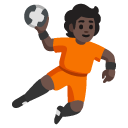
A person playing handball with dark skin tone, depicting an athlete in motion throwing or catching a handball.
02What does 🤾🏿 mean on TikTok?
Represents athletic hustle, sports pride, and physical energy. Also used in Black excellence content to celebrate representation.
03What does 🤾🏿 mean on WhatsApp?
Signals someone is heading to sports practice, playing handball, or being active.
04What does 🤾🏿 mean in Gen-Z slang?
Used to flex athletic energy, represent hustle and grind culture, or simply signal that someone is active or sporty. Sometimes used ironically when someone is doing the bare minimum and calling it a workout.
05Is the 🤾🏿 emoji safe to use?
Represents athletic activity, handball sport, physical fitness, and Black athletic representation.
06What does 🤾🏿 mean in texting?
Conveys a sense of physical empowerment, competitive spirit, and pride in athletic identity. The dark skin tone adds a layer of cultural representation and visibility.
07What is the shortcode for 🤾🏿?
The shortcode for Person Playing Handball: Dark Skin Tone is :person_playing_handball_dark_skin_tone:
08What does 🤾🏿 mean in dating?
Rarely used for flirting, but could signal 'I'm athletic and active — come match my energy.'
Safety & usage
- Safe meaning
- Represents athletic activity, handball sport, physical fitness, and Black athletic representation.
- Caution
- No widely documented toxic or coded misuse of this emoji.
No significant warning flags. Straightforward sports emoji with positive representation value. As with any emoji, context can shift meaning but no established harmful usage patterns exist.
How it looks across platforms


Appearance varies by platform and device. Google Noto, Twemoji, and OpenMoji are open-source.