🛀🏿
The Emoji
Person Taking Bath: Dark Skin Tone
U+1F6C0 U+1F3FF · :person_taking_bath_dark_skin_tone:
Trend 48
Meaning layers
- interpretation
- Used to signal self-care, relaxation, or a 'wash off the negativity' vibe. Often posted after a bad day to symbolize cleansing stress or drama away. Also used humorously to say someone is 'cleaning up' — either literally or metaphorically.
- tiktok usage
- Appears in 'self-care routine' videos, 'glow-up' content, and 'unbothered' aesthetics. Sometimes used ironically when someone is clearly NOT relaxing.
- irony level
- 4 / 10
Platform meanings
- meaning
- Represents self-care routines, relaxation rituals, and the 'soft life' aesthetic. Also used to signal emotional reset moments.
- trend usage
- Common in 'Get Ready With Me' videos, luxury bath routines, and 'day in the life' vlogs. Used with trending self-care sounds and aesthetic montages.
- hashtags
- #selfcare#bathtime#softlife#glowup#treatyourself
- virality score
- 52 / 100
Cultural meanings
🇺🇸
Western / Gen-Z
Widely used in self-care and 'soft life' discourse. The dark skin tone variant is particularly celebrated in Black wellness communities online as a representation of inclusive self-care content.
🇵🇰
Pakistan & India
Used literally to mean bathing or freshening up. Younger urban users may also use it in self-care contexts influenced by global social media trends.
🌍
Middle East
Generally interpreted as a hygiene or cleanliness reference, which carries positive connotations in Islamic culture. Used in self-care and wellness contexts among younger demographics.
🌐
Global Neutral
Universally understood as representing bathing or personal hygiene. Self-care undertones are broadly recognized across cultures due to global social media influence.
🇧🇩
Bangladesh
Primarily used in its literal sense to indicate bathing. Urban youth may adopt the self-care meaning from Instagram and TikTok trends.
🇱🇰
Sri Lanka
Used mainly in its literal sense. Among younger, digitally-active users it may carry the self-care connotation imported from global social media.
🇨🇳
China
Bathing is a significant wellness ritual in Chinese culture, especially foot soaking. This emoji is used positively for hygiene, relaxation, and wellness content on platforms like Weibo.
🇯🇵
Japan
Deeply culturally resonant — bathing (ofuro) is a cherished daily ritual in Japan. The emoji is used warmly and frequently to refer to evening bath routines or onsen culture.
🇰🇷
South Korea
Used in the context of extensive skincare and self-care culture. Bathing rituals (including jjimjilbang visits) are important, and this emoji signals wellness and grooming pride.
🇹🇼
Taiwan
Used similarly to broader East Asian contexts — associated with relaxation, evening routines, and wellness. Commonly seen in lifestyle and wellness social media content.
🇭🇰
Hong Kong
Used casually to indicate bathing or self-care. In fast-paced urban culture, it also carries a 'taking a moment for myself' meaning online.
🇵🇭
Philippines
Used literally and casually. Among Gen Z Filipinos on TikTok and Twitter (X), it's adopted in self-care and 'unbothered' meme culture as well.
🇮🇩
Indonesia
Used mainly in its literal sense for hygiene references. Among younger, social-media-savvy Indonesians, self-care associations are increasingly recognized.
🇹🇭
Thailand
Associated with personal care and cleanliness. In Thai wellness culture, bathing with floral or herbal products is traditional, giving this emoji a warm, positive connotation.
🇻🇳
Vietnam
Used straightforwardly for hygiene contexts. Growing self-care content culture on TikTok Vietnam is beginning to adopt its broader relaxation meaning.
🇲🇾
Malaysia
Used to signal bathing or freshening up. Younger Malaysian users on social media use it in self-care contexts, particularly in wellness and skincare communities.
🇸🇦
Saudi Arabia
Cleanliness is a religious and cultural priority, so the emoji carries strong positive meaning. It's used in wellness, hygiene, and self-care content widely.
🇦🇪
UAE
Used in luxury wellness and self-care contexts given the UAE's spa and luxury culture. Younger users also use it in casual 'taking a break' messaging.
🇪🇬
Egypt
Used casually for hygiene references. Online, younger Egyptians use it in self-care and 'treating yourself' content on Instagram and TikTok.
🇹🇷
Turkey
Bathing culture (hammam) is historically significant in Turkey. The emoji carries warm associations with relaxation and cleansing, used in wellness and lifestyle content.
🇮🇷
Iran
Used in a straightforward hygiene context. Among digitally-active youth on Instagram, it's also used in self-care and personal wellbeing discussions.
🇳🇬
Nigeria
Resonates strongly as the dark skin tone variant provides representation. Used in self-care discourse and 'glow-up' culture, especially in Afrobeat and Black excellence spaces online.
🇿🇦
South Africa
The dark skin tone makes this emoji particularly significant for Black South African users. It appears in self-care, wellness, and 'spoil yourself' content widely.
🇬🇧
UK & Ireland
Used humorously and casually. British slang culture sometimes uses it to tell someone to 'go have a wash and calm down.' Also used genuinely in self-care content.
🇫🇷
France
Associated with personal hygiene (culturally important in France) and self-care rituals. Used in wellness and beauty content, sometimes paired with French bath product aesthetics.
🇩🇪
Germany
Used in a practical, literal sense for hygiene. Among younger Germans on social media, the self-care meaning is recognized and adopted from Anglo-American digital culture.
🇪🇸
Spain & Italy
Used in a warm, relaxed context — both cultures value personal care and grooming. Also used humorously to tell someone they need to 'refresh' their attitude.
🇧🇷
Brazil
Brazilians place high value on personal hygiene and grooming. This emoji is used positively in self-care and beauty content, especially among Black Brazilian communities who value the representation.
🇲🇽
Mexico
Used casually for hygiene references. Among Mexican Gen Z on TikTok and Instagram, it's also used in self-care and 'unbothered' content.
🌎
Latin America
Broadly used for hygiene and relaxation across Latin America. The self-care meaning is gaining traction with younger social media users across the region.
🇦🇺
Australia & NZ
Used casually and humorously. Australians may use it sarcastically ('go have a shower and calm down') or genuinely in self-care and wellness content.
How its meaning shifted
- 2010
The base person-taking-bath emoji did not yet exist. Bathing was represented by water or soap-related emoji workarounds. Skin tone modifiers were not yet available.
- 2015
The skin tone modifier system was introduced (Unicode 8.0, 2015). The dark skin tone bath emoji became available, used primarily in its literal sense for hygiene conversations online.
- 2020
The self-care movement exploded during COVID-19 lockdowns, and this emoji surged in use across Instagram, TikTok, and Twitter in the context of bath rituals, mental health resets, and 'taking care of yourself' content.
- 2026
Now firmly embedded in self-care culture with added layers of representation politics. The dark skin tone variant is deliberately chosen by users who want to affirm Black and Brown representation in wellness aesthetics. Also used as a casual 'logging off' or 'unbothered' signal.
See it on every platform
Adjacent emojis
- Often confused with
- person swimmingperson in lotus positionhot springs
Share & embed
Frequently asked
01What does the 🛀🏿 Person Taking Bath: Dark Skin Tone emoji mean?
A person with dark skin tone sitting in a bathtub, taking a bath. The dark skin tone modifier (Fitzpatrick scale type VI) is applied to the base person-taking-bath emoji.
02What does 🛀🏿 mean on TikTok?
Represents self-care routines, relaxation rituals, and the 'soft life' aesthetic. Also used to signal emotional reset moments.
03What does 🛀🏿 mean on WhatsApp?
Literally means 'I'm in the bath' or 'I'm taking a bath, give me a few minutes.' Used to signal unavailability or a need for personal time.
04What does 🛀🏿 mean in Gen-Z slang?
Used to signal self-care, relaxation, or a 'wash off the negativity' vibe. Often posted after a bad day to symbolize cleansing stress or drama away. Also used humorously to say someone is 'cleaning up' — either literally or metaphorically.
05Is the 🛀🏿 emoji safe to use?
Represents bathing, self-care, relaxation, hygiene, and personal wellness. Completely safe for general audiences in most contexts.
06What does 🛀🏿 mean in texting?
Bathing is psychologically linked to emotional cleansing and stress relief. Using this emoji signals a desire for solitude, recharging, or washing away negative experiences — aligning with self-compassion and boundary-setting behaviors.
07What is the shortcode for 🛀🏿?
The shortcode for Person Taking Bath: Dark Skin Tone is :person_taking_bath_dark_skin_tone:
08What does 🛀🏿 mean in dating?
Can carry a mildly flirtatious or suggestive undertone depending on context, implying vulnerability or invitation when sent between romantic partners. Sometimes used playfully to hint at shared bathing or intimacy.
Safety & usage
- Safe meaning
- Represents bathing, self-care, relaxation, hygiene, and personal wellness. Completely safe for general audiences in most contexts.
- Caution
- In rare cases, could be used suggestively between individuals to imply intimacy or vulnerability. Very occasionally used to mock someone's hygiene.
While generally safe, the bathing context can be sexualized in adult conversations. Parents should be aware of context when children use or receive this emoji. The dark skin tone representation is important and should not be used mockingly.
How it looks across platforms
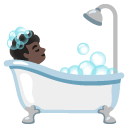


Appearance varies by platform and device. Google Noto, Twemoji, and OpenMoji are open-source.