🚶🏾➡️
The Emoji
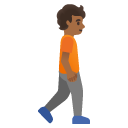
Person Walking Facing Right: Medium-dark Skin Tone
U+1F6B6 U+1F3FE U+200D U+27A1 U+FE0F · :person_walking_facing_right_mediumdark_skin_tone:
Trend 52
Meaning layers
- interpretation
- Used to signal leaving a situation, moving on, or literally walking away from drama, toxicity, or bad vibes. Also used humorously to indicate someone is 'on the way' or making a dramatic exit.
- tiktok usage
- Appears in 'walking away from problems' montages, transition videos, and 'leaving toxic situations' storytimes. Often paired with relatable captions about moving on.
- irony level
- 4 / 10
Platform meanings
- meaning
- Represents moving on, leaving, or being in transit. Used in relatable 'walking away from...' content or as a literal indicator of going somewhere.
- trend usage
- Frequently used in POV videos, 'leaving toxic traits behind' content, and transition edits where the creator walks away from camera.
- hashtags
- #walkingaway#movingon#newera#leftthatchapter#walkingtowards
- virality score
- 55 / 100
Cultural meanings
🇺🇸
Western / Gen-Z
Primarily used ironically to signal 'I'm walking away from this situation' — a digital coping mechanism for setting boundaries and leaving toxic dynamics.
🇵🇰
Pakistan & India
Used in casual chat to mean 'I'm heading out' or during emotional conversations to signal someone is done with an argument or drama, sometimes with humorous intent.
🌍
Middle East
Generally interpreted literally as being on the way somewhere or going for a walk; metaphorical usage is less common but growing among younger, digital-native users.
🌐
Global Neutral
A universally understood symbol of movement and travel — interpreted as walking, commuting, or being in transit regardless of cultural background.
🇧🇩
Bangladesh
Used mainly in its literal sense to indicate going somewhere or being on the move; younger users may adopt the 'walking away from drama' usage from global social media trends.
🇱🇰
Sri Lanka
Typically understood as indicating physical movement or travel; in urban youth communities, the 'leaving a situation' connotation is beginning to take hold.
🇨🇳
China
Used straightforwardly to indicate walking or being out. On platforms like WeChat, it signals 'I'm heading out now'. Skin tone representation is noted by users interested in diverse emoji options.
🇯🇵
Japan
Interpreted literally as walking or being en route. Japanese emoji culture tends toward literal interpretations, though younger users on global platforms adopt broader meanings.
🇰🇷
South Korea
Used among younger Koreans to signal they're heading out or moving on. The skin tone aspect is occasionally discussed in conversations about emoji diversity representation.
🇹🇼
Taiwan
Generally used to indicate physical movement or transit. Taiwanese youth on global platforms adopt the 'moving on' metaphorical meaning as well.
🇭🇰
Hong Kong
Used in messaging apps to quickly say 'I'm on my way' or 'heading out'. The medium-dark skin tone is noted and sometimes specifically chosen for representation.
🇵🇭
Philippines
Very commonly used to indicate being en route or heading somewhere. The 'walking away from drama' usage is also popular among Filipino social media users.
🇮🇩
Indonesia
Used to signal departure or movement in everyday messaging. Growing adoption of the metaphorical 'walking away from bad situations' meaning among younger users.
🇹🇭
Thailand
Typically used for its literal meaning in Thai messaging culture. Among younger Thai users on TikTok and Instagram, the 'leaving situation' connotation is emerging.
🇻🇳
Vietnam
Primarily literal — used to indicate going somewhere or being in transit. Younger Vietnamese social media users are beginning to adopt more ironic or emotional usages.
🇲🇾
Malaysia
Used in both literal and metaphorical contexts — 'on my way' in casual chats and 'I'm done with this' in more emotional or dramatic conversations.
🇸🇦
Saudi Arabia
Generally used to indicate movement or travel. Among Saudi youth on social media platforms, it may carry the 'moving on' or 'leaving drama' interpretation.
🇦🇪
UAE
In the multicultural UAE context, used literally and understood across communities. Younger Emirati and expat users adopt global social media meanings as well.
🇪🇬
Egypt
Used colloquially to mean 'I'm leaving' or 'heading out'. In Egyptian humor culture, it can be used for comedic dramatic exits from online arguments.
🇹🇷
Turkey
Among Turkish social media users, used to signal departure from a conversation or situation — both literal and metaphorical usage is common.
🇮🇷
Iran
Used on platforms like Instagram and Telegram to indicate movement or departure. The skin tone selection is sometimes a point of conversation around representation.
🇳🇬
Nigeria
Used expressively in Nigerian social media culture to signal 'I'm out of here' or 'walking away from nonsense' — fits well into Naija humor and bluntness.
🇿🇦
South Africa
Used across communities to signal movement or departure. In South African social media culture, the 'walking away from drama' usage resonates strongly.
🇬🇧
UK & Ireland
Used with dry British/Irish humor to signal leaving a conversation or situation — 'and I simply walked'. Very natural fit for the understated exit culture.
🇫🇷
France
Used with typical Gallic nonchalance to signal departure or disinterest. 'Je m'en vais' energy — an elegant exit from drama or conversation.
🇩🇪
Germany
Primarily interpreted literally as walking or being in motion. Metaphorical uses are less dominant but present among younger German social media users.
🇪🇸
Spain & Italy
Used dramatically and expressively to signal exits — fits well with passionate Southern European communication styles. Can signal 'I'm done, goodbye' with flair.
🇧🇷
Brazil
Brazilians use this with humor and expressiveness to signal leaving drama behind or literally being on the move. Fits perfectly into Brazilian meme culture.
🇲🇽
Mexico
Used in Mexican social media to humorously signal 'I'm walking away from this mess' — a fun, dramatic departure emoji in everyday digital conversations.
🌎
Latin America
Broadly used across Latin America to indicate movement or a dramatic exit from situations — very relatable in vibrant, expressive Latin American digital culture.
🇦🇺
Australia & NZ
Used casually to say 'heading off' or in dry humor contexts to signal leaving an absurd conversation. Fits the laid-back yet sarcastic Aussie/Kiwi digital voice.
How its meaning shifted
- 2010
The directional walking emoji variant did not exist in this form. Basic emoji sets had limited human figures without directional options or skin tone modifiers.
- 2015
Walking emojis were present but directional variants were limited. Skin tone modifiers had just been introduced, and usage was mostly literal — indicating walking or being on the move.
- 2020
Directional walking emojis with skin tone options became more widely used. The 'walking away' metaphorical usage began growing alongside meme culture and self-help/boundary-setting social media trends.
- 2026
Fully embedded in digital culture as both a literal travel indicator and a metaphorical 'moving on' symbol. Widely used across all platforms with strong Gen Z adoption for emotional and ironic expression.
See it on every platform
Adjacent emojis
- Opposite
- person sittingstop signno entry
- Often confused with
- person runningperson hikingperson walking medium skin tone
- Can replace
- person walkingfootprintsright arrow
Share & embed
Frequently asked
01What does the 🚶🏾➡️ Person Walking Facing Right: Medium-dark Skin Tone emoji mean?
A person walking while facing to the right, displayed with a medium-dark skin tone. The emoji depicts a human figure in mid-stride, moving in a rightward direction.
02What does 🚶🏾➡️ mean on TikTok?
Represents moving on, leaving, or being in transit. Used in relatable 'walking away from...' content or as a literal indicator of going somewhere.
03What does 🚶🏾➡️ mean on WhatsApp?
Literally means 'I'm on my way' or 'heading over now'. Also used to signal disengagement from a conversation or topic.
04What does 🚶🏾➡️ mean in Gen-Z slang?
Used to signal leaving a situation, moving on, or literally walking away from drama, toxicity, or bad vibes. Also used humorously to indicate someone is 'on the way' or making a dramatic exit.
05Is the 🚶🏾➡️ emoji safe to use?
A completely safe emoji representing walking, movement, transit, or metaphorical departure from negative situations.
06What does 🚶🏾➡️ mean in texting?
Walking away is a psychologically empowering action; this emoji can convey autonomy, the decision to leave negativity, or simply forward momentum in life, representing agency and self-determination.
07What is the shortcode for 🚶🏾➡️?
The shortcode for Person Walking Facing Right: Medium-dark Skin Tone is :person_walking_facing_right_mediumdark_skin_tone:
08What does 🚶🏾➡️ mean in dating?
Used lightheartedly to say 'I'm on my way to you' or to tease a partner by implying you're walking out if they don't behave. Rarely overtly flirtatious on its own.
Safety & usage
- Safe meaning
- A completely safe emoji representing walking, movement, transit, or metaphorical departure from negative situations.
- Caution
- In rare cases, could be used to threaten to 'walk out' of a relationship in a manipulative or passive-aggressive way.
Generally benign. Minimal risk of misuse. The medium-dark skin tone is intentional representation and should be respected as such.
How it looks across platforms
Appearance varies by platform and device. Google Noto, Twemoji, and OpenMoji are open-source.