🫄🏿
The Emoji
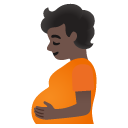
Pregnant Person: Dark Skin Tone
U+1FAC4 U+1F3FF · :pregnant_person_dark_skin_tone:
Trend 52
Meaning layers
- interpretation
- Used to represent pregnancy in a gender-inclusive way, celebrate body positivity, or humorously describe feeling bloated or overly full after eating. Also used in trans/non-binary communities to represent their reproductive experiences authentically.
- tiktok usage
- Appears in body positivity content, trans pregnancy vlogs, 'what I ate today' jokes about bloating, and inclusive parenting content. Sometimes used ironically when someone says they're 'pregnant with ideas.'
- irony level
- 4 / 10
Platform meanings
- meaning
- Represents pregnancy, body positivity, inclusive parenting, and humorously 'food babies' after large meals. Also used in trans and non-binary pregnancy content.
- trend usage
- Seen in 'pregnancy reveal' trends with inclusive framing, 'what I ate' food challenge videos, LGBTQ+ family content, and body neutrality trends.
- hashtags
- #PregnancyJourney#TransPregnancy#BodyPositivity#FoodBaby#InclusiveParenting
- virality score
- 55 / 100
Cultural meanings
🇺🇸
Western / Gen-Z
Widely recognized and accepted as an inclusive pregnancy symbol; Gen Z uses it proudly in LGBTQ+ and body-positive contexts, and humorously for food-baby jokes.
🇵🇰
Pakistan & India
Primarily interpreted as a straightforward pregnancy symbol without awareness of gender-neutral intent; skin tone modifier may increase relatability for South Asian users.
🌍
Middle East
Interpreted conservatively as a pregnancy/maternity symbol; the gender-neutral intent may not be widely understood or may be viewed critically in more traditional contexts.
🌐
Global Neutral
Universally understood as representing pregnancy; the inclusive gender-neutral dimension is recognized primarily in digitally progressive communities worldwide.
🇧🇩
Bangladesh
Seen as a pregnancy symbol; commonly used to congratulate expecting mothers without attention to its gender-neutral design intent.
🇱🇰
Sri Lanka
Used in pregnancy congratulation messages and maternity-related content; the gender-neutral framing is not widely discussed in mainstream usage.
🇨🇳
China
Interpreted as a pregnancy emoji; gender-neutral pregnancy representation is not a major cultural conversation, so it is used mostly at face value.
🇯🇵
Japan
Used in pregnancy announcement contexts; Japan's emerging awareness of LGBTQ+ issues means younger users may understand the inclusive intent, but mainstream use is literal.
🇰🇷
South Korea
Used in pregnancy and family planning contexts; growing LGBTQ+ visibility means some younger Koreans recognize the inclusive framing, though mainstream use remains literal.
🇹🇼
Taiwan
Taiwan's progressive stance on LGBTQ+ rights means this emoji carries inclusive pregnancy meaning more consciously than in many other Asian contexts.
🇭🇰
Hong Kong
Interpreted as a pregnancy emoji; used in family and health contexts with some younger users aware of its gender-neutral significance.
🇵🇭
Philippines
Commonly used for pregnancy announcements and congratulations; the gender-neutral intent is less commonly discussed in mainstream Filipino digital culture.
🇮🇩
Indonesia
Primarily used as a pregnancy symbol; in a culturally conservative context, the gender-neutral design intent may not be recognized or may be viewed with discomfort.
🇹🇭
Thailand
Thailand's relatively visible trans community (kathoey culture) means some users recognize the inclusive intent; broadly used as a pregnancy symbol.
🇻🇳
Vietnam
Used straightforwardly as a pregnancy emoji; gender-neutral pregnancy representation is not a mainstream cultural conversation in Vietnam.
🇲🇾
Malaysia
Interpreted as a pregnancy symbol; in a conservative cultural and legal context, the gender-neutral intent may be unrecognized or controversial.
🇸🇦
Saudi Arabia
Understood as a traditional pregnancy symbol; the gender-neutral design intent is largely absent from cultural consciousness and may be considered inappropriate in context.
🇦🇪
UAE
Used in pregnancy and family contexts; in cosmopolitan Dubai circles some may recognize inclusive intent, while broader UAE usage remains traditional.
🇪🇬
Egypt
Used as a conventional pregnancy symbol in family and health contexts; gender-neutral pregnancy representation is not part of mainstream cultural discourse.
🇹🇷
Turkey
Interpreted as a pregnancy emoji in family and health contexts; younger, urban Turks may recognize the inclusive framing while mainstream use is literal.
🇮🇷
Iran
Used as a straightforward pregnancy symbol; the gender-neutral intent is not part of mainstream cultural conversation and could be sensitive in the current political climate.
🇳🇬
Nigeria
Used to represent pregnancy in family and health conversations; the gender-neutral intent is not widely recognized in mainstream Nigerian digital culture.
🇿🇦
South Africa
South Africa's progressive constitution and visible LGBTQ+ community means some users recognize the inclusive intent; broadly used as a pregnancy symbol.
🇬🇧
UK & Ireland
Widely recognized in its gender-inclusive intent, especially among younger users and in progressive health and LGBTQ+ communities; also used humorously for food-baby jokes.
🇫🇷
France
Interpreted as a pregnancy emoji; France's debate around 'inclusive writing' means some users engage thoughtfully with its gender-neutral framing, though casual use is literal.
🇩🇪
Germany
Germany's progressive LGBTQ+ scene means many users recognize the inclusive intent; used in family planning, trans community content, and body-positive spaces.
🇪🇸
Spain & Italy
Used as a pregnancy emoji; Spain's more progressive stance on LGBTQ+ issues compared to Italy means the inclusive intent is more recognized in Spanish digital culture.
🇧🇷
Brazil
Brazil's large and visible LGBTQ+ community, especially in urban areas, means many users recognize and celebrate the emoji's inclusive framing; also used in humor contexts.
🇲🇽
Mexico
Used in family and pregnancy contexts; LGBTQ+ communities in Mexico's urban centers recognize the inclusive intent, while mainstream use is more traditional.
🌎
Latin America
Broadly interpreted as a pregnancy symbol; in progressive LGBTQ+ communities across Latin America the inclusive framing is recognized and celebrated.
🇦🇺
Australia & NZ
Widely recognized as an inclusive pregnancy symbol; both countries have progressive LGBTQ+ communities that use it meaningfully, alongside mainstream humorous food-baby usage.
How its meaning shifted
- 2010
This emoji did not exist in 2010; pregnancy representation was limited to the pregnant woman emoji which was not yet widely standardized.
- 2015
Still did not exist; pregnancy emoji representation remained binary and gendered, with no gender-neutral options available.
- 2020
The emoji was in proposal stages; trans and non-binary communities were actively advocating for more inclusive pregnancy emoji representation.
- 2026
Established as a mainstream inclusive pregnancy emoji; widely used in healthcare communications, LGBTQ+ family content, body-positive spaces, and humorously in food-baby meme culture globally.
See it on every platform
Adjacent emojis
- Often confused with
- pregnant womanperson gesturing okperson standing
- Can replace
- pregnant womanbaby bottlehatching chick
Share & embed
Frequently asked
01What does the 🫄🏿 Pregnant Person: Dark Skin Tone emoji mean?
A gender-neutral person with a visibly pregnant belly, shown with dark skin tone. Introduced to represent pregnancy inclusively across all gender identities.
02What does 🫄🏿 mean on TikTok?
Represents pregnancy, body positivity, inclusive parenting, and humorously 'food babies' after large meals. Also used in trans and non-binary pregnancy content.
03What does 🫄🏿 mean on WhatsApp?
Used to announce pregnancy, discuss someone who is pregnant, or joke about being full after eating.
04What does 🫄🏿 mean in Gen-Z slang?
Used to represent pregnancy in a gender-inclusive way, celebrate body positivity, or humorously describe feeling bloated or overly full after eating. Also used in trans/non-binary communities to represent their reproductive experiences authentically.
05Is the 🫄🏿 emoji safe to use?
Represents pregnancy in a gender-inclusive way; used in healthcare, family planning, LGBTQ+ community content, and body positivity discussions.
06What does 🫄🏿 mean in texting?
Pregnancy as an emoji evokes deep emotional responses tied to life creation, identity, and bodily autonomy. The gender-neutral framing can be emotionally significant for non-binary and trans people who rarely see themselves represented in mainstream pregnancy discourse.
07What is the shortcode for 🫄🏿?
The shortcode for Pregnant Person: Dark Skin Tone is :pregnant_person_dark_skin_tone:
08What does 🫄🏿 mean in dating?
Rarely used in flirting contexts; if used in early dating it may signal someone is pregnant or joking about 'being pregnant with feelings' for someone.
Safety & usage
- Safe meaning
- Represents pregnancy in a gender-inclusive way; used in healthcare, family planning, LGBTQ+ community content, and body positivity discussions.
- Caution
- Can be used mockingly toward trans or non-binary people in hostile online spaces as a form of gender-identity harassment or ridicule.
May be weaponized in transphobic contexts on platforms with limited moderation. In political discourse, it can become a flashpoint in gender-ideology debates. Users in conservative cultural contexts should be aware it may provoke strong reactions.
How it looks across platforms


Appearance varies by platform and device. Google Noto, Twemoji, and OpenMoji are open-source.