👩🏾🎤
The Emoji
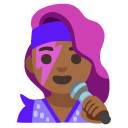
Woman Singer: Medium-dark Skin Tone
U+1F469 U+1F3FE U+200D U+1F3A4 · :woman_singer_mediumdark_skin_tone:
Trend 62
Meaning layers
- interpretation
- Used to express being in your performer era, hyping up a friend's confidence, or signaling main character energy especially around music, creativity, or stage presence.
- tiktok usage
- Dropped in comments when someone is serving looks or vocals, or used in bios/captions by aspiring singers and music creators to claim their identity.
- irony level
- 2 / 10
Platform meanings
- meaning
- Represents singer/performer identity, used by music creators to mark their content and signal vocal or artistic talent.
- trend usage
- Used in duets, vocal challenge videos, and 'singing my feelings' content; appears in trending audio captions and POV performance skits.
- hashtags
- #singercheck#vocalera#performerenergy#blackgirlsing#musiccreator
- virality score
- 68 / 100
Cultural meanings
🇺🇸
Western / Gen-Z
Widely used to celebrate Black female artists and self-expression; signals performer energy, main character moments, and creative confidence.
🇵🇰
Pakistan & India
Used by music-loving users to represent female playback singers or Bollywood-adjacent performers; less common but growing with music content creators.
🌍
Middle East
Occasionally used by Arab music fans to reference female vocalists; cultural conservatism may limit its use in some contexts.
🌐
Global Neutral
Universally understood as representing a female singer or music performer across most digital communication contexts.
🇧🇩
Bangladesh
Used among younger, urban music fans to represent female vocalists or aspiring artists in the local pop and folk music scene.
🇱🇰
Sri Lanka
Appears in conversations about local female pop artists or in music fan communities online.
🇨🇳
China
Less frequently used due to different emoji culture preferences; may appear in music fan communities discussing global pop artists.
🇯🇵
Japan
Used in idol and J-pop fan communities to represent female performers; appreciated for its representation of diverse skin tones.
🇰🇷
South Korea
Common in K-pop fan communities when discussing Black Western artists or celebrating diverse representation in music.
🇹🇼
Taiwan
Used in music fan spaces and by younger users engaged with global pop culture and Western music.
🇭🇰
Hong Kong
Appears in music discussions and among fans of Western R&B and pop culture who value diversity representation.
🇵🇭
Philippines
Widely used by OPM (Original Pilipino Music) fans and aspiring female singers; embraced in music content creation communities.
🇮🇩
Indonesia
Used by music creators and fans on social media; associated with confident female vocal expression in pop culture.
🇹🇭
Thailand
Appears in T-pop and international music fan spaces; used to signal admiration for female performers.
🇻🇳
Vietnam
Used among younger users in music communities; growing usage among V-pop fans and aspiring creators.
🇲🇾
Malaysia
Used in music discussions and by creative young women expressing artistic ambitions; appreciated for skin tone diversity.
🇸🇦
Saudi Arabia
Limited usage due to cultural context around female public performance; more commonly used in private or youth digital spaces.
🇦🇪
UAE
Used in cosmopolitan music communities, particularly among expats and younger residents engaged with global pop culture.
🇪🇬
Egypt
Appears in conversations about female Arab pop stars and international music; used by younger music fans.
🇹🇷
Turkey
Used in pop music fan communities and by aspiring female artists; associated with bold creative expression.
🇮🇷
Iran
Circulates in underground music communities and diaspora spaces where female artistic expression is celebrated online.
🇳🇬
Nigeria
Heavily used and culturally resonant — associated with Afrobeats, afropop, and celebrated female artists like Tiwa Savage and Yemi Alade.
🇿🇦
South Africa
Used to celebrate local female music talent in amapiano, gospel, and pop; strong cultural resonance for representation.
🇬🇧
UK & Ireland
Common in music discussions, used to hype female artists and signal creative confidence; fits well within British music culture.
🇫🇷
France
Used in music fan spaces and by creative communities; appreciated in contexts celebrating diverse artistic representation.
🇩🇪
Germany
Used in digital music communities and by younger Germans engaged with global pop culture and diversity discourse.
🇪🇸
Spain & Italy
Appears in music-loving communities and social media posts celebrating female performers; associated with passion and stage presence.
🇧🇷
Brazil
Strongly used in music communities; resonates with Brazil's vibrant music culture and celebration of Black female artists.
🇲🇽
Mexico
Used in pop and regional music fan spaces; gaining traction among younger Mexicans celebrating female performer energy.
🌎
Latin America
Broadly used across Latin America in music communities to celebrate female vocalists and creative empowerment.
🇦🇺
Australia & NZ
Used in music discussions and by creatives; appreciated for its representation of darker skin tones in a diverse cultural context.
How its meaning shifted
- 2010
This specific emoji did not exist yet; woman and music were represented through separate or more generic emojis.
- 2015
Introduced around this period as part of Unicode's expanded profession and skin tone modifier system; early adoption among tech-forward users.
- 2020
Growing usage tied to Black Lives Matter representation discourse, Black female artist celebration, and the broader push for diverse emoji usage.
- 2026
Established as a go-to emoji for music creators, female vocalist content, and empowered performer identity across all major platforms.
See it on every platform
Adjacent emojis
Share & embed
Frequently asked
01What does the 👩🏾🎤 Woman Singer: Medium-dark Skin Tone emoji mean?
A woman with medium-dark skin tone depicted as a singer or music performer, often shown with a microphone and rock-star styling.
02What does 👩🏾🎤 mean on TikTok?
Represents singer/performer identity, used by music creators to mark their content and signal vocal or artistic talent.
03What does 👩🏾🎤 mean on WhatsApp?
Sent to hype up a friend who just shared a voice note, song, or performance clip.
04What does 👩🏾🎤 mean in Gen-Z slang?
Used to express being in your performer era, hyping up a friend's confidence, or signaling main character energy especially around music, creativity, or stage presence.
05Is the 👩🏾🎤 emoji safe to use?
Represents female singers, musicians, and performers; used positively to celebrate creativity, talent, and artistic identity.
06What does 👩🏾🎤 mean in texting?
Represents self-expression and artistic identity; using this emoji can signal a desire to be seen as talented, bold, and unapologetically visible in a creative space.
07What is the shortcode for 👩🏾🎤?
The shortcode for Woman Singer: Medium-dark Skin Tone is :woman_singer_mediumdark_skin_tone:
08What does 👩🏾🎤 mean in dating?
Sent to someone to say 'you're a star' or to compliment their confidence and charisma, sometimes used flirtatiously to suggest they have an irresistible performer energy.
Safety & usage
- Safe meaning
- Represents female singers, musicians, and performers; used positively to celebrate creativity, talent, and artistic identity.
- Caution
- Rarely used in toxic contexts; could theoretically be deployed sarcastically to demean someone's singing ability.
Generally very safe; no significant misuse patterns documented. Skin tone specificity makes it an important representation tool — avoid using it in ways that appropriate or trivialize Black female artistry.
How it looks across platforms


Appearance varies by platform and device. Google Noto, Twemoji, and OpenMoji are open-source.