🧔♀️
The Emoji
Woman: Beard
U+1F9D4 U+200D U+2640 U+FE0F · :woman_beard:
Trend 38
Meaning layers
- interpretation
- Used to celebrate gender non-conformity, challenge beauty norms, and show solidarity with trans women and non-binary folks. Also used humorously to represent 'she doesn't shave and she doesn't care' energy.
- tiktok usage
- Appears in body positivity content, trans visibility posts, and anti-gender-norm commentary. Sometimes used ironically in comedy skits.
- irony level
- 5 / 10
Platform meanings
- meaning
- Symbol of gender non-conformity and queer pride; used in trans visibility content and anti-beauty-standard videos
- trend usage
- Appears in #TransVisibility videos, body hair positivity TikToks, and comedic gender-norm-breaking skits
- hashtags
- #TransVisibility#GenderNonConforming#BodyPositivity#QueerTikTok#BreakingBeautyStandards
- virality score
- 52 / 100
Cultural meanings
🇺🇸
Western / Gen-Z
Widely understood and embraced as a symbol of trans visibility and gender non-conformity; commonly used in queer online spaces with pride and humor.
🇵🇰
Pakistan & India
Largely misunderstood or avoided; may be associated with the hijra community, which carries complex social stigma despite hijra people having historical cultural significance.
🌍
Middle East
Generally taboo and avoided in mainstream use; may be seen as offensive or blasphemous in conservative contexts, though some LGBTQ+ activists use it defiantly.
🌐
Global Neutral
Recognized as a gender-diversity emoji by digitally literate users; interpreted cautiously or with curiosity by those less familiar with LGBTQ+ representation.
🇧🇩
Bangladesh
Rarely used; may evoke associations with the hijra community; deeply sensitive in a socially conservative context where gender non-conformity is marginalized.
🇱🇰
Sri Lanka
Uncommon in mainstream use; limited awareness of the emoji's intended meaning; may be seen as comedic or confusing rather than representational.
🇨🇳
China
Largely avoided due to strict platform censorship around LGBTQ+ content; may be deleted or flagged on domestic platforms like WeChat or Weibo.
🇯🇵
Japan
Used with curiosity in discussions about gender diversity; Japan's emerging awareness of LGBTQ+ rights means it is gaining gradual understanding among younger users.
🇰🇷
South Korea
Used cautiously; Gen Z Koreans in queer spaces embrace it, but mainstream culture remains conservative and the emoji may provoke negative reactions.
🇹🇼
Taiwan
Embraced positively given Taiwan's status as the most LGBTQ+-progressive country in Asia; used openly in queer communities and pride contexts.
🇭🇰
Hong Kong
Used among LGBTQ+ communities in Hong Kong with growing awareness, though political and social conservatism limit mainstream adoption.
🇵🇭
Philippines
Mixed reception; the Philippines has a visible and celebrated bakla culture, so gender non-conformity is recognized, but trans women specifically face significant stigma.
🇮🇩
Indonesia
Sensitive and largely avoided; Indonesia's conservative Islamic majority views the emoji as inappropriate, and waria (trans women) face social marginalization.
🇹🇭
Thailand
Relatively accepted given Thailand's visible kathoey (ladyboy) culture; used more casually and with less political weight than in Western contexts.
🇻🇳
Vietnam
Uncommon; Vietnam has a growing LGBTQ+ movement but the emoji remains niche, mainly used by activists and young urban queer communities.
🇲🇾
Malaysia
Largely taboo; Malaysia's conservative Muslim-majority context means LGBTQ+ representation is legally and socially suppressed, making this emoji risky to use.
🇸🇦
Saudi Arabia
Effectively banned in spirit; LGBTQ+ content is illegal, and the emoji would be avoided or flagged; only used covertly by underground queer communities.
🇦🇪
UAE
Similar to Saudi Arabia — heavily suppressed; the emoji would not appear in mainstream digital communication; associated with illegality in local law.
🇪🇬
Egypt
Rarely used and potentially dangerous; LGBTQ+ expression is criminalized in practice, and the emoji would be seen as provocative or offensive by most users.
🇹🇷
Turkey
Increasingly polarized; LGBTQ+ rights have been rolled back, but a vocal younger queer community uses the emoji defiantly in online activist spaces.
🇮🇷
Iran
Deeply taboo; gender non-conformity and homosexuality are criminalized, though paradoxically Iran permits gender reassignment surgery, creating a complex cultural backdrop.
🇳🇬
Nigeria
Almost never used positively in mainstream contexts; same-sex relations are criminalized, and the emoji would be seen as offensive or foreign to most Nigerian users.
🇿🇦
South Africa
South Africa has constitutional LGBTQ+ protections; urban queer communities use the emoji openly, but rural and conservative communities may react negatively.
🇬🇧
UK & Ireland
Well understood and positively received in progressive circles; used in Trans Pride UK content and online queer discourse with familiarity and acceptance.
🇫🇷
France
Used in LGBTQ+ activist circles and queer social media; France's republican universalism sometimes creates tension with identity-specific emojis, but younger users embrace it.
🇩🇪
Germany
Welcomed in Germany's relatively progressive LGBTQ+ landscape; used in trans rights discussions, pride content, and queer community spaces without controversy.
🇪🇸
Spain & Italy
Spain embraces it warmly given strong LGBTQ+ rights; Italy has a more mixed reception due to conservative Catholic influence, but urban youth use it freely.
🇧🇷
Brazil
Brazil has one of the world's largest trans populations and vibrant pride culture; the emoji is used actively in queer spaces despite political tensions.
🇲🇽
Mexico
Used in LGBTQ+ communities especially in major cities; Mexico's muxe tradition in Oaxaca provides cultural context for gender non-conformity, though national reception varies.
🌎
Latin America
Varies widely by country; progressive urban communities in Argentina and Chile embrace it; more conservative regions in Central America treat it with caution or hostility.
🇦🇺
Australia & NZ
Well received in both countries with strong LGBTQ+ rights frameworks; used openly in trans visibility campaigns, pride events, and queer social media.
How its meaning shifted
- 2010
This specific emoji did not exist yet; gender-diverse representation in emoji was virtually nonexistent, and the concept was not part of mainstream digital culture.
- 2015
Still non-existent as an emoji; broader emoji gender debates were beginning with campaigns like #EmojiEquality; bearded woman emoji had not been conceptualized publicly.
- 2020
Introduced in Unicode 13.1 (2021), so barely emerging; initial usage was primarily by LGBTQ+ advocates and tech-savvy users testing new emoji diversity additions.
- 2026
Established as a meaningful symbol of trans visibility and gender non-conformity; regularly used in queer online spaces, pride content, and DEI conversations across major platforms.
See it on every platform
Adjacent emojis
- Often confused with
- man beardmx clausperson beard
- Can replace
- transgender flagrainbow flagwoman
Share & embed
Frequently asked
01What does the 🧔♀️ Woman: Beard emoji mean?
A woman with a beard, representing a bearded female-presenting person. Added to Unicode to support gender diversity and representation of people who identify as women but have facial hair.
02What does 🧔♀️ mean on TikTok?
Symbol of gender non-conformity and queer pride; used in trans visibility content and anti-beauty-standard videos
03What does 🧔♀️ mean on WhatsApp?
Used to reference someone who breaks gender norms or to represent a specific trans or non-binary person in conversation
04What does 🧔♀️ mean in Gen-Z slang?
Used to celebrate gender non-conformity, challenge beauty norms, and show solidarity with trans women and non-binary folks. Also used humorously to represent 'she doesn't shave and she doesn't care' energy.
05Is the 🧔♀️ emoji safe to use?
Representation of gender non-conforming women, trans women, or people with conditions like PCOS who identify as women; a symbol of inclusivity and authentic self-expression.
06What does 🧔♀️ mean in texting?
Carries strong psychological weight around identity and self-acceptance. For many in the LGBTQ+ community it signals safety and pride; for others it may trigger discomfort, reflecting deeply held gender norms and biases.
07What is the shortcode for 🧔♀️?
The shortcode for Woman: Beard is :woman_beard:
08What does 🧔♀️ mean in dating?
Rarely used in flirting; when used it signals radical self-acceptance and non-conformity — a statement rather than a flirt.
Safety & usage
- Safe meaning
- Representation of gender non-conforming women, trans women, or people with conditions like PCOS who identify as women; a symbol of inclusivity and authentic self-expression.
- Caution
- Can be weaponized in transphobic contexts to mock or dehumanize trans women; sometimes used in bad-faith gender debate trolling to ridicule gender diversity.
Use with sensitivity and awareness of context. In conservative or hostile environments, this emoji may attract harassment. When used mockingly it constitutes transphobic behavior. Platforms should monitor its use in hateful pile-ons.
How it looks across platforms
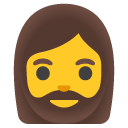
Appearance varies by platform and device. Google Noto, Twemoji, and OpenMoji are open-source.