⛹🏻♀️
The Emoji
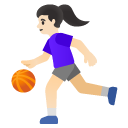
Woman Bouncing Ball: Light Skin Tone
U+26F9 U+1F3FB U+200D U+2640 U+FE0F · :woman_bouncing_ball_light_skin_tone:
Trend 38
Meaning layers
- interpretation
- Used to signal sporty energy, girlboss athleticism, or casual flex about being active. Also used ironically to represent someone doing the most or trying too hard.
- tiktok usage
- Appears in gym check-in videos, sports girl aesthetics, or sarcastically in 'she's that girl' content.
- irony level
- 4 / 10
Platform meanings
- meaning
- Represents sporty girl aesthetic, basketball culture, or gym-girl identity.
- trend usage
- Used in 'that girl' morning routine content, basketball highlight clips, and girl athlete appreciation posts.
- hashtags
- #sportsgirlera#basketballgirls#gymgirl#athleticaesthetic#thatgirlworkout
- virality score
- 42 / 100
Cultural meanings
🇺🇸
Western / Gen-Z
Represents empowered sporty femininity and the 'that girl' athletic aesthetic; popular in fitness and basketball culture content.
🇵🇰
Pakistan & India
Represents growing interest in women's sports participation; used by female athletes and sports fans to show support for women in cricket, basketball, and kabaddi.
🌍
Middle East
Used cautiously but increasingly as women's sports participation grows; associated with female empowerment and athletic achievement in the region.
🌐
Global Neutral
Universally understood as a woman playing basketball or ball sports; generally positive and sports-affirming.
🇧🇩
Bangladesh
Symbolizes female athletic participation, used by sports-minded youth to celebrate women's growing presence in national sports.
🇱🇰
Sri Lanka
Represents women in sports, particularly among younger urban demographics interested in basketball and fitness culture.
🇨🇳
China
Associated with women's basketball culture and Olympic sports pride; used during FIBA or Olympics season to celebrate female athletes.
🇯🇵
Japan
Used in sports club contexts and female athletic content; carries connotations of dedication and team spirit aligned with Japanese sports culture.
🇰🇷
South Korea
Tied to sporty girl aesthetics popular in K-culture; used by athletic idols and fitness influencers to show active lifestyles.
🇹🇼
Taiwan
Used in casual sports and fitness contexts; appreciated in women's wellness and athletic communities on local social platforms.
🇭🇰
Hong Kong
Associated with urban sports culture and gym lifestyle; used among youth in fitness and basketball social circles.
🇵🇭
Philippines
Popular among female basketball fans given the sport's strong culture; used to celebrate women's leagues and school tournaments.
🇮🇩
Indonesia
Growing in use as women's sports participation rises; seen in basketball and fitness communities on Instagram and TikTok.
🇹🇭
Thailand
Used in fitness and sports content; associated with active lifestyles and female empowerment in Thai youth culture.
🇻🇳
Vietnam
Represents modern athletic women; used by younger generations embracing sports and fitness as lifestyle statements.
🇲🇾
Malaysia
Used in sports community chats and female fitness content; reflects growing acceptance and celebration of women in sports.
🇸🇦
Saudi Arabia
Increasingly relevant as women's right to participate in sports grows; symbolizes progressive change and female empowerment in athletics.
🇦🇪
UAE
Common in cosmopolitan sports and fitness circles; used by expat and local communities to express athletic lifestyle and women's sports appreciation.
🇪🇬
Egypt
Used among sports-enthusiastic youth to represent female athletic ambition; tied to basketball and fitness culture in urban areas.
🇹🇷
Turkey
Associated with women's basketball which has a strong following in Turkey; used by fans and players to celebrate the sport.
🇮🇷
Iran
Used carefully given restrictions on women's sports participation publicly; represents aspirational athletic freedom among younger generations.
🇳🇬
Nigeria
Tied to growing women's basketball culture; used by fans of the Nigerian women's team and female athletes to show pride.
🇿🇦
South Africa
Used in sports-loving communities to represent female athletes; associated with basketball and fitness culture in urban South Africa.
🇬🇧
UK & Ireland
Used casually in sports and fitness contexts; associated with gym culture and women's basketball gaining popularity through NBL and grassroots leagues.
🇫🇷
France
Connected to France's strong women's basketball tradition; used by fans of LDLC ASVEL Féminin and the national team.
🇩🇪
Germany
Used in fitness and sports community contexts; associated with women's Bundesliga basketball and athletic lifestyle content.
🇪🇸
Spain & Italy
Tied to strong women's basketball leagues (Liga Femenina, Lega Basket Femminile); used by fans to celebrate female athletes.
🇧🇷
Brazil
Associated with active girl energy and Brazil's love of sport; used in fitness culture and basketball communities alongside football dominance.
🇲🇽
Mexico
Used in youth sports culture; represents women breaking into traditionally male-dominated sports spaces, gaining traction on Mexican social media.
🌎
Latin America
Broadly represents female athletic participation; used across Latin American countries to support women in sports and fitness movements.
🇦🇺
Australia & NZ
Used in active lifestyle and sports content; associated with women's basketball leagues, school sports, and gym culture Down Under.
How its meaning shifted
- 2010
Emoji didn't exist yet; female sports representation in emoji was minimal and the concept of skin tone modifiers was not yet implemented.
- 2015
Introduced as part of Unicode's push for diverse and gender-inclusive emoji; primarily used literally to indicate playing basketball.
- 2020
Gained traction during the rise of 'that girl' aesthetic and women's sports visibility; used in fitness content and WNBA discourse.
- 2026
Used across fitness, sports empowerment, and ironically in Gen Z meme culture; heavily associated with athletic girl aesthetics and women's basketball appreciation.
See it on every platform
Compare with
Adjacent emojis
- Often confused with
- person bouncing ballwoman playing handballwoman cartwheeling
- Can replace
- basketballwoman runningflexed biceps
Share & embed
Frequently asked
01What does the ⛹🏻♀️ Woman Bouncing Ball: Light Skin Tone emoji mean?
A woman with light skin tone dribbling or bouncing a basketball, representing female athletic participation in basketball or ball sports.
02What does ⛹🏻♀️ mean on TikTok?
Represents sporty girl aesthetic, basketball culture, or gym-girl identity.
03What does ⛹🏻♀️ mean on WhatsApp?
Tells someone you're going to play sports or are feeling active and energetic.
04What does ⛹🏻♀️ mean in Gen-Z slang?
Used to signal sporty energy, girlboss athleticism, or casual flex about being active. Also used ironically to represent someone doing the most or trying too hard.
05Is the ⛹🏻♀️ emoji safe to use?
Represents female athletic participation and sports enthusiasm in a completely benign, positive context.
06What does ⛹🏻♀️ mean in texting?
Reflects a sense of bodily autonomy and athletic pride; often tied to self-improvement narratives and competitive drive in women.
07What is the shortcode for ⛹🏻♀️?
The shortcode for Woman Bouncing Ball: Light Skin Tone is :woman_bouncing_ball_light_skin_tone:
08What does ⛹🏻♀️ mean in dating?
Used to hint at being athletic, low-maintenance, or sporty — can signal 'I'm active and fun, date me' energy.
Safety & usage
- Safe meaning
- Represents female athletic participation and sports enthusiasm in a completely benign, positive context.
- Caution
- No known toxic or harmful usage patterns associated with this emoji.
No significant warning notes; universally considered a safe and positive emoji.
How it looks across platforms
Appearance varies by platform and device. Google Noto, Twemoji, and OpenMoji are open-source.