⛹🏾♀️
The Emoji
Woman Bouncing Ball: Medium-dark Skin Tone
U+26F9 U+1F3FE U+200D U+2640 U+FE0F · :woman_bouncing_ball_mediumdark_skin_tone:
Trend 48
Meaning layers
- interpretation
- Used to flex athletic ability, signal a sporty or competitive personality, or as shorthand for 'I'm on my game' — both literally and metaphorically. Also used ironically when someone is making moves in life, love, or social situations.
- tiktok usage
- Appears in gym motivation content, basketball highlight videos, and 'that girl' aesthetic content. Also used sarcastically in comment sections to say someone is 'playing games.'
- irony level
- 4 / 10
Platform meanings
- meaning
- Represents athletic hustle, basketball culture, and female sporting excellence. Used in motivational content and sports commentary.
- trend usage
- Appears in WNBA highlight compilations, 'day in the life of an athlete' videos, and 'boss woman' motivation edits. Also used in comment wars about women's sports.
- hashtags
- #WomensBasketball#WNBA#ThatGirl#SportsGirlsOfTikTok#HoopLife
- virality score
- 52 / 100
Cultural meanings
🇺🇸
Western / Gen-Z
Widely used as a symbol of female athletic power and Black girl magic. Strongly associated with WNBA culture and the broader celebration of women in sports.
🇵🇰
Pakistan & India
Less commonly used in mainstream contexts but appears among cricket-loving communities when discussing women's cricket, or among urban youth familiar with basketball through media.
🌍
Middle East
Rarely used in everyday conversation but appears in international sports discourse and among younger, globally connected users who follow women's basketball or fitness content.
🌐
Global Neutral
Universally readable as a woman playing a ball sport. Carries straightforward athletic connotations across most global contexts.
🇧🇩
Bangladesh
Infrequently used; basketball is not a dominant sport culturally. May appear in general fitness or empowerment content among younger, urban demographics.
🇱🇰
Sri Lanka
Occasional use in sports enthusiasm posts; more likely to appear in content related to international sports events rather than local basketball culture.
🇨🇳
China
Used by youth interested in NBA/WNBA content, especially following the global popularity of basketball. Carries athletic and competitive connotations.
🇯🇵
Japan
Basketball is growing in Japan; this emoji is used among younger fans and players, particularly after increased WNBA visibility and the success of Japanese female athletes internationally.
🇰🇷
South Korea
Popular among K-sports fans and youth who follow international basketball. Also appears in fitness content as part of the 'healthy lifestyle' aesthetic popular in Korean social media.
🇹🇼
Taiwan
Used in sports and fitness contexts, with growing basketball culture among youth. Also seen in content celebrating Taiwanese female athletes.
🇭🇰
Hong Kong
Common among young, internationally minded users who follow NBA/WNBA. Used in sports commentary and fitness motivation content.
🇵🇭
Philippines
Basketball is a national passion in the Philippines; this emoji is enthusiastically used in women's basketball content and female athletic celebration posts.
🇮🇩
Indonesia
Used in sports content and increasingly in women's empowerment posts as women's sports gain visibility. More common among urban, young demographics.
🇹🇭
Thailand
Appears in sports content and fitness motivation posts. Less culturally central than football or Muay Thai emojis but growing with increased basketball media.
🇻🇳
Vietnam
Growing use among youth influenced by NBA culture and basketball media. Used in sports hype content and fitness posts.
🇲🇾
Malaysia
Used among younger Malaysians involved in basketball communities and fitness culture. Occasionally appears in women's empowerment content.
🇸🇦
Saudi Arabia
Increasingly used as women's sports participation has expanded following Vision 2030 reforms. Appears in female athlete content and sports empowerment posts.
🇦🇪
UAE
Used in cosmopolitan sports contexts, fitness culture, and among the diverse expat population who follow basketball. Female empowerment in sports is a growing topic.
🇪🇬
Egypt
Used primarily among younger, sports-passionate Egyptians following international basketball. Also appears in women's sports advocacy content.
🇹🇷
Turkey
Basketball is popular in Turkey; this emoji is used in women's basketball discussions and among fans of Turkish women's basketball leagues which are competitive globally.
🇮🇷
Iran
Limited public use due to social restrictions on women in sports discourse, but used privately among youth who follow international basketball and feminist sports content.
🇳🇬
Nigeria
Enthusiastically used in Nigerian sports content — Nigeria has a strong basketball culture and many Nigerian-descended players in global leagues. Carries pride and representation.
🇿🇦
South Africa
Used in sports and empowerment content. Growing basketball culture alongside strong female athletic traditions make this emoji positively received.
🇬🇧
UK & Ireland
Used in basketball fan communities and female sports empowerment posts. Less dominant than football emojis but common among diversified sports fans and Black British communities.
🇫🇷
France
France has a strong basketball culture, especially linked to African diaspora communities. This emoji is used proudly in sports content and representation discussions.
🇩🇪
Germany
Occasionally used in sports content. Basketball is growing; more likely to appear in professional sports discussions than casual conversation.
🇪🇸
Spain & Italy
Basketball is significant in both countries with strong leagues. Used in women's basketball content and by fans of teams like Valencia Basket or Famila Schio.
🇧🇷
Brazil
Used in sports content, especially as basketball grows alongside football dominance. Also appears in Black Brazilian empowerment and female athlete celebration content.
🇲🇽
Mexico
Growing basketball culture among youth; this emoji appears in sports content and female empowerment posts. Commonly used by fans following NBA/WNBA.
🌎
Latin America
Broadly used in Latin American basketball communities. Represents female athletic pride and is especially resonant in countries with growing women's sports movements.
🇦🇺
Australia & NZ
Used in basketball fan communities — both countries have active women's basketball leagues and NBL/WNBL culture. Positively received in sporty and fitness contexts.
How its meaning shifted
- 2010
Emoji did not exist yet. Skin tone modifiers and gender variants were not part of the Unicode standard at this time.
- 2015
Introduced as part of Unicode 8.0 and Emoji 1.0 skin tone modifier rollout. Initially used straightforwardly to represent women playing basketball. Relatively niche usage.
- 2020
Usage expanded with growing WNBA visibility, especially after the 2020 WNBA bubble season and social justice activism. Became a symbol of Black women's athletic excellence.
- 2026
Firmly established as a symbol of female athletic identity, Black girl magic, and sports empowerment. Frequently used in WNBA discourse, fitness culture, and intersectional representation conversations across all major platforms.
See it on every platform
Compare with
Adjacent emojis
Share & embed
Frequently asked
01What does the ⛹🏾♀️ Woman Bouncing Ball: Medium-dark Skin Tone emoji mean?
A woman bouncing or dribbling a basketball, displayed with a medium-dark skin tone. This is a ZWJ sequence combining the person bouncing ball emoji with the female gender sign and a medium-dark skin tone modifier.
02What does ⛹🏾♀️ mean on TikTok?
Represents athletic hustle, basketball culture, and female sporting excellence. Used in motivational content and sports commentary.
03What does ⛹🏾♀️ mean on WhatsApp?
Tells friends you're at the gym, playing ball, or staying active. Casual shorthand for 'I'm busy doing my thing.'
04What does ⛹🏾♀️ mean in Gen-Z slang?
Used to flex athletic ability, signal a sporty or competitive personality, or as shorthand for 'I'm on my game' — both literally and metaphorically. Also used ironically when someone is making moves in life, love, or social situations.
05Is the ⛹🏾♀️ emoji safe to use?
Represents a woman of medium-dark skin tone playing basketball or engaging in sport. Positive, empowering, athletic connotation.
06What does ⛹🏾♀️ mean in texting?
The combination of a racially specific and gender-specific emoji creates a strong identity signal. Users who select this specific variant are often asserting cultural identity alongside athletic confidence, projecting self-assuredness and belonging to a specific community.
07What is the shortcode for ⛹🏾♀️?
The shortcode for Woman Bouncing Ball: Medium-dark Skin Tone is :woman_bouncing_ball_mediumdark_skin_tone:
08What does ⛹🏾♀️ mean in dating?
Used playfully to say 'I keep it moving' or 'I'm not waiting around for you.' Can be a subtle flex — implying the sender is busy, athletic, and has options.
Safety & usage
- Safe meaning
- Represents a woman of medium-dark skin tone playing basketball or engaging in sport. Positive, empowering, athletic connotation.
- Caution
- No significant toxic usage documented. Could theoretically be used condescendingly in sports discourse to mock or dismiss women's athletic ability, though this is uncommon.
No notable warnings. This emoji is generally safe and positive across all major platforms. Skin tone specificity may occasionally be weaponized in identity-based harassment, though this is rare for this particular emoji.
How it looks across platforms
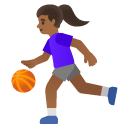
Appearance varies by platform and device. Google Noto, Twemoji, and OpenMoji are open-source.