⛹🏽♀️
The Emoji
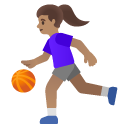
Woman Bouncing Ball: Medium Skin Tone
U+26F9 U+1F3FD U+200D U+2640 U+FE0F · :woman_bouncing_ball_medium_skin_tone:
Trend 48
Meaning layers
- interpretation
- Used to signal being active, sporty, or competitive. Also used ironically to say 'I'm out here doing my thing' or to flex casual athletic confidence.
- tiktok usage
- Appears in sports girl aesthetic content, basketball workout videos, or ironically when someone is 'bouncing back' from drama or stress.
- irony level
- 4 / 10
Platform meanings
- meaning
- Represents sporty girl aesthetics, basketball culture, or resilience ('bouncing back').
- trend usage
- Frequently paired with athlete POV videos, 'girl who hoops' trends, or motivational montages with lo-fi beats.
- hashtags
- #basketballgirls#sportygirl#hooplife#bounceback#girlswhoplay
- virality score
- 52 / 100
Cultural meanings
🇺🇸
Western / Gen-Z
Widely understood as sporty girl energy — empowering, confident, and tied to basketball culture and the 'athlete aesthetic' trend.
🇵🇰
Pakistan & India
Understood primarily in the literal sports context; less common culturally but used by urban youth involved in basketball or fitness communities.
🌍
Middle East
Seen as a symbol of active, modern women — resonates with younger generations embracing fitness culture despite regional conservatism.
🌐
Global Neutral
Universally recognized as a woman playing basketball — no controversial connotations across most global contexts.
🇧🇩
Bangladesh
Rarely used in everyday chat; when used, it represents sports or physical activity, mostly by younger, urban, digitally active users.
🇱🇰
Sri Lanka
Used in sports contexts, particularly as cricket is dominant but basketball grows among youth — signals athletic identity.
🇨🇳
China
Understood as athletic activity; resonates more since Chinese women's basketball has had international success — positive and energetic connotation.
🇯🇵
Japan
Used casually for sports and fitness contexts; appreciated for its skin tone diversity in a culture increasingly aware of representation.
🇰🇷
South Korea
Popular among fitness and sports content creators on Korean social media — ties into the 'healthy girl' aesthetic trend.
🇹🇼
Taiwan
Used straightforwardly for sports content — also embraced by women in fitness communities on Dcard and Instagram.
🇭🇰
Hong Kong
Common in sports group chats and fitness communities — used without heavy cultural overlay, mostly literal.
🇵🇭
Philippines
Basketball is the national sport, so this emoji carries strong cultural resonance — used enthusiastically in sports discussions.
🇮🇩
Indonesia
Used in sports and fitness contexts by younger users; basketball is growing in popularity, especially among urban youth.
🇹🇭
Thailand
Appears in fitness and sports content; Thai youth use it for basketball culture and gym motivation posts.
🇻🇳
Vietnam
Used in sports contexts, especially as basketball grows in popularity among Vietnamese youth via NBA exposure.
🇲🇾
Malaysia
Embraced in multilingual group chats for sports plans or gym motivation — basketball culture is growing among Malaysian youth.
🇸🇦
Saudi Arabia
Carries empowering undertones for women as athletic participation for Saudi women has expanded — seen as progressive and positive.
🇦🇪
UAE
Used positively in the UAE's diverse, cosmopolitan context — ties to women's empowerment in sports and active lifestyle culture.
🇪🇬
Egypt
Sports communities and fitness-focused youth use it; also appreciated as a symbol of female empowerment in active spaces.
🇹🇷
Turkey
Used in fitness and sports contexts — Turkish youth engaged in basketball or gym culture use it as part of their identity expression.
🇮🇷
Iran
Among younger Iranians on social media, it carries a subtle empowerment undertone given restrictions on women in sports publicly.
🇳🇬
Nigeria
Basketball culture is significant in Nigeria especially through NBA influence — this emoji is used with pride and enthusiasm.
🇿🇦
South Africa
Used in sports and fitness communities — basketball is growing, and the emoji is embraced in urban youth culture.
🇬🇧
UK & Ireland
Used casually in sports and fitness contexts — basketball is a growing sport and the emoji fits into active lifestyle branding.
🇫🇷
France
France has a strong basketball tradition — this emoji is well-received and commonly used in sports and youth culture.
🇩🇪
Germany
Used in fitness and sports content; basketball has a dedicated following in Germany and this emoji fits active community posts.
🇪🇸
Spain & Italy
Basketball has strong followings in both countries — used in sports community chats and female athlete content with enthusiasm.
🇧🇷
Brazil
While football dominates, basketball is growing — this emoji is used in sports and fitness culture, sometimes with empowerment framing.
🇲🇽
Mexico
Used in youth sports culture and fitness communities — basketball is popular and the emoji signals athletic ambition.
🌎
Latin America
Across Latin America, used in athletic and fitness contexts — resonates especially in countries with growing basketball scenes.
🇦🇺
Australia & NZ
Used for sports and fitness content — the NBL and women's basketball communities use it regularly in social media engagement.
How its meaning shifted
- 2010
This specific emoji did not exist yet — basketball was represented by generic sport symbols without gender or skin tone options.
- 2015
Early versions of person bouncing ball emoji introduced — skin tone and gender modifiers not yet widely supported across platforms.
- 2020
Widely used in female athlete content, fitness motivation posts, and growing WNBA social media discourse — empowerment angle solidified.
- 2026
Embedded in athlete aesthetic culture, 'bouncing back' resilience memes, and female sports empowerment conversations — also used ironically in Gen Z humor.
See it on every platform
Compare with
Adjacent emojis
- Often confused with
- woman playing handballperson bouncing ballwoman playing water polo
- Can replace
- basketballflexed bicepswoman running
Share & embed
Frequently asked
01What does the ⛹🏽♀️ Woman Bouncing Ball: Medium Skin Tone emoji mean?
A woman with medium skin tone bouncing or dribbling a basketball, representing the sport of basketball, athletic activity, and female sportsmanship.
02What does ⛹🏽♀️ mean on TikTok?
Represents sporty girl aesthetics, basketball culture, or resilience ('bouncing back').
03What does ⛹🏽♀️ mean on WhatsApp?
Signals being at practice, playing basketball, or being physically active.
04What does ⛹🏽♀️ mean in Gen-Z slang?
Used to signal being active, sporty, or competitive. Also used ironically to say 'I'm out here doing my thing' or to flex casual athletic confidence.
05Is the ⛹🏽♀️ emoji safe to use?
Represents female athletic activity and basketball — entirely safe and positive in virtually all contexts.
06What does ⛹🏽♀️ mean in texting?
Evokes empowerment and physical agency — seeing a female-coded sporty emoji activates associations with independence, discipline, and self-reliance.
07What is the shortcode for ⛹🏽♀️?
The shortcode for Woman Bouncing Ball: Medium Skin Tone is :woman_bouncing_ball_medium_skin_tone:
08What does ⛹🏽♀️ mean in dating?
Rarely used as a direct flirt, but can signal 'sporty girl' energy or hint at wanting to hang out for a game or physical activity date.
Safety & usage
- Safe meaning
- Represents female athletic activity and basketball — entirely safe and positive in virtually all contexts.
- Caution
- Extremely rare edge case: could be used sarcastically in misogynistic sports arguments to mock women in athletics, but this is not a common usage.
No significant safety concerns. The emoji is generally positive and empowering. Skin tone modifier usage is culturally sensitive but not problematic.
How it looks across platforms
Appearance varies by platform and device. Google Noto, Twemoji, and OpenMoji are open-source.