🧗🏽♀️
The Emoji
Woman Climbing: Medium Skin Tone
U+1F9D7 U+1F3FD U+200D U+2640 U+FE0F · :woman_climbing_medium_skin_tone:
Trend 58
Meaning layers
- interpretation
- Used metaphorically to signal hustle, overcoming obstacles, personal growth, or 'climbing up' in life. Also used to flex an active, adventurous lifestyle or gym grind culture.
- tiktok usage
- Appears in 'glow up' and 'era' content — 'entering my climbing era 🧗🏽♀️' — or used in motivational montages about leveling up mentally and physically.
- irony level
- 3 / 10
Platform meanings
- meaning
- Signals entering a new active or ambitious 'era,' used in fitness, adventure, and self-improvement content. Also ironically used in 'climbing out of' bad situations.
- trend usage
- Paired with trending audio about growth, used in transition videos from laziness to activity, or in rock climbing content that has surged in Gen Z popularity.
- hashtags
- #climbingera#rockclimbing#activegirl#levelingup#grindmode
- virality score
- 62 / 100
Cultural meanings
🇺🇸
Western / Gen-Z
Heavily used metaphorically to signal personal growth, hustle, and leveling up. 'Entering my climbing era' is a recognized Gen Z expression of ambition.
🇵🇰
Pakistan & India
Used primarily in fitness and gym contexts among urban youth. Also used metaphorically in motivational posts about career advancement and overcoming family or societal pressures.
🌍
Middle East
Used in fitness and sports contexts, increasingly popular among younger women as a symbol of physical empowerment in a changing social landscape.
🌐
Global Neutral
Universally understood as representing physical climbing and by extension effort, challenge-facing, and upward momentum across most global audiences.
🇧🇩
Bangladesh
Used primarily in literal fitness contexts. Among younger urban users, carries a motivational connotation related to self-improvement and academic or career hustle.
🇱🇰
Sri Lanka
Seen in fitness and outdoor content. The medium skin tone makes it more relatable for South Asian users, increasing its use in personal posts about achievement.
🇨🇳
China
Used in fitness and extreme sports content, popular among younger users on platforms like WeChat and Weibo who follow outdoor lifestyle trends.
🇯🇵
Japan
Used in sport climbing content, which grew significantly in Japan after the Tokyo 2020 Olympics. Also used in productivity and self-improvement (jibun磨き) contexts.
🇰🇷
South Korea
Popular in fitness and 'self-management' (자기관리) culture content. Used by people documenting gym progress and outdoor adventures on Instagram and KakaoTalk.
🇹🇼
Taiwan
Used in outdoor adventure and climbing content, a growing hobby in Taiwan. Also adopted metaphorically in work and study grind culture posts.
🇭🇰
Hong Kong
Associated with the growing rock climbing culture in Hong Kong. Used both literally for actual climbing and metaphorically for navigating challenges.
🇵🇭
Philippines
Used in fitness content and motivational posts. Resonates with the OFW (overseas worker) narrative of climbing out of hardship through perseverance.
🇮🇩
Indonesia
Used in outdoor and fitness content. Among younger Indonesians, it signals an active, modern lifestyle, often paired with travel and adventure content.
🇹🇭
Thailand
Appears in fitness and outdoor tourism content. Thailand's growing adventure tourism scene has made climbing emojis more recognizable and relatable.
🇻🇳
Vietnam
Used in fitness and hustle culture content by urban youth. Carries connotations of striving and upward mobility that resonate strongly in Vietnam's growth-oriented culture.
🇲🇾
Malaysia
Used in fitness and outdoor content, popular among younger Malaysians who engage in bouldering and rock climbing as trendy sports.
🇸🇦
Saudi Arabia
Increasingly used by Saudi women in fitness and adventure content, particularly post-Vision 2030 social reforms that have expanded women's participation in sports.
🇦🇪
UAE
Common in the UAE's active expat and local fitness community. Used in adventure tourism content and among women in fitness who have a strong social media presence.
🇪🇬
Egypt
Primarily used in fitness contexts in major cities. Among youth, carries aspirational connotations of working hard to climb above one's circumstances.
🇹🇷
Turkey
Used in outdoor sports and fitness content. Turkey's growing rock climbing scene and adventure tourism have made this emoji recognizable in relevant communities.
🇮🇷
Iran
Used mostly by younger, urban women in fitness and empowerment contexts on Instagram (accessed via VPN). Carries subtle undertones of defiance and resilience.
🇳🇬
Nigeria
Used in hustle and grind culture content — 'no rest, we climbing 🧗🏽♀️' — deeply resonant with Nigerian entrepreneurial and ambition-forward social media culture.
🇿🇦
South Africa
Used in outdoor adventure and fitness content, particularly among Cape Town's active lifestyle community. Also carries motivational connotations in empowerment posts.
🇬🇧
UK & Ireland
Used in fitness and outdoor content. Bouldering and climbing are trendy UK activities, so the emoji has both literal and metaphorical cultural currency.
🇫🇷
France
Associated with the strong French climbing culture (France is a world leader in competitive climbing). Used both literally in sports contexts and metaphorically for ambition.
🇩🇪
Germany
Used in outdoor sports, fitness, and Leistungsgesellschaft (achievement society) content. Germans may use it in professional posts about overcoming challenges methodically.
🇪🇸
Spain & Italy
Used in outdoor adventure and fitness content. Spain's and Italy's vibrant rock climbing scenes make this emoji popular in sporting and travel communities.
🇧🇷
Brazil
Used in fitness, outdoor adventure, and empowerment content. Has strong resonance with the 'mulher guerreira' (warrior woman) archetype celebrated in Brazilian culture.
🇲🇽
Mexico
Used in motivational and fitness content. The 'she grinds' energy translates well to Mexican hustle culture, particularly among younger urban women.
🌎
Latin America
Broadly used across Latin America in fitness and ambition content. The visual of a woman climbing resonates with regional narratives of women breaking barriers.
🇦🇺
Australia & NZ
Very popular in outdoor and fitness contexts given the strong climbing and adventure sports culture in both countries. Also used casually in motivational contexts.
How its meaning shifted
- 2010
This emoji did not exist in 2010. Climbing and sport-specific emojis were not yet part of the Unicode standard.
- 2015
Still pre-introduction. Rock climbing was not represented in the emoji lexicon, leaving users to approximate with mountain and sports emojis.
- 2020
Post-introduction (2017), the emoji had established itself in fitness and outdoor communities. Sport climbing's Olympic debut at Tokyo 2020 boosted its cultural relevance globally.
- 2026
Widely used across fitness, motivational, and pop culture contexts. The 'climbing era' metaphor is firmly embedded in Gen Z and Millennial digital language, used far beyond literal climbing contexts.
See it on every platform
Compare with
Adjacent emojis
- Often confused with
- person climbingperson mountain bikingwoman cartwheeling
- Can replace
- woman runningflexed bicepsmountain
Share & embed
Frequently asked
01What does the 🧗🏽♀️ Woman Climbing: Medium Skin Tone emoji mean?
A woman climbing a rock wall or cliff face, depicted with medium skin tone. Represents rock climbing, bouldering, physical fitness, and outdoor adventure.
02What does 🧗🏽♀️ mean on TikTok?
Signals entering a new active or ambitious 'era,' used in fitness, adventure, and self-improvement content. Also ironically used in 'climbing out of' bad situations.
03What does 🧗🏽♀️ mean on WhatsApp?
Literally means going climbing or signals physical activity. Metaphorically used as 'I'm working hard on something' or 'pushing through a tough time.'
04What does 🧗🏽♀️ mean in Gen-Z slang?
Used metaphorically to signal hustle, overcoming obstacles, personal growth, or 'climbing up' in life. Also used to flex an active, adventurous lifestyle or gym grind culture.
05Is the 🧗🏽♀️ emoji safe to use?
Represents physical climbing, fitness, perseverance, and ambition. Entirely positive and safe in virtually all contexts.
06What does 🧗🏽♀️ mean in texting?
Evokes a sense of upward momentum and perseverance. Psychologically linked to the concept of mastery and self-efficacy — the belief in one's own ability to overcome challenges and reach goals.
07What is the shortcode for 🧗🏽♀️?
The shortcode for Woman Climbing: Medium Skin Tone is :woman_climbing_medium_skin_tone:
08What does 🧗🏽♀️ mean in dating?
Low-key used to signal an adventurous, active personality or to hint at wanting an outdoorsy partner. 'Take me climbing 🧗🏽♀️' can serve as a soft date invitation.
Safety & usage
- Safe meaning
- Represents physical climbing, fitness, perseverance, and ambition. Entirely positive and safe in virtually all contexts.
- Caution
- Extremely rare misuse — could theoretically be used sarcastically to mock someone struggling, but this is not a common pattern.
No significant safety concerns. The emoji is considered universally benign. The skin tone modifier makes it more personally expressive but does not introduce risk.
How it looks across platforms
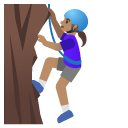
Appearance varies by platform and device. Google Noto, Twemoji, and OpenMoji are open-source.