🧔🏿♀️
The Emoji
Woman: Dark Skin Tone, Beard
U+1F9D4 U+1F3FF U+200D U+2640 U+FE0F · :woman_dark_skin_tone_beard:
Trend 28
Meaning layers
- interpretation
- Used to celebrate gender fluidity, body positivity, and breaking traditional beauty standards. Often deployed ironically or as a power move against gender norms.
- tiktok usage
- Appears in videos about PCOS awareness, gender expression, breaking beauty standards, and 'normalize this' content. Also used humorously in 'real vs. expectation' skits.
- irony level
- 5 / 10
Platform meanings
- meaning
- Symbol of body positivity, gender non-conformity, and 'normalize everything' culture. Frequently appears in PCOS awareness and queer identity content.
- trend usage
- Used in trending sounds about self-acceptance, 'things society told me I couldn't do' trends, and duets challenging conventional beauty standards.
- hashtags
- #NormalizeBeardedWomen#PCOS#GenderFluid#BodyPositivity#BreakingBeautyStandards
- virality score
- 42 / 100
Cultural meanings
🇺🇸
Western / Gen-Z
Widely recognized as a symbol of gender fluidity, PCOS representation, and body positivity; celebrated in progressive communities and used freely in queer spaces.
🇵🇰
Pakistan & India
Rarely used; may evoke confusion or discomfort in more conservative contexts, though PCOS communities and urban progressive spaces may use it for medical or body-positive awareness.
🌍
Middle East
Generally uncommon due to conservative gender norms; may be used in private or progressive online communities for PCOS awareness but avoided in public-facing content.
🌐
Global Neutral
Understood globally as representing a bearded woman, though cultural comfort with the concept varies widely from celebration to confusion or discomfort.
🇧🇩
Bangladesh
Largely unfamiliar in mainstream culture; may be recognized in PCOS support communities online but rarely used in everyday digital communication.
🇱🇰
Sri Lanka
Limited usage; most likely encountered in medical or health discussions about conditions like PCOS rather than gender expression contexts.
🇨🇳
China
Rarely used; Chinese social media culture tends toward traditional gender presentation norms, making this emoji uncommon except in niche LGBTQ+ communities.
🇯🇵
Japan
Occasionally used in queer or gender-fluid communities, but mainstream usage is limited; Japan's gender expression online culture is complex and context-dependent.
🇰🇷
South Korea
Uncommon in mainstream culture due to strong beauty standard norms (K-beauty); may appear in underground queer communities or ironic meme contexts.
🇹🇼
Taiwan
More accepted than in neighboring countries due to Taiwan's progressive stance on LGBTQ+ rights; used in queer communities and body-positive spaces.
🇭🇰
Hong Kong
Used in progressive and activist communities, particularly post-2019 where identity expression became a form of resistance; found in queer and feminist spaces.
🇵🇭
Philippines
Occasionally used in LGBTQ+ communities, which are vibrant in Filipino online culture; may also appear humorously in mainstream contexts without malicious intent.
🇮🇩
Indonesia
Rarely used publicly due to conservative religious norms around gender; may circulate in private or underground LGBTQ+ digital spaces.
🇹🇭
Thailand
Thailand's relatively open attitude toward diverse gender identities means this emoji sees moderate use in LGBTQ+ communities and body-positive content.
🇻🇳
Vietnam
Limited usage; gender norms remain relatively traditional in mainstream culture, though younger urban Vietnamese users in queer spaces may use it.
🇲🇾
Malaysia
Rarely used publicly due to conservative social and legal norms around gender expression; primarily circulates in private progressive or LGBTQ+ digital communities.
🇸🇦
Saudi Arabia
Extremely rare in public usage due to strict gender norms; essentially absent from mainstream digital communication in the region.
🇦🇪
UAE
Very limited public usage; may appear among expatriate communities or in private progressive circles but avoided in public-facing content.
🇪🇬
Egypt
Uncommon in mainstream usage; may circulate among younger progressive Egyptians online but generally avoided due to conservative gender norms.
🇹🇷
Turkey
Occasionally used in Turkey's active feminist and LGBTQ+ online communities; mainstream usage is limited but growing in progressive urban circles.
🇮🇷
Iran
Extremely rare in public contexts; may circulate in underground digital spaces where gender non-conformity is discussed privately despite legal restrictions.
🇳🇬
Nigeria
Rarely used in mainstream culture; may appear in progressive or diaspora communities engaging with global body-positivity and queer identity conversations.
🇿🇦
South Africa
More accepted than in many African nations due to South Africa's constitutional protections for LGBTQ+ people; used in progressive and queer communities.
🇬🇧
UK & Ireland
Relatively well understood and accepted in progressive communities; used in PCOS awareness content, queer spaces, and body-positive communities with growing normalization.
🇫🇷
France
Used in feminist and body-positive communities; France's strong tradition of gender discourse means this emoji finds a home in nuanced conversations about identity.
🇩🇪
Germany
Accepted in Germany's well-established queer and feminist communities; often seen in body-positive and gender non-conforming identity content.
🇪🇸
Spain & Italy
Moderately used in Spain's progressive urban communities; less common in Italy where traditional gender norms remain stronger in mainstream culture.
🇧🇷
Brazil
Brazil's large and vibrant LGBTQ+ community means this emoji sees meaningful use in queer spaces; also appears in body-positive and feminist content.
🇲🇽
Mexico
Used in queer and feminist communities, particularly among younger urban Mexicans; less common in more traditional or rural online contexts.
🌎
Latin America
Usage varies across Latin America; most visible in urban progressive, queer, and feminist communities in Argentina, Chile, Colombia, and other relatively progressive nations.
🇦🇺
Australia & NZ
Well-accepted in both countries' progressive and queer communities; New Zealand's particularly inclusive national identity means it's used openly in body-positive and gender-fluid spaces.
How its meaning shifted
- 2010
This specific emoji did not exist in 2010; bearded woman concepts were not yet part of the Unicode emoji standard, and gender non-conforming emoji representation was entirely absent.
- 2015
Still not yet introduced in this form; early discussions about gender diversity in emoji representation were beginning following the introduction of diverse skin tone options in 2015.
- 2020
The emoji had been introduced by this period; usage was largely limited to niche LGBTQ+, queer, and PCOS communities, with minimal mainstream recognition.
- 2026
Increasingly recognized in body-positive and gender non-conforming communities; PCOS awareness content drives periodic spikes in usage, and younger generations treat it as a normal part of the inclusive emoji vocabulary.
See it on every platform
Compare with
Adjacent emojis
- Often confused with
- man beardperson beardwoman dark skin tone
- Can replace
- transgender symbolrainbow flagperson beard
Share & embed
Frequently asked
01What does the 🧔🏿♀️ Woman: Dark Skin Tone, Beard emoji mean?
A woman with a dark skin tone depicted with a beard, representing gender non-conforming individuals, bearded women, or people who express both feminine and masculine physical traits simultaneously.
02What does 🧔🏿♀️ mean on TikTok?
Symbol of body positivity, gender non-conformity, and 'normalize everything' culture. Frequently appears in PCOS awareness and queer identity content.
03What does 🧔🏿♀️ mean on WhatsApp?
Sent between close friends to joke about skipping grooming routines or to express solidarity with gender non-conforming identity.
04What does 🧔🏿♀️ mean in Gen-Z slang?
Used to celebrate gender fluidity, body positivity, and breaking traditional beauty standards. Often deployed ironically or as a power move against gender norms.
05Is the 🧔🏿♀️ emoji safe to use?
Representation of a bearded woman, used for PCOS awareness, gender non-conformity celebration, and body positivity advocacy.
06What does 🧔🏿♀️ mean in texting?
Represents a psychological reclaiming of identity outside binary norms. For many users, deploying this emoji signals confidence in rejecting societal beauty expectations and affirming the validity of all gender expressions.
07What is the shortcode for 🧔🏿♀️?
The shortcode for Woman: Dark Skin Tone, Beard is :woman_dark_skin_tone_beard:
08What does 🧔🏿♀️ mean in dating?
Rarely used in traditional flirting contexts; more likely used to signal openness to diverse gender expressions or as a self-identifier in queer dating spaces.
Safety & usage
- Safe meaning
- Representation of a bearded woman, used for PCOS awareness, gender non-conformity celebration, and body positivity advocacy.
- Caution
- May be weaponized in transphobic or misogynistic contexts to mock gender non-conformity or to make derogatory comments about women's appearances.
Monitor usage in comment sections where it may be deployed mockingly toward transgender women, non-binary individuals, or women with PCOS. Context is critical — the same emoji can be affirming or harmful depending on intent.
How it looks across platforms
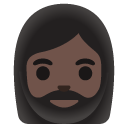
Appearance varies by platform and device. Google Noto, Twemoji, and OpenMoji are open-source.