🧚♀️
The Emoji
Woman Fairy
U+1F9DA U+200D U+2640 U+FE0F · :woman_fairy:
Trend 68
Meaning layers
- interpretation
- Used to express whimsy, effortless grace, or an ethereal aesthetic. Often signals a carefree, unbothered energy or a playful 'I do what I want' attitude. Also used to describe someone glowing up or thriving magically.
- tiktok usage
- Appears in transformation videos, 'main character' content, and aesthetic lifestyle clips. Used in captions like 'living my fairy era 🧚♀️' or to describe a soft, dreamy vibe.
- irony level
- 4 / 10
Platform meanings
- meaning
- Represents a dreamy, carefree aesthetic or transformation energy. Used to signal entering a new, magical chapter of life.
- trend usage
- Used in 'fairy era' trends, cottagecore aesthetics, and soft life content. Appears in POV videos about magical self-reinvention.
- hashtags
- #fairyera#fairycore#etherealaesthetic#maincharacter#softlife
- virality score
- 72 / 100
Cultural meanings
🇺🇸
Western / Gen-Z
Central to the fairycore aesthetic movement; used to signal a dreamy, whimsical, nature-connected identity and is frequently deployed in 'fairy era' self-empowerment narratives on social media.
🇵🇰
Pakistan & India
Used mostly in younger urban demographics to express something or someone is enchantingly beautiful or magical; also appears in fantasy fan communities and Bollywood-adjacent aesthetics referencing apsaras or fairy-like beings.
🌍
Middle East
Generally understood as a fantasy/fairy tale creature emoji; used by younger users for aesthetic purposes but less culturally embedded than in Western contexts, sometimes overlapping with djinn-adjacent fantasy imagery.
🌐
Global Neutral
Universally readable as a fairy fantasy figure; used to express magic, beauty, or whimsy across cultures regardless of specific local fairy mythology.
🇧🇩
Bangladesh
Used primarily in youth and online communities to express something enchanting or magical; associated with fairy tale content and increasingly with Korean and Western pop culture aesthetics.
🇱🇰
Sri Lanka
Used among younger social media users to signal beauty and magic; sometimes associated with local folklore spirits but more commonly used in its Western aesthetic internet sense.
🇨🇳
China
Resonates with traditional Chinese fairy (仙女/xiānnǚ) imagery; used in aesthetic communities and fantasy fandom but the specific Western fairy design is secondary to local celestial maiden iconography.
🇯🇵
Japan
Connects loosely to yōsei (fairy) and magical girl aesthetics; popular in kawaii and fantasy communities, and used in social media to signal ethereal, dreamy beauty.
🇰🇷
South Korea
Widely used in beauty and aesthetic content; associated with the concept of 'fairy-like' beauty standards (요정 미모) and appears frequently in K-beauty and K-pop fan communities.
🇹🇼
Taiwan
Used in fantasy fandom, aesthetic content, and beauty communities; resonates with local interest in Japanese manga-style fairy characters and Western fairycore aesthetics.
🇭🇰
Hong Kong
Common in lifestyle and aesthetic social media content; used to describe someone exceptionally beautiful or magical, blending local pop culture with Western internet aesthetics.
🇵🇭
Philippines
Popular among younger users in aesthetic and fantasy content; associated with local engkanto (fairy spirit) lore as well as Western and Korean fantasy aesthetics.
🇮🇩
Indonesia
Used in aesthetic and beauty communities; connects loosely to local peri (fairy) mythology from Persian-influenced folklore, though mostly used in its Western internet aesthetic sense.
🇹🇭
Thailand
Widely used in aesthetic and beauty content; associated with graceful, ethereal beauty ideals and sometimes compared to celestial beings in Thai Buddhist-influenced culture.
🇻🇳
Vietnam
Used among younger urban social media users for aesthetic and fantasy content; less culturally specific but increasingly popular in K-pop fan and cottagecore communities.
🇲🇾
Malaysia
Used in beauty, aesthetic, and fantasy communities; connects to local peri mythology but predominantly used in its Western internet aesthetic context among younger users.
🇸🇦
Saudi Arabia
Used cautiously in aesthetic contexts by younger users; fairy imagery is generally seen as harmless fantasy but is kept within pop culture and entertainment framing rather than spiritual contexts.
🇦🇪
UAE
Popular among cosmopolitan youth for aesthetic and beauty content; used freely in fashion, lifestyle, and fantasy fan communities in a diverse, internationally influenced digital culture.
🇪🇬
Egypt
Used among younger social media users for aesthetic and fantasy content; sometimes playfully connected to ancient mythology but primarily understood as a Western fairy tale figure.
🇹🇷
Turkey
Used in fantasy, beauty, and aesthetic communities; connects loosely to peri (fairy) figures in Ottoman and Persian-influenced folklore, making it culturally resonant beyond pure internet aesthetics.
🇮🇷
Iran
Has cultural resonance with the Persian concept of peri (پری), a beautiful fairy-like spirit; used in beauty compliments and aesthetic content, carrying more cultural depth than in purely Western contexts.
🇳🇬
Nigeria
Used by younger urban users in aesthetic and fantasy content; appreciated as a symbol of magical beauty and increasingly popular in Afrocentric fairycore aesthetic movements.
🇿🇦
South Africa
Common in youth aesthetic and fantasy communities; used across cultures to express magical beauty or whimsy, with growing adoption in Afrofuturism and Afrofairytale aesthetic spaces.
🇬🇧
UK & Ireland
Deeply culturally resonant given the rich tradition of British and Irish fairy folklore (Tinker Bell, Celtic fairies); used both earnestly in aesthetic contexts and sarcastically in dry British humor.
🇫🇷
France
Used in aesthetic and fashion content with a light touch; associated with the fée (fairy) of French fairy tales and used to describe someone with effortless, magical charm — très fée.
🇩🇪
Germany
Connected to Germanic fairy tale traditions (Grimm's Elfen and Feen); used in fantasy fan communities and aesthetic content, with occasional ironic use for impractical or dreamy thinking.
🇪🇸
Spain & Italy
Used in beauty and aesthetic content; associated with the hada (Spain) and fata (Italy) fairy tale traditions, deployed to describe magical beauty or enchanting people and places.
🇧🇷
Brazil
Popular in aesthetic, beauty, and fantasy communities; used to describe someone extraordinarily beautiful or magical, with growing fairycore and fantasy aesthetics among Brazilian youth.
🇲🇽
Mexico
Used in beauty and aesthetic content; occasionally connected to indigenous magical beings and Día de los Muertos ethereal aesthetics, but primarily used in its Western internet sense.
🌎
Latin America
Broadly used across Latin American youth communities for aesthetic and beauty content; associated with magical beauty ideals and growing fairycore aesthetic movements.
🇦🇺
Australia & NZ
Used in aesthetic, nature, and fantasy communities; the lush natural environments of both countries make fairycore aesthetics particularly popular, and the emoji is used earnestly and ironically with typical dry humor.
How its meaning shifted
- 2010
The woman fairy emoji did not exist yet; fairy concepts were represented minimally through text emoticons or generic sparkle symbols. Fairy imagery online was mostly limited to literal fairy tale or gaming contexts.
- 2015
Still pre-emoji existence for this specific character; emoji culture was growing but fairy representation was limited to general fantasy discussions. Tinker Bell GIFs were the dominant fairy visual shorthand.
- 2020
Newly established emoji gaining traction in aesthetic communities, particularly as fairycore and cottagecore aesthetics surged during pandemic-era escapism on TikTok and Pinterest.
- 2026
Firmly embedded in fairycore, ethereal aesthetic, and 'unbothered' internet culture. Used earnestly for dreamy identity expression and ironically for dismissive 'not my problem' energy. A staple in aesthetic bios and transformation content.
See it on every platform
Compare with
Adjacent emojis
- Often confused with
- woman angelwoman magedizzy
- Can replace
- sparkleswoman dancingwoman angel
Share & embed
Frequently asked
01What does the 🧚♀️ Woman Fairy emoji mean?
A woman fairy, a mythical winged creature from folklore often associated with magic, enchantment, and granting wishes. Depicted as a small winged female figure, sometimes with a wand.
02What does 🧚♀️ mean on TikTok?
Represents a dreamy, carefree aesthetic or transformation energy. Used to signal entering a new, magical chapter of life.
03What does 🧚♀️ mean on WhatsApp?
Used casually to express playfulness, excitement about something magical or dreamy, or to call someone enchanting.
04What does 🧚♀️ mean in Gen-Z slang?
Used to express whimsy, effortless grace, or an ethereal aesthetic. Often signals a carefree, unbothered energy or a playful 'I do what I want' attitude. Also used to describe someone glowing up or thriving magically.
05Is the 🧚♀️ emoji safe to use?
A whimsical, magical fairy figure used for aesthetic expression, fantasy content, beauty compliments, and playful self-identity.
06What does 🧚♀️ mean in texting?
Psychologically connects to escapism and idealization. Users often deploy this emoji when expressing a desire to feel magical, effortless, or untethered from mundane reality — linked to positive fantasy and self-empowerment narratives.
07What is the shortcode for 🧚♀️?
The shortcode for Woman Fairy is :woman_fairy:
08What does 🧚♀️ mean in dating?
Used flirtatiously to suggest a mysterious, enchanting quality — 'I put a spell on you' energy. Can indicate someone sees themselves as irresistibly charming or playfully mischievous.
Safety & usage
- Safe meaning
- A whimsical, magical fairy figure used for aesthetic expression, fantasy content, beauty compliments, and playful self-identity.
- Caution
- Occasionally used sarcastically to mock someone for being delusional, impractical, or living in a fantasy — e.g., dismissing a woman's ideas as 'fairy thinking.' Can carry subtle condescension.
Generally very safe. Minimal risk of misuse. The sarcastic 'you're a fairy' application can occasionally be dismissive or infantilizing toward women, but this is context-dependent and low-frequency.
How it looks across platforms
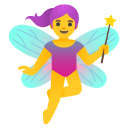
Appearance varies by platform and device. Google Noto, Twemoji, and OpenMoji are open-source.