🧎🏾♀️
The Emoji
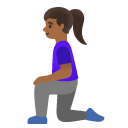
Woman Kneeling: Medium-dark Skin Tone
U+1F9CE U+1F3FE U+200D U+2640 U+FE0F · :woman_kneeling_mediumdark_skin_tone:
Trend 54
Meaning layers
- interpretation
- Used to convey begging, worshipping someone or something, submitting to a fave or idol, or dramatically pleading. Also used in protest solidarity contexts like 'taking a knee.' Sometimes ironic self-deprecation.
- tiktok usage
- Appears in fan edits worshipping celebrities, 'I am on my knees' reaction videos, and protest/solidarity content. Also used humorously when someone is obsessed with a show, food, or person.
- irony level
- 6 / 10
Platform meanings
- meaning
- Represents worshipping, begging, or dramatic devotion to a celebrity, food, or concept. Also used in protest-related content and 'taking a knee' solidarity videos.
- trend usage
- Common in fan edit videos, 'POV: me meeting my fave' content, protest solidarity duets, and self-deprecating humor about obsessions.
- hashtags
- #fangirl#takingaknee#imonmyknees#devotion#worshipping
- virality score
- 58 / 100
Cultural meanings
🇺🇸
Western / Gen-Z
Widely used ironically to express fan worship, dramatic pleading, or solidarity with protest movements; highly versatile and context-dependent.
🇵🇰
Pakistan & India
Most commonly interpreted as a gesture of prayer, reverence, or religious devotion; also used in emotional begging contexts in Urdu/Hindi chats.
🌍
Middle East
Strongly associated with prayer and religious submission to God; used sincerely in spiritual contexts and occasionally in dramatic pleading.
🌐
Global Neutral
Universally understood as kneeling — interpreted as prayer, respect, submission, or proposal depending on surrounding context.
🇧🇩
Bangladesh
Primarily read as a devotional or prayer gesture; also used in emotional contexts to express desperate pleading or deep respect.
🇱🇰
Sri Lanka
Associated with religious reverence and respectful greeting postures; used in faith-based community chats and emotional conversations.
🇨🇳
China
Less common; may be interpreted as submissive or self-deprecating, which can carry negative connotations — used cautiously in informal chats.
🇯🇵
Japan
Evokes the traditional dogeza (deep bow/prostration) posture; used to signal extreme apology, reverence, or comedic over-humility in online spaces.
🇰🇷
South Korea
Associated with fan culture worship of idols (K-pop fandom); also used in dramatic social media reactions and sincere apology contexts.
🇹🇼
Taiwan
Used in fan communities and casual chats to express admiration; occasionally tied to religious or ancestral reverence practices.
🇭🇰
Hong Kong
Used in protest and activism contexts (referencing kneeling solidarity movements) as well as in fan culture and casual pleading in chats.
🇵🇭
Philippines
Strongly tied to Catholic prayer and religious devotion; also used in dramatic emotional chats to beg or express deep gratitude.
🇮🇩
Indonesia
Associated with prayer and religious humility (both Islamic and Christian contexts); used sincerely in faith communities and humorously in fan culture.
🇹🇭
Thailand
Connected to Buddhist reverence and respectful postures toward monks or royalty; also used in casual contexts for dramatic admiration.
🇻🇳
Vietnam
Interpreted as a gesture of deep respect or religious devotion; used in younger online communities as ironic fan worship similar to Western usage.
🇲🇾
Malaysia
Used in Islamic prayer contexts and respectful postures; younger users also use it in fan culture and comedic begging scenarios.
🇸🇦
Saudi Arabia
Strongly associated with Islamic prayer (sujud/salah postures); used sincerely in religious contexts and very rarely in casual digital communication.
🇦🇪
UAE
Similar to Saudi Arabia — religious prayer connotations dominant; cosmopolitan younger users also engage with the Western ironic worship usage.
🇪🇬
Egypt
Tied to Islamic prayer and expressions of faith; also used in emotional or humorous contexts in Arabic social media to convey desperate pleading.
🇹🇷
Turkey
Used in both religious contexts and secular ironic humor; younger Turkish users use it to worship celebrities or beg for something in chats.
🇮🇷
Iran
Primarily associated with prayer and religious devotion (Islamic and Zoroastrian); careful usage in public digital spaces due to cultural sensitivity.
🇳🇬
Nigeria
Used in Christian prayer and worship contexts widely; also embraced by Nigerian Gen Z for celebrity worship and dramatic social media reactions.
🇿🇦
South Africa
Carries strong protest symbolism (taking a knee / anti-apartheid legacy); also used in faith communities and casual admiration contexts.
🇬🇧
UK & Ireland
Used with British irony for comedic worship and sarcastic pleading; also appears in sports protest discourse and sincere fan admiration.
🇫🇷
France
Used in secular ironic contexts more than religious ones; French users employ it to mock excessive reverence or dramatize admiration.
🇩🇪
Germany
Pragmatic usage — most commonly signals literal kneeling action, prayer, or serious protest solidarity; less irony than English-speaking regions.
🇪🇸
Spain & Italy
Associated with Catholic prayer and religious processions; also used dramatically in Latin/Mediterranean emotional communication styles online.
🇧🇷
Brazil
Used in both Evangelical/Catholic prayer contexts and exuberant fan worship; Brazilian social media culture embraces the dramatic worship usage enthusiastically.
🇲🇽
Mexico
Strong Catholic prayer associations; also widely used in Mexican Gen Z digital spaces for comedic worship of celebrities, food, and telenovela moments.
🌎
Latin America
Across Latin America, blends religious reverence with enthusiastic fan culture worship; used freely in emotional and dramatic digital communication.
🇦🇺
Australia & NZ
Used with casual Aussie/Kiwi humor for ironic worship and sarcastic begging; also appears in solidarity protest content and sports fan reactions.
How its meaning shifted
- 2010
Emoji did not exist in this form; kneeling representation was absent from Unicode. Prayer and reverence were conveyed through 🙏.
- 2015
Still not part of standard Unicode; skin tone modifiers and gender-specific kneeling emoji were under development in Unicode proposals.
- 2020
Introduced and rapidly adopted; surged in usage tied to Black Lives Matter protests and taking-a-knee solidarity movements worldwide.
- 2026
Established dual meaning: sincere protest/prayer symbol and ironic Gen Z worship/begging emoji; stable usage across platforms with continued fan culture adoption.
See it on every platform
Adjacent emojis
- Often confused with
- folded handswoman bowingperson facepalming
Share & embed
Frequently asked
01What does the 🧎🏾♀️ Woman Kneeling: Medium-dark Skin Tone emoji mean?
A woman kneeling on one or both knees, displayed with a medium-dark skin tone. Part of the Unicode kneeling person set introduced to represent postures of reverence, prayer, proposal, or rest.
02What does 🧎🏾♀️ mean on TikTok?
Represents worshipping, begging, or dramatic devotion to a celebrity, food, or concept. Also used in protest-related content and 'taking a knee' solidarity videos.
03What does 🧎🏾♀️ mean on WhatsApp?
Begging or pleading in a conversation — 'Please please please 🧎🏾♀️.' Can also signal deep admiration or humility.
04What does 🧎🏾♀️ mean in Gen-Z slang?
Used to convey begging, worshipping someone or something, submitting to a fave or idol, or dramatically pleading. Also used in protest solidarity contexts like 'taking a knee.' Sometimes ironic self-deprecation.
05Is the 🧎🏾♀️ emoji safe to use?
Prayer, protest solidarity (taking a knee), reverence, admiration, humility, marriage proposal context, yoga or exercise position.
06What does 🧎🏾♀️ mean in texting?
Kneeling is a deeply primal posture associated with submission, vulnerability, and reverence across nearly all human cultures, triggering associations with prayer, surrender, or passionate pleading.
07What is the shortcode for 🧎🏾♀️?
The shortcode for Woman Kneeling: Medium-dark Skin Tone is :woman_kneeling_mediumdark_skin_tone:
08What does 🧎🏾♀️ mean in dating?
Used jokingly to 'propose' or dramatically declare devotion to a crush — 'I am literally on my knees for you 🧎🏾♀️.' Can be flirty and playful.
Safety & usage
- Safe meaning
- Prayer, protest solidarity (taking a knee), reverence, admiration, humility, marriage proposal context, yoga or exercise position.
- Caution
- Rarely used in degrading dominance/submission contexts in adult or toxic communities; can be weaponized in harassment to mock someone's dignity.
Generally safe across contexts. Minimal risk of misuse; monitor in adult or fetish communities where submission dynamics may be implied negatively.
How it looks across platforms
Appearance varies by platform and device. Google Noto, Twemoji, and OpenMoji are open-source.