🧔🏻♀️
The Emoji
Woman: Light Skin Tone, Beard
U+1F9D4 U+1F3FB U+200D U+2640 U+FE0F · :woman_light_skin_tone_beard:
Trend 38
Meaning layers
- interpretation
- Used to represent gender fluidity, transmasculine or transfeminine identities, NB (non-binary) people, or simply to celebrate unconventional beauty standards. Also used ironically or humorously in meme contexts.
- tiktok usage
- Appears in trans visibility content, LGBTQ+ storytelling, or sarcastically in 'real me' reveals and 'no-makeup era' jokes.
- irony level
- 5 / 10
Platform meanings
- meaning
- Symbol of gender non-conformity, trans visibility, or ironic self-deprecation about beauty routines.
- trend usage
- Used in trans Day of Visibility content, 'this is me' identity videos, and humorous 'glowdown' or 'no-shave' joke clips.
- hashtags
- #TransVisibility#GenderNonConforming#BeardedWomen#BreakingNorms#QueerTikTok
- virality score
- 42 / 100
Cultural meanings
🇺🇸
Western / Gen-Z
Widely understood as a symbol of gender non-conformity and LGBTQ+ identity; used with pride in inclusive online spaces and meme culture.
🇵🇰
Pakistan & India
Largely unfamiliar or confusing to mainstream users; may be interpreted literally as a depiction of a hijra (third gender individual) by some, though that association is not accurate to the emoji's intent.
🌍
Middle East
Generally interpreted with confusion or discomfort in conservative contexts; in progressive online spaces, used cautiously by LGBTQ+ individuals as a covert identity signal.
🌐
Global Neutral
Understood as a woman with a beard; interpreted as representing body diversity or gender non-conformity in international contexts, though depth of meaning varies widely.
🇧🇩
Bangladesh
Rarely used; may cause confusion or be interpreted humorously. LGBTQ+ representation is not openly discussed, so usage is mostly among urban, English-influenced youth.
🇱🇰
Sri Lanka
Infrequently used; primarily appears among younger, globally connected users who follow Western internet culture. Conservative majority may find it unusual.
🇨🇳
China
Used minimally; gender non-conforming identity is a sensitive topic. May appear in niche LGBTQ+ online communities but largely absent from mainstream Chinese social media.
🇯🇵
Japan
Japan's nuanced relationship with gender expression means this emoji may be used in artistic or cosplay contexts, as well as in queer communities, with moderate understanding of its meaning.
🇰🇷
South Korea
Growing LGBTQ+ visibility means this emoji appears in queer Korean online spaces, though mainstream interpretation may lean toward confusion or humor.
🇹🇼
Taiwan
Taiwan's progressive stance on LGBTQ+ rights (first in Asia to legalize same-sex marriage) means this emoji is understood and used affirmatively in queer communities.
🇭🇰
Hong Kong
Used in LGBTQ+ communities, particularly in online spaces; broader public may interpret it with curiosity or mild confusion.
🇵🇭
Philippines
The Philippines has a visible LGBTQ+ community (bakla culture), so this emoji may be used humorously or affirmingly, though the specific beard-woman combination may be seen as unusual.
🇮🇩
Indonesia
Largely unused in mainstream contexts; conservative social norms mean this emoji is confined to niche, progressive online communities.
🇹🇭
Thailand
Thailand's visible kathoey (ladyboy) culture and LGBTQ+ visibility means this emoji has some resonance, though it may not perfectly map to local identity categories.
🇻🇳
Vietnam
Limited usage; primarily among urban youth familiar with Western internet culture. Mainstream users may find it confusing or amusing.
🇲🇾
Malaysia
Conservative Islamic majority means this emoji is rarely used openly; appears in underground LGBTQ+ communities as an identity marker.
🇸🇦
Saudi Arabia
Extremely rarely used; cultural and legal norms around gender expression make this emoji largely absent from mainstream Saudi social media.
🇦🇪
UAE
Similar to Saudi Arabia in conservative context, but cosmopolitan Dubai's expat community means it may appear in international and LGBTQ+ circles.
🇪🇬
Egypt
Not commonly used; conservative norms mean this emoji would be confusing or taboo in most contexts. May appear among younger, globally influenced users.
🇹🇷
Turkey
Used in progressive urban circles and LGBTQ+ communities, particularly in Istanbul; broader Turkish public may interpret it with confusion or negativity.
🇮🇷
Iran
Underground LGBTQ+ communities may use it as a subtle identity signal; mainstream usage is absent due to strict social and legal norms.
🇳🇬
Nigeria
Rarely used; conservative cultural and religious norms mean this emoji is not understood or would be met with confusion or disapproval in most contexts.
🇿🇦
South Africa
South Africa's constitutional protection of LGBTQ+ rights means this emoji is used more openly in queer communities, particularly in urban areas like Cape Town and Johannesburg.
🇬🇧
UK & Ireland
Well understood in progressive circles; used similarly to Western Gen Z culture in LGBTQ+ spaces, meme culture, and body positivity content.
🇫🇷
France
Used in LGBTQ+ and body-positive communities; France's secular and individual-liberty values mean gender non-conforming expression is discussed openly, though the emoji remains niche.
🇩🇪
Germany
Germany's strong LGBTQ+ rights culture means this emoji is understood and used in queer communities; also appears in online discussions about gender identity.
🇪🇸
Spain & Italy
Used in LGBTQ+ spaces in both countries, though Italy's more conservative religious culture means broader understanding lags behind Spain, where it's more openly embraced.
🇧🇷
Brazil
Brazil has a large, visible LGBTQ+ community; this emoji is used in trans and gender non-conforming spaces, often with pride, though broader public interpretation varies.
🇲🇽
Mexico
Growing LGBTQ+ visibility means this emoji appears in queer Mexican online communities; mainstream interpretation may range from curious to humorous.
🌎
Latin America
Across Latin America, usage is concentrated in LGBTQ+ urban communities; broader public interpretation is mixed, with understanding growing among younger, globally connected users.
🇦🇺
Australia & NZ
Both countries have progressive LGBTQ+ laws and cultures; this emoji is well understood and used in queer communities, body positivity spaces, and inclusive online discussions.
How its meaning shifted
- 2010
This emoji did not exist in 2010; bearded person emojis were years away from being introduced.
- 2015
Still non-existent; early discussions about gender-inclusive emoji were beginning to emerge in Unicode committees around this period.
- 2020
Introduced as part of inclusive emoji expansions; initial usage was primarily in LGBTQ+ communities and generated significant media discussion about gender representation in emoji.
- 2026
Established as a recognized symbol of gender non-conformity and trans visibility; used regularly in LGBTQ+ spaces, pride content, and body positivity discourse, with growing mainstream familiarity.
See it on every platform
Adjacent emojis
- Often confused with
- bearded personmx clausperson in tuxedo
- Can replace
- transgender flagrainbow flagpurple heart
Share & embed
Frequently asked
01What does the 🧔🏻♀️ Woman: Light Skin Tone, Beard emoji mean?
A woman with a beard and light skin tone, representing gender non-conforming individuals, transgender women, or women who have facial hair for various reasons including medical conditions like PCOS or personal identity expression.
02What does 🧔🏻♀️ mean on TikTok?
Symbol of gender non-conformity, trans visibility, or ironic self-deprecation about beauty routines.
03What does 🧔🏻♀️ mean on WhatsApp?
Sent jokingly between friends to describe a rough morning look or as a playful nod to body hair. Among LGBTQ+ communities, used as identity shorthand.
04What does 🧔🏻♀️ mean in Gen-Z slang?
Used to represent gender fluidity, transmasculine or transfeminine identities, NB (non-binary) people, or simply to celebrate unconventional beauty standards. Also used ironically or humorously in meme contexts.
05Is the 🧔🏻♀️ emoji safe to use?
Represents gender non-conforming identity, trans women, or bearded women; a symbol of inclusion and body diversity.
06What does 🧔🏻♀️ mean in texting?
This emoji can carry significant emotional weight for those who identify with it, representing self-acceptance and visibility. For others, it may trigger curiosity or confusion, reflecting broader societal tensions around gender norms.
07What is the shortcode for 🧔🏻♀️?
The shortcode for Woman: Light Skin Tone, Beard is :woman_light_skin_tone_beard:
08What does 🧔🏻♀️ mean in dating?
Rarely used in flirting; when used, it may signal openness to dating trans or gender non-conforming individuals, or signal one's own identity.
Safety & usage
- Safe meaning
- Represents gender non-conforming identity, trans women, or bearded women; a symbol of inclusion and body diversity.
- Caution
- Can be used mockingly to demean trans women or gender non-conforming people, or weaponized in anti-trans rhetoric to ridicule LGBTQ+ identities.
Context is critical: this emoji can be deeply affirming when used supportively and deeply harmful when used to mock trans or gender non-conforming individuals. Platforms should monitor for coordinated hateful use.
How it looks across platforms
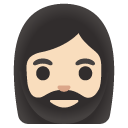
Appearance varies by platform and device. Google Noto, Twemoji, and OpenMoji are open-source.