🧔🏾♀️
The Emoji
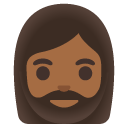
Woman: Medium-dark Skin Tone, Beard
U+1F9D4 U+1F3FE U+200D U+2640 U+FE0F · :woman_mediumdark_skin_tone_beard:
Trend 38
Meaning layers
- interpretation
- Used to represent gender fluidity, breaking beauty norms, body positivity around facial hair on women, or as a symbol of not conforming to traditional gender expectations. Often used proudly or humorously to challenge societal standards.
- tiktok usage
- Appears in body positivity content, 'normalize this' trend videos, LGBTQ+ affirmation content, and self-acceptance storytelling. Also used in comedic skits about gender stereotypes.
- irony level
- 4 / 10
Platform meanings
- meaning
- Symbol of body hair positivity, gender nonconformity, and LGBTQ+ pride in short-form video content.
- trend usage
- Used in 'this is me' trend videos, 'normalize body hair' challenges, and nonbinary/trans visibility content.
- hashtags
- #BodyPositivity#GenderFluid#NormalizeThis#BeardedWoman#QueerTikTok
- virality score
- 52 / 100
Cultural meanings
🇺🇸
Western / Gen-Z
Widely embraced as a symbol of gender fluidity and body positivity; used proudly by Gen Z to challenge conventional beauty and gender norms online.
🇵🇰
Pakistan & India
Largely misunderstood or considered taboo; may be associated with hijra (third-gender) communities or viewed as inappropriate in mainstream contexts, though urban progressive communities recognize it positively.
🌍
Middle East
Generally considered culturally sensitive or inappropriate in conservative contexts; may evoke references to rare medical conditions but is not widely used or understood as a gender identity symbol.
🌐
Global Neutral
Universally recognized as representing a bearded woman; interpreted variably from medical representation to gender expression depending on cultural context.
🇧🇩
Bangladesh
Rarely used and poorly understood outside progressive urban circles; may be associated with medical anomaly rather than gender identity.
🇱🇰
Sri Lanka
Uncommon in mainstream usage; may be viewed with curiosity or confusion, though LGBTQ+ communities in urban areas may use it to signal identity.
🇨🇳
China
Largely absent from mainstream emoji use; may be seen as a curiosity or Western concept, with limited visibility in domestic platforms like WeChat.
🇯🇵
Japan
Occasionally used in discussions about gender diversity (ジェンダー), particularly in queer communities on Twitter/X Japan; mainstream usage remains low.
🇰🇷
South Korea
Used by Korean queer communities online to express gender nonconformity; mainstream audiences may be unfamiliar or uncomfortable with its meaning.
🇹🇼
Taiwan
More positively received given Taiwan's progressive LGBTQ+ stance; used in queer communities and Pride-related content on social media.
🇭🇰
Hong Kong
Used within LGBTQ+ activist circles, especially post-2019 when identity politics became more prominent; generally understood in urban, educated demographics.
🇵🇭
Philippines
May evoke references to the country's recognized third-gender identity (bakla culture) but is not directly mapped to it; used occasionally in progressive online spaces.
🇮🇩
Indonesia
Largely avoided or misunderstood in mainstream contexts given conservative social norms; may be used ironically or negatively in some online communities.
🇹🇭
Thailand
In a country known for gender diversity (kathoey culture), this emoji may be used more openly, though it is still not mainstream; LGBTQ+ communities recognize its inclusive intent.
🇻🇳
Vietnam
Uncommon in Vietnamese digital culture; may be perceived as foreign or unusual, with limited adoption outside of international-facing LGBTQ+ spaces.
🇲🇾
Malaysia
Rarely used in mainstream contexts due to conservative social and religious norms; may circulate in underground LGBTQ+ communities online.
🇸🇦
Saudi Arabia
Extremely rare and potentially sensitive given strict gender norms; use is largely absent in public digital spaces.
🇦🇪
UAE
Similar to Saudi Arabia in conservative interpretation; may appear in expat or international community spaces but is not mainstream.
🇪🇬
Egypt
Considered unusual or inappropriate in mainstream Egyptian digital culture; may appear in progressive or Western-influenced online communities.
🇹🇷
Turkey
Used occasionally in Turkish LGBTQ+ communities, particularly on Twitter; broader public may view it with confusion or disapproval.
🇮🇷
Iran
Extremely rare in public digital spaces due to strict gender laws; may be used cautiously in underground LGBTQ+ online communities.
🇳🇬
Nigeria
Generally misunderstood or seen negatively in mainstream culture due to conservative attitudes toward gender; may circulate in diaspora or international-facing Nigerian communities.
🇿🇦
South Africa
More positively received given South Africa's constitutional protections for LGBTQ+ rights; used in queer communities and body positivity spaces.
🇬🇧
UK & Ireland
Well understood and generally accepted in progressive contexts; used in LGBTQ+ communities, PCOS awareness, and body positivity movements.
🇫🇷
France
Used in discussions about gender identity and body liberation, though French secular debates about identity politics can create mixed reactions.
🇩🇪
Germany
Positively received in Germany's relatively progressive LGBTQ+ culture; used in queer spaces and increasingly in body positivity discourse.
🇪🇸
Spain & Italy
Used in LGBTQ+ communities in both countries; Spain is generally more receptive due to progressive gender laws, while Italy may show more mixed reactions.
🇧🇷
Brazil
Embraced in Brazil's vibrant LGBTQ+ community, particularly during Carnival and Pride events; also used in PCOS awareness communities.
🇲🇽
Mexico
Used in Mexican LGBTQ+ spaces and body positivity communities; may face pushback in more traditional or machismo-influenced contexts.
🌎
Latin America
Usage varies significantly across Latin America; more accepted in urban progressive circles in Argentina, Chile, and Colombia than in more conservative regions.
🇦🇺
Australia & NZ
Well received in both countries' progressive digital cultures; used in LGBTQ+ communities, body hair positivity content, and gender diversity discussions.
How its meaning shifted
- 2010
This emoji did not exist in 2010; gender-diverse emoji representations were not yet part of Unicode, and the concept was entirely absent from digital communication.
- 2015
Still not available; Unicode was beginning to expand skin tone modifiers but had not yet introduced gender-diverse or ZWJ sequence emojis of this complexity.
- 2020
Introduced as part of Unicode's push for gender inclusivity; initial adoption was primarily in LGBTQ+ communities and body positivity spaces, with limited mainstream awareness.
- 2026
Growing recognition in Western digital spaces as gender fluidity conversations become more mainstream; adoption remains uneven globally, with strong use in LGBTQ+ and body positivity communities and continued confusion or avoidance in conservative cultures.
See it on every platform
Adjacent emojis
- Often confused with
- bearded personwoman medium dark skin tonemx claus
Share & embed
Frequently asked
01What does the 🧔🏾♀️ Woman: Medium-dark Skin Tone, Beard emoji mean?
A woman with a beard and medium-dark skin tone, representing a bearded woman. This is a ZWJ (Zero Width Joiner) sequence combining the bearded person emoji with the female sign and a medium-dark skin tone modifier.
02What does 🧔🏾♀️ mean on TikTok?
Symbol of body hair positivity, gender nonconformity, and LGBTQ+ pride in short-form video content.
03What does 🧔🏾♀️ mean on WhatsApp?
Expresses gender nonconformity, body positivity, or is used humorously when discussing unconventional appearances.
04What does 🧔🏾♀️ mean in Gen-Z slang?
Used to represent gender fluidity, breaking beauty norms, body positivity around facial hair on women, or as a symbol of not conforming to traditional gender expectations. Often used proudly or humorously to challenge societal standards.
05Is the 🧔🏾♀️ emoji safe to use?
Representation of gender nonconformity, body hair positivity, and LGBTQ+ identity; used supportively in inclusive communities.
06What does 🧔🏾♀️ mean in texting?
Evokes feelings of empowerment and liberation from gender norms. For some, it resonates as a symbol of visible identity and the courage to exist outside societal beauty standards. Can also trigger discomfort in more conservative audiences, highlighting the psychological tension between traditional gender expectations and modern inclusivity.
07What is the shortcode for 🧔🏾♀️?
The shortcode for Woman: Medium-dark Skin Tone, Beard is :woman_mediumdark_skin_tone_beard:
08What does 🧔🏾♀️ mean in dating?
Rarely used in flirting contexts; more likely used as a playful self-descriptor by someone who embraces their unconventional appearance or gender expression.
Safety & usage
- Safe meaning
- Representation of gender nonconformity, body hair positivity, and LGBTQ+ identity; used supportively in inclusive communities.
- Caution
- Can be weaponized as a mockery of transgender women or gender-nonconforming individuals in transphobic or misogynistic contexts.
While the emoji itself is not harmful, it can be used maliciously in transphobic or anti-LGBTQ+ rhetoric. Context is critical — supportive communities use it for empowerment, while bad-faith actors may deploy it to demean or mock gender-diverse individuals.
How it looks across platforms
Appearance varies by platform and device. Google Noto, Twemoji, and OpenMoji are open-source.