👩🏾🦱
The Emoji
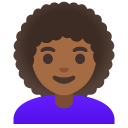
Woman: Medium-dark Skin Tone, Curly Hair
U+1F469 U+1F3FE U+200D U+1F9B1 · :woman_mediumdark_skin_tone_curly_hair:
Trend 68
Meaning layers
- interpretation
- Used as a self-representation emoji by Black and brown women or those with curly hair, often symbolizing natural hair pride, melanin celebration, or simply 'that's me.' Also used culturally to reference a confident, self-assured woman.
- tiktok usage
- Appears in captions and comments to represent the creator or a character in a story, often paired with affirmations about natural beauty or curly hair care routines.
- irony level
- 2 / 10
Platform meanings
- meaning
- Self-representation for curly-haired, medium-dark skinned women; used in natural hair content, melanin celebration, and Black girl magic narratives.
- trend usage
- Frequently used in hair tutorials, 'get ready with me' videos, and empowerment trends like #NaturalHair or #BlackGirlMagic.
- hashtags
- #NaturalHair#BlackGirlMagic#CurlyHair#MelaninPoppin#CurlyGirl
- virality score
- 72 / 100
Cultural meanings
🇺🇸
Western / Gen-Z
Widely used as a self-representation emoji by Black and mixed-race Gen Z women, especially in natural hair and melanin-positive communities. Carries strong cultural pride and identity affirmation energy.
🇵🇰
Pakistan & India
Less commonly used as a direct self-identifier; may be used by South Asian women with naturally curly or wavy hair who connect with the representation. Occasionally used in urban youth communities celebrating diverse beauty.
🌍
Middle East
Used by women with naturally curly hair who find representation in the emoji, particularly in Lebanon, Egypt, and North Africa where curly hair is common. Cultural sensitivity around hair coverings may limit its personal use in some contexts.
🌐
Global Neutral
Universally recognized as a representation of a woman with curly hair and medium-dark skin tone, generally used positively for identity and inclusivity purposes worldwide.
🇧🇩
Bangladesh
Occasionally used by Bangladeshi women with naturally wavy or curly hair as a self-identifier in social media contexts. More commonly understood as a generic diversity emoji by general users.
🇱🇰
Sri Lanka
Used by Sri Lankan women who relate to the curly hair representation, particularly in social media communities celebrating natural South Asian hair textures.
🇨🇳
China
Generally interpreted as a Western-style diversity emoji without deep cultural resonance; may be used in discussions about international diversity and representation.
🇯🇵
Japan
Used in contexts related to foreign or multicultural identity; Japanese users may use it to represent non-Japanese friends or in discussions about global hair diversity.
🇰🇷
South Korea
Seen primarily as a representation of Western or African-diaspora identity; used in K-beauty community discussions about hair diversity and in multicultural content.
🇹🇼
Taiwan
Used in diversity and inclusion discussions online; Taiwanese users with naturally curly hair may adopt it as a fun self-identifier in casual digital communication.
🇭🇰
Hong Kong
Used in cosmopolitan social media contexts to celebrate diversity; some Hong Kong women with naturally curly hair use it as a self-tag in beauty content.
🇵🇭
Philippines
Embraced by Filipino women with naturally curly or kinky hair, particularly in communities pushing back against hair straightening norms. Used in natural hair movements within the Philippines.
🇮🇩
Indonesia
Used by Indonesian women with naturally curly or frizzy hair who connect with the emoji's representation, especially in urban areas where natural hair positivity is growing.
🇹🇭
Thailand
Primarily interpreted as representing someone of African or mixed heritage; used in diversity discussions and occasionally by Thai women with naturally curly hair.
🇻🇳
Vietnam
Less common as a self-identifier; more often used in discussions about global diversity or to reference international contexts involving Black or brown women.
🇲🇾
Malaysia
Used by Malaysian women of Malay, Indian, or mixed heritage with naturally curly hair as a self-representative emoji, reflecting Malaysia's diverse ethnic landscape.
🇸🇦
Saudi Arabia
Used cautiously given cultural norms around women's representation; primarily used in women-only digital spaces or among younger, internationally connected users celebrating natural hair.
🇦🇪
UAE
In the UAE's cosmopolitan digital environment, this emoji is widely recognized and used by women from African and South Asian diaspora communities as a self-identifier.
🇪🇬
Egypt
Used by Egyptian women who have naturally curly hair, which is common in the country, as a proud self-representation. Connected to growing natural hair movements in Egyptian social media.
🇹🇷
Turkey
Used by Turkish women with naturally curly or wavy hair who find representation in the emoji; also appears in diversity and multicultural discussions online.
🇮🇷
Iran
Used in informal digital communication by Iranian women with curly hair, particularly on international platforms. May carry additional meaning as an expression of identity freedom.
🇳🇬
Nigeria
Highly embraced in Nigeria as a representation of Black women's natural beauty; widely used in natural hair communities, Afrocentric fashion content, and everyday self-expression.
🇿🇦
South Africa
Strongly resonates with South African women across Black, Coloured, and mixed-heritage communities; used prominently in natural hair movements and melanin celebration content.
🇬🇧
UK & Ireland
Used by Black British and mixed-heritage women as a self-identifier; common in UK natural hair communities and discussions about Black women's representation in British media.
🇫🇷
France
Used by Afro-French and mixed-heritage women, particularly in conversations about natural hair rights in schools and workplaces in France. Connected to broader hair discrimination debates.
🇩🇪
Germany
Used by women from African diaspora communities in Germany as a self-representation emoji; appears in diversity and anti-racism discussions within German digital spaces.
🇪🇸
Spain & Italy
Used by Afro-European and Latin American women living in Spain and Italy; connected to natural hair communities and celebrations of non-European beauty standards.
🇧🇷
Brazil
Widely embraced in Brazil, where Afro-Brazilian and mixed-heritage women use it to celebrate natural curly and coily hair. Connected to the cabelo crespo (natural kinky hair) movement.
🇲🇽
Mexico
Used by Afro-Mexican and darker-complexioned Mexican women as a self-representative emoji, particularly in communities celebrating indigenous and African heritage.
🌎
Latin America
Broadly used across Latin America by Afro-Latina and morena women celebrating curly and natural hair, connected to movements like #PeloNatural and Afro-Latina identity movements.
🇦🇺
Australia & NZ
Used by Aboriginal, Torres Strait Islander, Pacific Islander, and Black Australian women as a self-identifier; appears in indigenous beauty and natural hair communities.
How its meaning shifted
- 2010
This specific emoji did not exist yet; the concept of skin tone and hair type modifiers had not been introduced to Unicode, leaving users with only a single generic yellow-faced woman emoji.
- 2015
Skin tone modifiers were introduced but hair type variants had not yet been added; users would use the base woman emoji with a skin tone modifier without specific hair representation.
- 2020
The emoji was introduced as part of Unicode 12.0's hair style variants (released in 2019) and was gaining traction, primarily used in natural hair communities and Black women's representation discussions on social media.
- 2026
Widely established as a meaningful self-representation emoji across global platforms, frequently used in natural hair communities, DEI content, melanin celebration, and everyday self-expression by curly-haired women of medium-dark complexion.
See it on every platform
Compare with
Adjacent emojis
Share & embed
Frequently asked
01What does the 👩🏾🦱 Woman: Medium-dark Skin Tone, Curly Hair emoji mean?
A woman emoji with medium-dark skin tone and curly hair, part of the Unicode emoji diversity update. Represents a woman with naturally curly or coily hair and a medium-dark brown complexion.
02What does 👩🏾🦱 mean on TikTok?
Self-representation for curly-haired, medium-dark skinned women; used in natural hair content, melanin celebration, and Black girl magic narratives.
03What does 👩🏾🦱 mean on WhatsApp?
Self-referential emoji used by women to represent themselves in conversations, especially when describing what they're doing or how they look.
04What does 👩🏾🦱 mean in Gen-Z slang?
Used as a self-representation emoji by Black and brown women or those with curly hair, often symbolizing natural hair pride, melanin celebration, or simply 'that's me.' Also used culturally to reference a confident, self-assured woman.
05Is the 👩🏾🦱 emoji safe to use?
A positive representation emoji celebrating natural curly hair and medium-dark skin tone; used for identity, empowerment, and cultural pride.
06What does 👩🏾🦱 mean in texting?
Carries strong identity significance for users who historically lacked emoji representation; using this emoji can be an act of self-affirmation and cultural pride, particularly for Black and Afro-Latina women.
07What is the shortcode for 👩🏾🦱?
The shortcode for Woman: Medium-dark Skin Tone, Curly Hair is :woman_mediumdark_skin_tone_curly_hair:
08What does 👩🏾🦱 mean in dating?
Used by women to represent themselves in flirty or playful messages, signaling 'this is me' when describing themselves to a match.
Safety & usage
- Safe meaning
- A positive representation emoji celebrating natural curly hair and medium-dark skin tone; used for identity, empowerment, and cultural pride.
- Caution
- Extremely rare toxic usage; could theoretically be used in racially charged contexts to stereotype or mock, but this is uncommon and widely condemned.
Using this emoji to represent someone without their consent or in a mocking manner could be seen as racially insensitive. Non-Black users should be mindful of appropriating the emoji's cultural significance.
How it looks across platforms


Appearance varies by platform and device. Google Noto, Twemoji, and OpenMoji are open-source.