🤽🏾♀️
The Emoji
Woman Playing Water Polo: Medium-dark Skin Tone
U+1F93D U+1F3FE U+200D U+2640 U+FE0F · :woman_playing_water_polo_mediumdark_skin_tone:
Trend 18
Meaning layers
- interpretation
- Used to signal athletic identity, hustle, and aquatic energy. Sometimes used ironically to describe someone who is always in their element or thriving under pressure — 'in the water' metaphorically.
- tiktok usage
- Appears in athlete POV videos, swim team content, and 'main character' sports montages. Sometimes used in captions like 'nobody asked but here she is 🤽🏾♀️'
- irony level
- 3 / 10
Platform meanings
- meaning
- Represents female athletic power, water sports identity, and sporty girl aesthetics. Used in swim/water polo team content.
- trend usage
- Appears in 'day in the life' athlete videos, training montages, and 'POV: you play a sport nobody knows about' trends.
- hashtags
- #WaterPolo#AthleticWomen#SwimLife#SportsTok#WaterSports
- virality score
- 28 / 100
Cultural meanings
🇺🇸
Western / Gen-Z
Embraced as a symbol of female athletic empowerment and diversity visibility. Gen Z appreciates the intersectional representation of gender and skin tone.
🇵🇰
Pakistan & India
Water polo is a niche sport in these regions, so the emoji is rarely used in mainstream conversation but may appear in elite sports or Olympic discussions.
🌍
Middle East
Limited cultural resonance due to water polo's low popularity, though may appear in Olympic coverage contexts or expat communities.
🌐
Global Neutral
Universally understood as a woman participating in water polo; recognized as a sports and diversity emoji.
🇧🇩
Bangladesh
Very niche usage; water polo is not widely played, so the emoji is primarily seen in international sports discussions or emoji curiosity posts.
🇱🇰
Sri Lanka
Minimal everyday usage; occasionally surfaces in content related to international sports events or Olympic coverage.
🇨🇳
China
Water polo has moderate presence in China as an Olympic sport; the emoji may appear in sports fan communities and Olympic discussion threads.
🇯🇵
Japan
Japan's strong Olympic culture means this emoji is recognized and used during Olympic seasons, particularly in water sports fan communities.
🇰🇷
South Korea
Used primarily in sports fan contexts and Olympic coverage; Korean sports culture may use it to support diverse athletic representation.
🇹🇼
Taiwan
Similar to Japan and Korea — recognized in Olympic and sports fan contexts; appreciated for its diverse representation.
🇭🇰
Hong Kong
Used in aquatic sports communities; Hong Kong has a competitive swimming culture that gives this emoji some relevant resonance.
🇵🇭
Philippines
Primarily seen in Olympic-related content; the aquatic sports connection resonates given the Philippines' coastal culture.
🇮🇩
Indonesia
Niche usage tied to Olympic or international sports content; occasionally used in sports club social media.
🇹🇭
Thailand
Limited mainstream use; appears in Olympic discussion contexts or among sports enthusiasts following international competitions.
🇻🇳
Vietnam
Rarely used in daily conversation; surfaces in international sports news sharing or Olympic pride content.
🇲🇾
Malaysia
Occasionally used in sports content; water polo is played at some levels in Malaysia, giving it minor community usage.
🇸🇦
Saudi Arabia
Very limited usage due to low water polo presence and cultural norms around women in sports, though changing attitudes may increase relevance.
🇦🇪
UAE
More relevant given UAE's multicultural and cosmopolitan nature; appears in expatriate sports communities and Olympic discussions.
🇪🇬
Egypt
Water polo has historical roots in Egypt; the emoji may appear in sports nostalgia or Olympic pride contexts among enthusiasts.
🇹🇷
Turkey
Used in sports contexts; Turkey has a developing water polo culture, giving this emoji mild relevance in athletic communities.
🇮🇷
Iran
Very limited usage given cultural restrictions around women in sports; may appear in diaspora or international sports discussion contexts.
🇳🇬
Nigeria
Primarily seen in Olympic or international sports discussions; the skin tone representation is positively noted for Black African representation.
🇿🇦
South Africa
The medium-dark skin tone is particularly meaningful here for representation; used in sports empowerment and diversity discussions.
🇬🇧
UK & Ireland
Recognized in Olympic and school sports contexts; used by water polo clubs and athletic communities with appreciation for diversity.
🇫🇷
France
France has a strong water polo tradition; the emoji is used by sports fans and athletes, with the diversity aspect appreciated in progressive communities.
🇩🇪
Germany
Functional usage in sports contexts; Germans recognize it as a sports emoji and may use it in Olympic discussion or sports club settings.
🇪🇸
Spain & Italy
Both countries have strong water polo cultures; the emoji sees genuine usage among fans and players, especially during Mediterranean Games and Olympics.
🇧🇷
Brazil
Water sports are culturally resonant in Brazil; the emoji is used with enthusiasm in sports and beach culture contexts.
🇲🇽
Mexico
Niche sports usage; occasionally appears in Olympic coverage or among sports enthusiasts following international competitions.
🌎
Latin America
Generally niche except in countries with Olympic water polo traditions; appreciated for Latin American representation when used with relevant skin tones.
🇦🇺
Australia & NZ
Highly relevant given strong aquatic sports culture in Australia and NZ; used by water polo clubs, swim teams, and sports enthusiasts regularly.
How its meaning shifted
- 2010
This specific emoji did not exist in 2010; water polo and skin tone modifier emojis had not yet been introduced to Unicode.
- 2015
Water polo emojis were introduced around this period but gender and skin tone variants were still being standardized; usage was extremely minimal.
- 2020
Usage grew with increased awareness of emoji diversity and representation; appeared in athlete social media, Olympic discussions, and diversity-in-tech conversations.
- 2026
Steady niche usage among athletes and sports communities; appreciated for its intersectional representation but remains one of the less commonly used sport emojis outside dedicated contexts.
See it on every platform
Adjacent emojis
- Often confused with
- woman swimmingperson rowing boatwoman surfing
Share & embed
Frequently asked
01What does the 🤽🏾♀️ Woman Playing Water Polo: Medium-dark Skin Tone emoji mean?
A woman playing water polo with medium-dark skin tone, depicted in a swimming pool reaching for or throwing a ball. This is a ZWJ sequence combining the water polo emoji with the female gender sign and a medium-dark skin tone modifier.
02What does 🤽🏾♀️ mean on TikTok?
Represents female athletic power, water sports identity, and sporty girl aesthetics. Used in swim/water polo team content.
03What does 🤽🏾♀️ mean on WhatsApp?
Signals athletic activity, swimming, or water sports plans. Used in group chats with teammates or to tell someone you're at practice.
04What does 🤽🏾♀️ mean in Gen-Z slang?
Used to signal athletic identity, hustle, and aquatic energy. Sometimes used ironically to describe someone who is always in their element or thriving under pressure — 'in the water' metaphorically.
05Is the 🤽🏾♀️ emoji safe to use?
A woman of medium-dark skin tone playing water polo; a completely benign and positive sports/diversity emoji.
06What does 🤽🏾♀️ mean in texting?
Evokes themes of resilience and physical strength. The combination of race and gender representation in the emoji gives it a nuanced emotional weight tied to inclusion and visibility in competitive sports.
07What is the shortcode for 🤽🏾♀️?
The shortcode for Woman Playing Water Polo: Medium-dark Skin Tone is :woman_playing_water_polo_mediumdark_skin_tone:
08What does 🤽🏾♀️ mean in dating?
Could be used flirtatiously to imply 'I'm athletic and active — come find me in the pool.' Signals a fit, sporty lifestyle as an attractive trait.
Safety & usage
- Safe meaning
- A woman of medium-dark skin tone playing water polo; a completely benign and positive sports/diversity emoji.
- Caution
- No known toxic or harmful usage patterns associated with this emoji.
No warnings necessary. This emoji has no documented misuse or harmful connotations.
How it looks across platforms
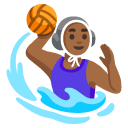
Appearance varies by platform and device. Google Noto, Twemoji, and OpenMoji are open-source.